
Opinion|Videos|November 12, 2026
CELMoDs With CAR T-Cell Therapy and Bispecific Antibodies in Multiple Myeloma
Author(s)Joseph Mikhael, MD, Scott Goldsmith, MD
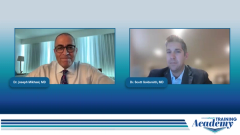
In this segment, Dr. Joseph Mikhael and Dr. Scott Goldsmith discuss the potential role of cereblon E3 ligase modulators (CELMoDs) following chimeric antigen receptor (CAR) T-cell therapy and in combination with bispecific antibodies for multiple myeloma.
Advertisement
In this segment, Dr. Joseph Mikhael and Dr. Scott Goldsmith discuss the potential role of cereblon E3 ligase modulators (CELMoDs) following chimeric antigen receptor (CAR) T-cell therapy and in combination with bispecific antibodies for multiple myeloma. Dr. Goldsmith reviews preclinical and translational findings suggesting that mezigdomide may reduce T-cell exhaustion, enhance T-cell activation, and support CAR T-cell persistence. Experimental findings, including increased CAR T-cell persistence in vitro and prolonged survival in mouse models, provide a rationale for further investigation, but their clinical relevance remains to be established. The experts consider whether CELMoDs could eventually be used as maintenance therapy after CAR T-cell infusion to sustain treatment activity. They also explore the potential for combining CELMoDs with bispecific antibodies, particularly in patients with challenging disease features such as extramedullary involvement. The discussion highlights the possibility that CELMoDs could complement immune-based therapies through their direct antimyeloma activity and effects on immune function. However, Dr. Mikhael and Dr. Goldsmith emphasize the need for additional translational research and clinical trials to determine the safety, efficacy, and optimal use of these strategies in multiple myeloma.
Advertisement
Related to this article

Daniel Y.C. Heng, MD, MPH, FRCPC, discussed final LITESPARK-011 data, toxicity management, and treatment sequencing in advanced renal cell carcinoma.
In a retrospective analysis, teclistamab produced response rates numerically higher than in MajesTEC-1, with missed doses not compromising outcomes.
NCCN guidelines now list the ArteraAI Prostate Test for risk stratification in patients with biochemical recurrence after radical prostatectomy.

In 60 patients undergoing gastrectomy, pre-consultation video aids shortened in-person consent visits and no patient had high decisional conflict.
The robotic endoscopy system obtained detrusor muscle in 94% of resected bladder lesions among the first 20 patients treated in the VIABLE study.
Neil Mehta, MD, and Laura Kulik, MD, discussed which patients with HCC awaiting liver transplant may benefit from bridging immunotherapy.

Pembrolizumab plus SBRT produced more toxicity vs SBRT alone among patients with early-stage non–small cell lung cancer in the phase 3 KEYNOTE-867 trial.

Phase 1a data in 16 patients with recurrent glioblastoma established a recommended dose for expansion of LP-184 for a planned phase 1b/2a combination trial.
Advertisement
Advertisement
Trending on CancerNetwork
1
ArteraAI Prostate Test Added to NCCN Guidelines for BCR After Prostatectomy
2
Real-World Teclistamab Shows Deep Responses in R/R Multiple Myeloma Cohort
3
Adding Pembrolizumab to SBRT Does Not Improve EFS in Early-Stage NSCLC
4
Virtuoso Robotic System Earns FDA De Novo Nod for En Bloc Bladder Resection
5