
Opinion|Videos|November 3, 2026
T-Cell Fitness and Treatment Sequencing in Multiple Myeloma
Author(s)Joseph Mikhael, MD, Scott Goldsmith, MD
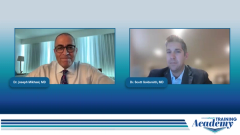
In this segment, Dr. Joseph Mikhael and Dr. Scott Goldsmith discuss how T-cell fitness may influence treatment sequencing in multiple myeloma, particularly as chimeric antigen receptor (CAR) T-cell therapy and bispecific antibodies become increasingly important treatment options.
Advertisement
Episodes in this series
In this segment, Dr. Joseph Mikhael and Dr. Scott Goldsmith discuss how T-cell fitness may influence treatment sequencing in multiple myeloma, particularly as chimeric antigen receptor (CAR) T-cell therapy and bispecific antibodies become increasingly important treatment options. Dr. Goldsmith explains that prior therapies, including transplant conditioning regimens, alkylating agents, proteasome inhibitors, and corticosteroids, may affect T-cell function. However, the extent and duration of these effects, as well as their implications for subsequent treatment outcomes, remain incompletely understood. The discussion explores the biological rationale for investigating cereblon E3 ligase modulators (CELMoDs) as potential treatment partners for T-cell-redirecting therapies. Dr. Goldsmith outlines several areas of investigation, including CELMoD use before leukapheresis, during the bridging period before CAR T-cell infusion, following CAR T-cell therapy to potentially support persistence, and in combination with bispecific antibodies. The segment highlights emerging translational evidence supporting these approaches while emphasizing the need for further clinical studies to determine optimal sequencing strategies and establish whether these potential immune effects translate into improved outcomes for patients with multiple myeloma.
Advertisement
Related to this article

Sunnie Kim, MD, outlined how she monitors for endocrine, renal, pulmonary, and other immune-related adverse events during adjuvant durvalumab.

Rocbrutinib plus R-CHOP yielded a 100% ORR and an 86.7% CR rate in 15 patients with untreated non-GCB DLBCL, warranting randomized evaluation.

Parul N. Barry, MD, FACRO, discussed extending advanced radiation services to satellite sites and offered guidance for early career physicians building new programs.

Rutika Mehta, MD, MPH, shares her framework for growth factor support, global dose reductions, and dropping agents during FLOT therapy.

Grade 3/4 neurotoxicity in patients prompted a partial clinical hold on the PALISADES-1 and PALISADES-2 trials of KITE-753 in large B-cell lymphoma.

A flood-damaged Pfizer joint-venture plant in India that makes injectable chemotherapy may not resume supply until mid-to-late 2028.
Preoperative botensilimab plus balstilimab produced a pathologic major response in 36% of patients with pMMR and 100% of those with dMMR resectable colon cancer.

Sunnie Kim, MD, explains how she uses baseline and postsurgical ctDNA to guide de-escalation conversations for patients struggling after surgery.
Advertisement
Advertisement
Trending on CancerNetwork
1
Flood-Damaged Plant May Prolong US Chemotherapy Shortages to 2028
2
KITE-753 Trials in R/R DLBCL Placed on Partial Clinical Hold for ICANS
3
Neoadjuvant BOT + BAL Yields Pathologic Responses in pMMR/dMMR Colon Cancer
4
How Could Rocbrutinib Plus R-CHOP Reshape Frontline Non-GCB DLBCL Treatment?
5