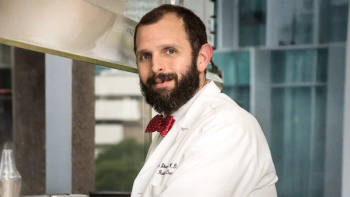
Heath Skinner, MD, PhD, discussed which new radiation oncology service lines community practices can implement, how leadership decides, and what launches require.
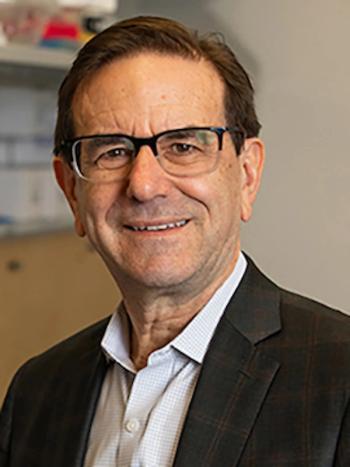
Parul N. Barry, MD, FACRO, discussed extending advanced radiation services to satellite sites and offered guidance for early career physicians building new programs.
The faculty at the University of Pittsburgh Medical Center (UPMC) organized the
In an interview with CancerNetwork® at the symposium, Parul N. Barry, MD, FACRO, discussed why service line development belongs on the agenda at a meeting like this one, what early career physicians stand to take from it, and how a center adding a new service can avoid widening the gap in who can reach it. She described UPMC’s work bringing radiopharmaceutical therapy, radiosurgery, and brachytherapy out to its satellite sites.
Barry closed by discussing the advice she gives early career physicians asked to build programs without leadership experience, including how to make the case for a service to colleagues outside radiation oncology, and what distinguishes a skills-focused regional meeting from a large research conference.
Barry is a clinical assistant professor of radiation oncology in the Department of Radiation Oncology at the University of Pittsburgh and a radiation oncologist at UPMC Hillman Cancer Center at UPMC Magee-Womens Hospital, where her practice focuses on breast and gynecologic malignancies.
CancerNetwork: The focus of this conference is developing new service lines. Why is that such an important topic to discuss at forums like this?
Barry: In the United States, we are constantly pushing the envelope and expanding medicine, and within radiation oncology…we have worked quite a bit to expand what we can offer our patients to give them the highest quality of care. Especially at UPMC, we have some of the best technology and some of the brightest minds, from physicists, physicians, nurses, and [advanced practice providers], all helping to bring the highest quality and highest technological care directly to our patients here in Pittsburgh and the surrounding area, across the nation, and across the world.
You have experience in leadership for physicians in the early phases of their careers. What do they need to hear from a conference about this process?
Taking away from this conference, early career physicians can learn how to build programs. This is especially important if you’re just starting in your career. Often, finding your niche in a practice, and also being able to offer your patients some of the highest quality care that you probably learned in residency as well. This conference is a great way for [physicians] to take the things that [they] learned in residency, as well as what other people are doing across the country, and implement them in [their] clinic so patients benefit from the highest technological and most advanced treatment and care.
When a center adds a new service, how do you make sure it reaches everyone and doesn’t widen the gap in who can get it?
Accessibility is incredibly important, and breaking down the barriers to access of care is very, very critical. What I can say is that often people who live in urban areas at large centers generally have some of the highest access to the highest quality care. But certainly, people who are in more rural places, where we are seeing more and more radiation centers closing, may not necessarily have access to, say, radiopharmaceutical therapy, low-dose radiation therapy, brain radiosurgery, and brachytherapy.
With that being said, at UPMC, we’re the largest integrated network in the country, and what we are doing is making sure our satellite sites also have these very critical advanced technological offerings. We have recently opened radiopharmaceutical therapy in [Altoona, Pennsylvania], and at [UPMC] Horizon, which is a great thing for people with metastatic prostate cancer. We are opening several sites with radiosurgery as well, and finally, we also have several sites with brachytherapy. All sites certainly can do low-dose radiotherapy. We have shown the nation and the world that you can offer all of these advanced techniques locally to people, so they don’t have to travel or miss out on some of this care.
Early career physicians are often asked to build out new programs without much leadership experience. What advice would you give them?
What I would say is to trust in yourself and lean on your mentors. It can be very scary to open new programs, especially if you run into challenges, perhaps even elucidating what you need, or telling people and explaining the why. Sometimes, especially with radiation oncology, which can seem like a niche field to administrators and people outside the field, in the multidisciplinary sectors of nuclear medicine, medical oncology, and surgery, they may not understand the value or importance.
But what I can say, even as a breast radiation oncologist, is that, for example, someone who’s on anastrozole or another aromatase inhibitor [AI], they see exacerbation in their osteoarthritic symptoms. Often, these patients, while on treatment, may discontinue their AI, and that affects their cancer outcomes. If we can just treat these people with low-dose radiotherapy and help alleviate their symptoms, their tolerance goes way up, and their compliance can certainly improve.
Similarly, talking to medical oncologists about radiopharmaceutical therapies and integrating that, working as a team with medical oncologists on delivering this for our [patients with cancer], is another great way to really work on that multidisciplinary care. That involves all sorts of staff, both on the medical oncology and radiation oncology side, [including] administrators, among others.
This conference is smaller than the American Society of Clinical Oncology (ASCO) Annual Meeting or the European Society for Medical Oncology (ESMO) Congress, but that doesn’t make it less valuable. What different goals should attendees have coming here, and what will they find that they wouldn’t at one of those?
This conference is all about learning and gaining a skill set. At ESMO and ASCO, those are great conferences to see some of the latest groundbreaking research. Here, we’re bringing some of the latest groundbreaking techniques and programs directly to you. We’ll teach about all of these programs in the morning, and then we’ll have afternoon breakouts where we can get our hands dirty, walk through clinical scenarios and situations, and work through how to do it. We’ll be playing around with some dummies and actually talking through programmatically implementing these advanced techniques in [the] clinic.