Hope S. Rugo, MD, discussed KEYNOTE-B49 data showing pembrolizumab plus chemotherapy improved PFS in PD-L1-positive HR+/HER2- breast cancer.

Mark Burkard, MD, PhD, discussed genomic gaps, extreme survivors of metastatic breast cancer, and how minimal residual disease testing may refine care.
As genomic testing becomes routine in breast cancer care and new targeted therapies continue to emerge, ensuring that these advances translate into better outcomes for patients across academic and community settings remains an ongoing challenge.
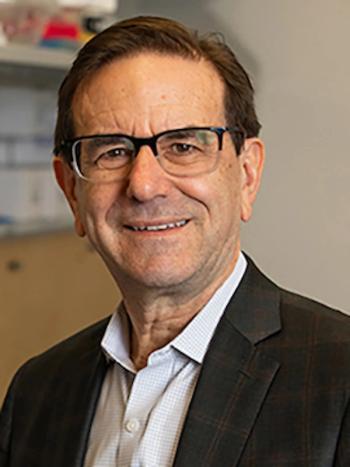
At the Big Ten Cancer Research Consortium (Big Ten CRC) Summit, CancerNetwork® spoke with Mark Burkard, MD, PhD, director of the University of Iowa Health Care Holden Comprehensive Cancer Center and professor in the Division of Hematology, Oncology, and Blood and Marrow Transplantation at the University of Iowa Carver College of Medicine, about how the consortium fosters collaboration across institutions and how the Holden Comprehensive Cancer Center extends expertise to community sites throughout Iowa.
Burkard also discussed the gaps between what can be detected and what can be targeted in metastatic breast cancer, his laboratory's work on chromosomal instability as a potential predictor of response to paclitaxel, and findings from a study of patients who have lived a decade or more with metastatic breast cancer. He concluded by highlighting minimal residual disease (MRD) testing as the precision oncology advance he expects to have the greatest near-term impact and the need to unify comprehensive tumor testing at diagnosis.
CancerNetwork: What does the Big Ten CRC do, and how does it foster collaboration among its member institutions?
Burkard: We are all aware of Big Ten sports—the football, the basketball, and other activities. But the same universities that compete in Big Ten sports have major cancer research institutions undergirding them, and those are powerful cancer centers that can do a lot of excellent work. However, a lot of that work requires collaboration. If you make a discovery, especially nowadays, it might only impact a fraction of patients with cancer, so it is important that we work in collaboration across that entire network.
For example, we are now conducting a clinical trial across the consortium to optimize the tolerability of a standard breast cancer medication. By doing that across the consortium, we were able to get important information that helps change patient care quickly, and that exemplifies the collaboration of the consortium. There are many other research collaborations that this network fosters.
It is very important to reach out to communities in cancer research and cancer care because cancer care today is more complicated than ever. Over the past 10 years, so many new therapies have been introduced that there are now more than 300 FDA-approved drugs for cancers of various sorts, and the level of complexity has become tremendous.
One thing we have done is expand our health system, which now includes sites where physicians go out into smaller communities and care for patients there. We also have researchers who develop networks to work with community sites to meet quality standards and improve quality of care: for example, by establishing regular tumor boards for interdisciplinary case discussion and providing assistance when necessary. We have also invited everyone in Iowa to participate in our tumor boards.
The most relevant one is our molecular tumor board. Any genomic finding for a patient (say, in Atlantic, Iowa) can be submitted and reviewed by our experts free of cost, without the patient traveling to Iowa City 4 hours away. The information is provided back on genetic counseling, therapeutic implications, and recommendations from the most knowledgeable genetics experts at the university. Those are some examples of how we are trying to improve care in the community beyond the reach of our health system.
Over the past decade, the number of therapies for targetable mutations in breast cancer has changed. Ten years ago, many of my colleagues would say, "Why bother doing the testing? We do not have anything we could do with the results." But testing allowed us to engage in clinical research of new therapies that improve cancer care.
One of the gaps we have today in breast cancer is that some of the inhibitors of PIK3CA cause hyperglycemia, and new agents are being developed to overcome that limitation by being more selective for mutated forms of PIK3CA. There are also many targets for which we do not have drugs—the undruggable targets. Probably the biggest one across all cancers, including breast cancer, is p53, for which we do not have a therapeutic approach. MYC is known to be amplified in many breast cancers, yet we do not have a way of therapeutically intervening for those cancers. There is also FGFR1-amplified breast cancer, a common mechanism of resistance to [endocrine therapy], for which we do not have much.
However, we have made a lot of progress. We have mutation-selective drugs for PIK3CA coming out, we have AKT inhibitors, and we have drugs that are appropriate for estrogen receptor [ESR1]–mutated breast cancer. I am very hopeful that the future will allow us to further advance and provide more options for our patients.
This is an active area of investigation in my laboratory, in collaboration with Beth Weaver, PhD, at the University of Wisconsin. The challenge has been that most DNA sequencing technology reads very short segments of DNA. You can detect mutations and small deletions, but detecting large-scale genomic alterations has been challenging. While we routinely measure microsatellite instability, we do not measure chromosomal instability, which is the rate at which chromosomes are lost in each cell division.
We see a future in which you take a tumor and analyze the individual cells to determine their karyotypes. You can now do that digitally with single-cell sequencing and use it to infer the rate of chromosomal instability—the division errors that led to that tumor. We believe that will get us a long way toward telling who will and will not respond to drugs like [paclitaxel] that target mitosis. That is an area of active investigation in our group.
About a decade ago, a patient walked into my clinic and said she had been diagnosed with metastatic breast cancer in 1982 and had been on several therapies for 30 years. That person ultimately lived at least 40 years with metastatic breast cancer; by the time she moved away, she was on no medication. That raised the question of whether there are metastatic survivors for whom we may be able to de-escalate treatment, and who they are and why.
We conducted a study both locally and nationally through the Dr. Susan Love Foundation's Army of Women, which later became the [Love] Research Army because it included men. That allowed us to identify people from all over the country who had lived with metastatic cancer for a long period.
We discovered 2 major groups. One group is like the patient I described, who has metastatic hormone receptor–positive, HER2-negative breast cancer. For a small cohort of these patients, the cancer progresses very slowly. We do not believe it is the immune system; we do not have evidence of immune cells infiltrating the tumors. We believe it is the fundamental biology of the cancer itself: that it arises from a cell that proliferates very slowly or has a set of mutations that allow it to be slow. People have speculated that cancers with a mutation in PIK3CA or p53 would be more aggressive, but we saw just as many of those mutations in this group as in anyone else, so our data suggest that is not the case.
We also found a cohort of patients who had HER2-positive breast cancer and were exceptional responders. The first group, with hormone receptor–positive disease, were not exceptional responders; they simply had slowly progressive disease. However, among the patients with HER2-positive disease who lived a long time, it looks like their tumors regressed in response to HER2-directed therapy, which allowed them to survive more than a decade. We do not know why that is the case for some patients with HER2-positive breast cancer and not for others. We are still investigating.
The advance I expect to have the biggest impact on cancer care in the next few years is [MRD] testing with tumor-informed ctDNA. This testing has been around for several years, but through many technologic advances and hard work, the diagnostic threshold has been pushed down, with third-generation tests allowing us to find very minute amounts of cancer DNA with high confidence. What this means is that we will be able to escalate and de-escalate therapy in an informed way.
For 50 years, we as oncologists have been used to giving chemotherapy and other treatments to patients who have had surgery. We know many of them do not need it, but some of them do, and we know we save lives by doing it. If we could do that in a more informed way, where we could actually see that there is cancer present, that would be powerful, because we could focus our efforts, and all the risks that go with treatment, on the people who need it most and not give it to those who may have been fine. I see this refining our adjuvant therapy in a knowledge-based and technologic way that spares a lot of toxicity and cost to health care and continues to save lives.
Moreover, I anticipate that we will have the opportunity to monitor patients who have received treatment and may develop metastatic breast cancer. Breast cancer can become metastatic years after the initial diagnosis, and it is not uncommon, unfortunately, for it to recur after a decade or more. If you have a process by which you can continually monitor for minute amounts of DNA, you can anticipate and intercept that cancer and give what we call secondary adjuvant therapy: a treatment that could eliminate the minute amounts of metastatic cancer before it becomes incurable, radiologically detectable metastatic disease.
We are getting many advances in DNA testing and genomics, and my mind goes to what patients need and what we are going to do in the future with tumor assays, whether it is an MRD test or a mutational assay. I anticipate that in the near future, we will be developing an MRD assay for every patient with a primary solid tumor after surgery, but also learning which mutations are present, because the targeted drugs we are talking about are moving from the metastatic setting to the front line. We need to know that, along with the pharmacogenomic indications, such as DPYD and UGT1A1, that we need for treatment selection. As I talk to many industry partners and others, I wonder when we will get to the point where we obtain all that information at the outset for a patient. I think we are coming to that point, but there needs to be some unification of all the comprehensive and advanced tests we are doing into the one test that everyone needs.
Then we need to communicate those advances. One way we are doing that is through clinical grand rounds that are broadcast to community sites and recorded, so any physician anywhere in the state can participate. The challenge is that rural physicians are very busy, so I am not sure how well we are getting through, but we are trying to make it as easy as possible. Whether they watch synchronously or asynchronously, we give them continuing medical education [CME] credit. We want to make it facile so that new information gets to everyone.