“What we are trying to do more often is to ablate as much as we can,” said Shankar Siva, MBBS, PhD, FRANZCR, on pairing SABR with systemic therapy in RCC.
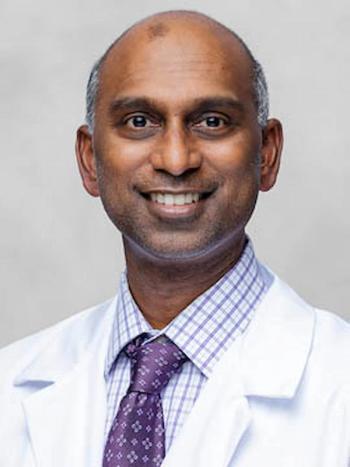
Heath Skinner, MD, PhD, discussed which new radiation oncology service lines community practices can implement, how leadership decides, and what launches require.
In an interview with CancerNetwork® at the 2026 University of Pittsburgh Medical Center (UPMC) Hillman Cancer Center Radiation Oncology Symposium, Heath Skinner, MD, PhD, discussed which of the meeting's 4 highlighted service lines is most practical for community practices to take on, the role large institutional centers play in helping smaller networks build these programs, and how leadership decides which service lines are worth building in the first place. He explained what attendees should take from a regional meeting compared with a large national one, and which of the workflow, staffing, and regulatory challenges programs most often underestimate.
Skinner closed by discussing the advice he gives program leaders preparing to launch a service line, the counsel he received when he first became chair, and what trial and error has changed about the way he approaches implementation now.
Skinner is a professor and Claude Worthington Benedum Chair of Radiation Oncology at the University of Pittsburgh, and chief medical officer of the Radiation Oncology Network at UPMC Hillman Cancer Center.
Skinner: Low-dose radiation for osteoarthritis and for benign conditions would be the easiest for almost any practice to implement. You require no new equipment, and the setup itself is extraordinarily straightforward. Largely, it involves building up relationships with primary care providers and your orthopedic colleagues.
We're all in this together, and we need to collaborate in the context of knowledge gained. For example, what each of us has learned in the implementation of new services and what we have learned in the context of data from clinical trials, [the question is] how do we disseminate that to community practices? And in turn, how do we learn about implementation science from our colleagues in the community, both from the community at UPMC and other smaller sites, nationally and internationally? Indeed, today at our conference, we have several participants online from Central and Eastern Europe, as well as in multiple regions across almost the entirety of the United States.
It's a complicated question. First and foremost, how might we benefit the most patients in any given period of time? If you have a finite set of resources and a finite set of people, how can you do the most good for the most patients in a given environment?
You also need to look at the local practice environment. We have practices that range from very small rural communities to relatively large urban areas, and the practice environment in each is different. How you can best implement a given technology, technique, or service varies, and it could vary quite differently between a very rural area and a very urban area. You have to take those things into account. You have to take the talents, skills, and interests of the clinician at the individual site as well. All of these things have to play a role in deciding how we can best utilize the resources that we have to help the most people.
At a lot of larger meetings, you get lost. You get lost, and there are a lot of different research topics. As much as I'm a physician-scientist, I have a lab, and I enjoy research—at the end of the day, many of the things that are discussed at a lot of these meetings don't have clinical applicability right now.
The goal of this conference is to educate and to engage in a dialogue with attendees about how to implement changes that are positive for patients and clinicians right now. [It includes] the experiences that we've learned, the data that we've learned, and how to disseminate that out to help individual physicians, practices, and organizations implement [programs] that could help patients now.
A lot of it depends upon your viewpoint. As physicians and clinicians, we often tend to downplay the regulatory and administrative challenges of implementing a new technology or a new workflow. Conversely, hospital administrators will sometimes downplay and not fully understand the clinical difficulties of implementing a new technology.
A lot of what we're trying to do is bring those groups together as best we can. We do have administrators presenting as well this afternoon, to bring those groups together as best we can and make sure that whatever blind spot anyone has is, at least to some degree, remedied by the educational content.
Be very thoughtful. Engaging stakeholders early on, having good communication amongst the stakeholders, and getting their buy-in. Functionally, at the end of the day, the people who are going to do it are the front-line staff. If they don't have buy-in, if they don't see the advantages to the patient, if they don't see that it's logical, if they don't see that you're responsive to change, you're never going to get as good a program as if you do those things.
When I first became chair here, in mid-2022, some of the best advice I received was to not make any dramatic changes initially, but to listen first. There is an old [G.K.] Chesterton quote that says something along the lines of, "If you come across a gate in the middle of an empty field, don't take it out until you know why it's there." I think that's good advice for anyone coming into any new situation.
A decent amount of it comes from trial and error, quite frankly—mistakes that I have made. All of the advice that I gave you earlier in the discussion is largely based on mistakes that I've made, either in the context of communication or in the context of stakeholder buy-in, and all of those are hard-won from leadership experiences where it could have been done better.
Now, thankfully, I have a wonderful team, and I'm proud of all of the service lines and all the services that we've implemented. But the need for effective communication, and honestly, for your team to see that you are engaged and that you care, is paramount.