At the BIG10 CRC Summit, Mingjia Li, MD, outlined how pre-operative hemoglobin may signal treatment response in resectable NSCLC.

"As we combine more treatments…they have overlapping toxicities, and they may have the ability to synergize in a negative way," said Dwight H. Owen, MBBCh, MS.
Immune checkpoint inhibitors have transformed the treatment of lung cancer, but many patients whose tumors initially respond eventually progress, and severe immune-related toxicities remain difficult to predict. At the same time, perioperative chemoimmunotherapy and new agents for difficult-to-treat subgroups continue to reshape clinical decision-making.
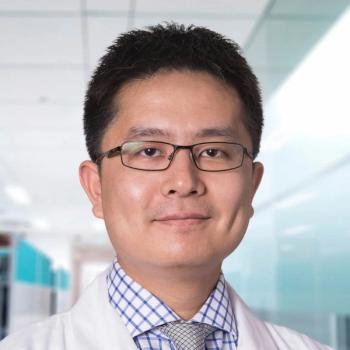
At the Big Ten Cancer Research Consortium (Big Ten CRC) Summit, CancerNetwork® spoke with Dwight H. Owen, MBBCh, MS, a thoracic oncologist, director of the Clinical Treatment Unit and Clinical Trials Processing Laboratory, and leader of the Thoracic Oncology Disease Research Group at The Ohio State University Comprehensive Cancer Center – Arthur G. James Cancer Hospital and Richard J. Solove Research Institute (OSUCCC – James). He discussed:
Owen also highlighted the evolving approach to resectability in patients with multistation N2 disease, the unmet need among patients with PD-L1–negative squamous NSCLC, and the need to break down barriers to collaborative clinical research.
Owen: That is a real focus of ours, and it is an incredibly challenging scenario when a patient's tumor initially shrinks in response to immunotherapy and then, at some point, starts to grow again or new lesions appear. That is acquired resistance, which is different from the situation in which a tumor does not respond to treatment at all; we call that primary resistance. Acquired resistance means that there was something about the tumor or the patient's immune system that was ready to receive the immunotherapy and act on it.
However, it is probably simplistic and naive to think that targeting the one pathway that most checkpoint inhibitors target, PD-1/PD-L1, is going to yield the same long-lasting results for all patients. There is always an interplay between the tumor and the patient's immune system; if the immune system gains an edge, the tumor may figure out a way to get around it. Anticipating that, and trying to figure out in which patients it is more likely to happen, may allow us to escalate care earlier in treatment rather than waiting until the tumor has started to grow again. Otherwise, we are trying to catch up by adding more treatment when the patient might already have developed symptoms.
We have always treated NSCLC and SCLC as 2 very different diseases, and this is one area where that certainly holds true. With NSCLC, we can often see resistance developing as lesions start to grow. Sometimes we may even be able to intervene, either by changing systemic therapy or by introducing some form of local therapy, most often radiation or an ablation technique, to try to halt resistance beyond the one site that may be growing, in the setting of so-called oligoprogression.
That paradigm does not hold as well for SCLC. Once treatment stops working, the cancer is so aggressive that it tends to grow very quickly, and we do not have the luxury of waiting to see how other modalities might be introduced. In SCLC, once we see resistance developing, we have to act quickly.
Unfortunately, today we still do not have a single test or technique that can predict this. However, it is a huge area of interest for the community broadly, and for me personally and our team at Ohio State. We know some patients are at higher risk of toxicity if they are receiving combination immunotherapies, such as patients with any history of autoimmune disorders. But patients may have no identifiable risk factor and still develop, in some cases, devastating, irreversible, and rarely even fatal toxicities from these treatments. If you had known that at the beginning, would you have changed your treatment recommendation? Generally, of course.
The hard part is that immunotherapy requires an immune system to work well, so the patients who develop immune-related toxicities are also the ones who are more likely to have benefited from treatment. There are also biases at play: a longer time on treatment tends to mean the treatment is working for the cancer, but it also exposes the patient to more risk of adverse effects.
As we combine more treatments, including immunotherapies, antibody-drug conjugates, and oral therapies, they have overlapping toxicities, and they may synergize in a negative way to increase the risk of severe adverse effects, including pneumonitis and some neurologic toxicities. It is important that we continue to develop prediction models for immune-related toxicities with monotherapies before we start combining these agents. As data sets grow and we better understand the necessary data inputs, I hope we will at least be able to risk-stratify which patients are more likely to develop serious, clinically significant, and potentially devastating toxicities, so that we can nudge them toward a different treatment up front.
There are so many advances in thoracic oncology, from approvals of new medications and new pathways to agents that we are used to using in later lines now moving into earlier settings. From a paradigm standpoint, the biggest change has been in determining whether a patient is a candidate for surgery. Many of the neoadjuvant and perioperative studies of chemotherapy-immunotherapy combinations used more recent staging tools, the eighth and now even the ninth edition rather than the seventh. These broke out mediastinal nodal status, specifically N2 disease, into single-station vs multistation disease.
Historically, multistation N2 disease was almost always considered unresectable; that was the bellwether. Interestingly, several of the perioperative studies included patients with multistation N2 disease, and those patients did benefit from chemoimmunotherapy, including achieving pathologic complete response, which we know is associated with much better outcomes.
For a patient who presents with multistation N2 disease but relatively small nodes, rather than veering directly toward chemoradiation as though the disease were unresectable, it is worth discussing the case with a thoracic surgeon in a multidisciplinary setting. The patient may fit the criteria of the studies that evaluated perioperative treatment and may benefit from neoadjuvant chemoimmunotherapy, especially if they achieve nodal clearance. We know that patients whose nodes clear by the time of surgery have better outcomes. That can be assessed with a presurgical [endobronchial ultrasound (EBUS)] or at the time of surgery before proceeding with resection.
For the last few years, the patient population I feel has not seen a significant benefit is patients with squamous histology whose tumors are PD-L1 negative. Long-term results from [the phase 3 KEYNOTE-407 trial (NCT02775435)] did not show significant improvement with the addition of immunotherapy in that group, and until recently, we had not seen any major progress for those patients.1 Now we have HARMONi-6, which was recently presented and published, and which did show improved outcomes, including survival, among patients with squamous NSCLC, including those with PD-L1–negative disease.2
However, the progress has not been as dramatic as I had hoped. The squamous population is one in which we historically had concerns about using VEGF-targeted therapies because of bleeding risk, and there was an increased risk of bleeding in the studies so far. There have also been concerns about the generalizability of HARMONi-6 specifically, and as we bring that treatment to a broader patient population, where will the risk-benefit balance fall?
I still think patients with squamous, PD-L1–negative tumors are the cohort we have not served as well as others, and they should be a focus of our efforts. I applaud the HARMONi-6 team for focusing on a squamous cohort and including patients with PD-L1–negative disease.
It is always a balance between the hope we see in trials as they are presented or planned and the patients we see in clinic. The struggle we have as oncologists is balancing the hope of future progress against the options we have today for the patients in front of us, which are not always what we wish they were. But we continue to make progress every year. There are more approvals in lung cancer than at almost any point in history, which is making those conversations and choices easier. The hope of progress continues to get closer to where we are in clinic.
One of the most important things we need to focus on is how we collaborate in research. There is a clear problem with silos, barriers, and the burdens of clinical trials, both in getting trials opened for our patients and in what we ask patients to go through to enroll. I think there is an effort and an understanding now that how we conduct clinical trials and clinical research has to change. It would behoove us as a research community, especially within the Big Ten, to get ahead of that and participate in shaping how we conduct cancer research over the next 5 to 10 years.