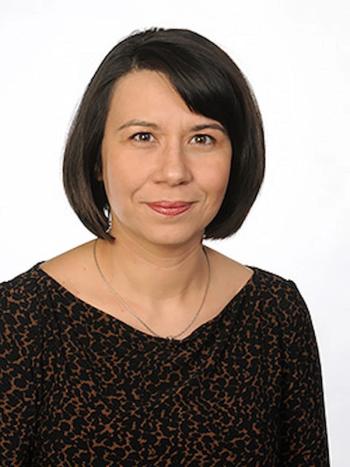
“What has changed is that we are bringing the phase 1 trials earlier in the course of treatment for our patients,” said Oana Danciu, MD.
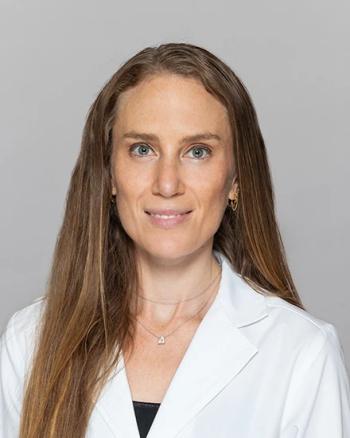
“The more representation, the more people we have participating in clinical trials, the more applicable the data,” said Patricia A. Robinson, MD.
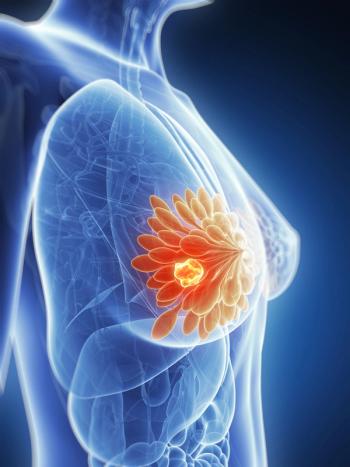
Although gains have been made across the cancer control continuum, racial disparities in breast cancer outcomes remain well documented, prompting renewed focus on their underlying drivers and on how research is designed and conducted.
CancerNetwork® spoke with Patricia A. Robinson, MD, associate professor of medicine in the Division of Hematology and Oncology at Northwestern University Feinberg School of Medicine and associate director for diversity, equity, and inclusion at the Robert H. Lurie Comprehensive Cancer Center of Northwestern University, about efforts to address disparities in breast cancer care.
She began by outlining where progress has been made in narrowing outcome gaps, then discussed how metabolic syndrome and social determinants of health may contribute to survival disparities. Robinson also described practical strategies her institution has used to increase clinical trial representation and how community oncologists and academic centers can work together to close gaps in care. She then considered whether genomic assays and targeted therapies risk widening disparities. In conclusion, she highlighted the role of Big Ten–wide collaboration in reaching diverse patient populations.
Robinson: Some of the most significant gains in addressing outcome disparities in the breast cancer space have occurred across the cancer control continuum. Every space, whether it be prevention and screening, diagnosis, treatment, or cancer survivorship, has made significant impacts in narrowing the gap between underserved patient populations and others.
A significant disease burden is linked to metabolic syndrome or metabolic dysregulation, and the impact of metabolic syndrome and/or metabolic dysregulation is significantly linked to outcome disparities. The impact, or percentage, related to social determinants of health [SDOH] remains to be seen and is an active area of research. It has been said that about 80% to 90% of health outcomes are related to SDOH vs 10% to 20% to medical care.
If one thinks about the incidence of metabolic syndrome or metabolic dysregulation in our country, and probably globally, that burden is far greater than what we see with germline mutations. It is an amazing opportunity for us as clinicians and researchers to look into this space, because the impact health-wise is astronomical.
Our institution, Northwestern University, has been very intentional about increasing representation in clinical trials. That has included engagement with community-based organizations and having a specific, identified person at our institution, Adam Murphy, MD, MBA, MSCI, who is intentional about the work he is doing. Investigator-initiated trials have also significantly contributed to increased representation in clinical trials.
It is a responsibility that we all share. It is the responsibility of SWOG, our institutions, the cooperative groups, the Big Ten [CRC], and investigators to make sure there is representation across clinical trials. The rationale is that organizations such as the [National Comprehensive Cancer Network (NCCN)], which sets the guidelines, depend on the quality and robustness of the data to make it applicable to all patient populations and to validate it as a standard of care. The more representation, the more people we have participating in clinical trials, the more applicable the data.
There needs to be an intentional relationship between community hospitals and community-based practices and our academic centers. It is a bidirectional relationship, and one cannot exist without the other.
There are probably 4 core pillars to delivering high-quality care to patients: first, the health care system; second, the research being done; third, the patients themselves; and fourth, community-based organizations. The role of each may be independent and on a parallel track, but where they intersect is where you get the highest level of quality of care for the patient.
This is where interesting clinical trial design might come into play, with trials generated at the academic center but implemented through the community hospital or community practice. It also requires the community practice to be active and intentional about looking at the academic centers and the research being done. The link is probably the community-based organization, serving as a conduit between the patient and those 2 health care entities.
My hope is that genomic tools do not contribute to widening health care disparities but actually narrow them. That requires guideline-concordant use of the tools, and it requires utilization by all patient populations. Genomic tools and platforms provide an amazing opportunity for us to better understand all patient populations in a shorter period of time.
The limitation of a single-center institution is that the work is siloed. Intercollaboration [between centers] throughout the Big Ten provides an opportunity to leverage synergy. It provides an opportunity to accelerate the kinetic chain that is implicit to research, meaning that a basic scientist’s study of a protein that then moves to the bedside is probably done faster because you have more people working on it.
It also provides an opportunity for that research to be done in diverse patient populations, whether urban vs rural, or a demographic [group] or ethnicity that may be unique to a given Big Ten institution’s catchment area. The biggest gain of intercollaborative work, such as through the Big Ten [CRC], is that the work is no longer siloed. Siloed work is slower and more homogeneous, and it does not create the opportunity for a think tank in which new and innovative ideas are brought to the table.
Hood CM, Gennuso KP, Swain GR, Catlin BB. County Health Rankings: relationships between determinant factors and health outcomes. Am J Prev Med. 2016;50(2):129-135. doi:10.1016/j.amepre.2015.08.024