
Opinion|Videos|October 21, 2026
Extended COPERNICUS Follow-Up on Skin Toxicity and Thrombosis
Author(s)Wade Iams, MD, Luis Raez, MD
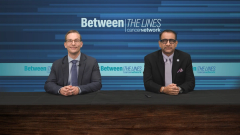
Wade T. Iams, MD, of Tennessee Oncology, presents extended COPERNICUS follow-up: 274 US participants have received subcutaneous amivantamab plus lazertinib, and 214 enrolled at least 4 months before the data cutoff.
Advertisement
Episodes in this series
Wade T. Iams, MD, of Tennessee Oncology, presents extended COPERNICUS follow-up: 274 US participants have received subcutaneous amivantamab plus lazertinib, and 214 enrolled at least 4 months before the data cutoff. Median follow-up reached 8.3 months, 86% remained on study, 56% were 65 years or older, and 22% were 75 or older. The population was 50% White, 27% Asian, and 10% Black, which Luis E. Raez, MD, of Miami Cancer Institute, calls important for confirming the regimen works across groups. For the first 4 months, Dr Raez notes that paronychia fell from 50% in MARIPOSA to 35%, rash from 55% to 25%, and infusion reactions from 55% to about 3%, stressing grade 3 events because treatment is often not restarted after them. Dr Iams reports venous thromboembolism in the first 4 months in 3% of participants vs 23% in MARIPOSA, with no grade 3 or higher bleeding and similar rates across age subgroups.
Advertisement
Related to this article
Training AI on data without good representation of underserved populations may unintentionally widen disparities in lung cancer care.

At the BIG10 CRC Summit, Mingjia Li, MD, outlined how pre-operative hemoglobin may signal treatment response in resectable NSCLC.

Experts highlight KEYNOTE-C93, TroFuse-005, and antibody-drug conjugate data in platinum-resistant ovarian cancer at the ESMO Congress 2026.
Nikolai Strusberg, MD, discussed other toxicities of proton vs photon breast RT, practice implications, and next steps in capsular contracture research.

Indocyanine green may be highly sensitive in the identification of ovarian cancer metastases, though with low specificity.
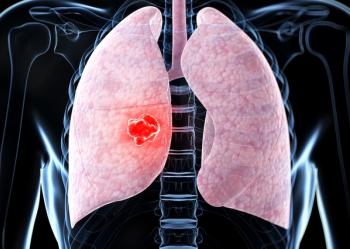
The therapeutic cancer vaccine OSE2101 combined with either docetaxel or nivolumab met the primary end point of 1-year overall survival in the Combi-TED trial.
In a phase 1 trial, CD19/CD20/CD22 CAR T cells produced complete responses in 83% of patients with relapsed/refractory B-cell non-Hodgkin lymphoma.
Nikolai Strusberg, MD, explained the clinical hypothyroidism endpoint and how thyroid dose should guide proton vs photon choice in breast cancer.
Advertisement
Advertisement
Trending on CancerNetwork
1
The Gynecologic Oncology Data to Watch at ESMO 2026: De-Escalation and ADCs
2
Cancer Vaccine Combinations Improve 1-Year Survival in Second-Line NSCLC
3
Trispecific CAR T Cells Demonstrate Safety, Early Activity in B-Cell Lymphoma
4
The Usefulness of Indocyanine Green in Cytoreductive Ovarian Cancer Surgery
5