

Opinion|Videos|February 5, 2025
Future of R/R MM: Emerging Agents
In this segment, Dr Mohan asks Dr Mann about emerging investigational agents for the management of relapsed/refractory multiple myeloma (R/R MM) that show particular promise.
Advertisement
Episodes in this series
Video content above is prompted by the following:
Are there any emerging investigational agents for R/R MM management that you find particularly promising?
Advertisement
Related to this article

Phase 1a data in 16 patients with recurrent glioblastoma established a recommended dose for expansion of LP-184 for a planned phase 1b/2a combination trial.

The FDA set a June 25, 2027, PDUFA date for gedatolisib in PIK3CA-mutant, HR-positive, HER2-negative advanced breast cancer after endocrine therapy.

The FDA approved pimicotinib for TGCT based on phase 3 MANEUVER data showing durable responses and improved pain, stiffness, and function.

Real-world data showed a 68% 12-month high-grade recurrence-free survival rate with hyperthermic mitomycin C in patients with BCG-unresponsive NMIBC.
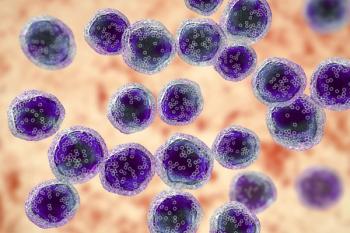
Data from the phase 3 OCEAN trial and others support the expanded approval for melflufen in patients with previously treated multiple myeloma.
The FDA approved the PCR-based OncoMate MSI Dx Analysis System to identify patients with microsatellite instability–high solid tumors who may be eligible for pembrolizumab.

An end-of-phase 2 meeting with the FDA supports a phase 3 development program for silevertinib in patients with locally advanced or metastatic NSCLC.

The FDA issued a Not Approvable Letter due to uncertainty around the degree of clinical benefit with Optune Mya for patients with NSCLC and brain metastases.
Advertisement
Advertisement
Trending on CancerNetwork
1
FDA Approves Pimicotinib for Tenosynovial Giant Cell Tumors
2
FDA Approves OncoMate MSI Dx as Pembrolizumab Companion Diagnostic in MSI-H Solid Tumors
3
Hyperthermic Mitomycin C Yields 68% 1-Year HG-RFS in BCG-Unresponsive NMIBC
4
FDA Accepts sNDA for Gedatolisib in PIK3CA-Mutant HR+/HER2– Breast Cancer
5