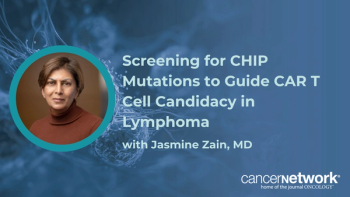
Jasmine Zain, MD, described how pre-existing CHIP mutations should inform pre-infusion risk counseling and treatment selection.
Mamta Parikh, MD, MS, outlined strategies to overcome payer coverage friction and optimize ctDNA testing windows after cystectomy.
Integrating circulating tumor DNA (ctDNA) molecular residual disease (MRD) testing into routine post-radical cystectomy workflows presents significant logistical and financial challenges. With variable payer coverage and narrow therapeutic windows for adjuvant intervention, clinical teams must balance evidence-based testing with operational efficiency.
According to Mamta Parikh, MD, MS, medical director of Genitourinary Malignancies at the UC Davis Comprehensive Cancer Center and member of the NCCN Guidelines Panel for Bladder Cancer, successfully navigating these hurdles hinges on strict adherence to guideline-concordant indications and proactive multidisciplinary coordination. Because tissue-informed ctDNA assays require considerable turnaround time, establishing seamless communication between urologic and medical oncologists before or immediately following surgery is critical.
Initiating testing during the routine 4- to 6-week postoperative recovery check ensures results are available well within the established 14-week window for adjuvant immunotherapy. Ultimately, Parikh explained that leveraging commercial testing infrastructure alongside aligned specialist workflows allows multidisciplinary teams to minimize administrative delays and deliver timely, targeted care.
What I can say about this is in the setting of potential financial toxicity of these tests, we have to be mindful of where we have the most data and focus our emphasis on guideline-concordant care, focusing on the tests where they are most useful. The NCCN guidelines recommend looking at this in the setting of minimal residual disease, with the cautions of limited data in the more evolved fields of perioperative management. In terms of actually obtaining these tests in a timely way, multidisciplinary collaboration is essential. Tumor-informed ctDNA testing companies generally have strong infrastructure for services like mobile phlebotomy, but someone still needs to order the test, which is often the biggest challenge. When medical oncologists and urologic oncologists collaborate and coordinate these activities together, we see the best outcomes. For example, most patients get a postoperative check after radical cystectomy, and this is an important opportunity to send tumor-informed ctDNA testing at that time because the test takes a while to return, and patients generally need at least 6 weeks to recover from radical cystectomy, sometimes longer. All the trials that have looked at adjuvant therapy have given immune checkpoint inhibitor therapy within about 14 weeks of radical cystectomy. Testing at that postoperative check can be a great opportunity to get results back in time for a discussion about adjuvant therapy. Similarly, if the medical oncologist knows the patient is going into radical cystectomy, that can be an opportunity to set up testing so the company is ready at the 4-week mark to draw the sample. But the best outcomes come when there is communication between medical oncologists and urologic oncologists, which I recognize can be a challenge in some settings given that if you’re not at a center where all your specialists are not all in the same place, it can be complicated. But it is very important for patient care.