

|Videos|July 14, 2022
Perspectives on First-Line Treatment Decision-Making for la/mUC: Results of The Targeted Literature Search and Qualitative Interviews
Author(s)Shilpa Gupta, MD, Vinit Makkar, MD
Experts discuss results from the targeted literature search and qualitative interviews, which identify important factors that impact their treatment decisions for patients with locally advanced/metastatic urothelial carcinoma.
Advertisement
Episodes in this series
Advertisement
Related to this article

Brandon Mancini, MD, MBA, FACRO, discusses the presentations from ASTRO 2026 that may impact the future of prostate cancer, lung cancer, and other diseases.

"We thought there might be a preventive effect towards the development from CHIP to CCUS to MDS, so it’s a sort of a continuum," said Kirsten Grønbæk, MD, PhD.

Ralph V. Boccia, MD, FACP, discussed how time since CAR T-cell therapy and toxicity profiles guide bispecific selection in relapsed multiple myeloma.

Al-Ola A. Abdallah, MD, explains a possible biological reason IMiD holding therapy benefited ide-cel but not cilta-cel recipients.

Industry payments to oncologists were associated with greater use of the promoted treatment, whether or not it was guideline-preferred for the patient’s cancer.
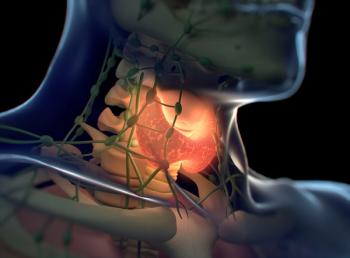
The phase 2/3 AHEAD-MERIT trial will continue to assess overall survival among patients who received BNT113 plus pembrolizumab for head and neck cancer.

Ralph V. Boccia, MD, FACP, discusses payer models, prior authorization, cost recovery, and patient assistance for bispecifics like teclistamab/daratumumab.
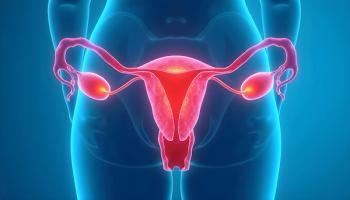
Robot-assisted radical hysterectomy reduced mostly low-grade intraoperative complications vs open surgery in early-stage cervical cancer.
Advertisement
Advertisement
Trending on CancerNetwork
1
BNT113/Pembrolizumab Misses PFS End Point in HPV16+ Head and Neck Cancer
2
RYZ101 Improves Progression-Free Survival in Previously Treated GEP-NETs
3
Teclistamab Vs Talquetamab After Relapse on CAR T-Cell Therapy in Multiple Myeloma
4
How Might IMiD Holding Therapy Impact Outcomes in R/R Multiple Myeloma?
5