Erik Bengtsen, MD, discussed meaning-centered therapy at the bedside, framing psychiatry referrals, and a more humanistic approach to care.
Paul Oberstein, MD, discusses how RASolute 302 may be the most significant advance in pancreatic cancer treatment in more than a decade.
In this episode of The Moonlight Shift, Gina Mauro sits down with Paul Oberstein, MD, director of GI Medical Oncology at NYU Langone Perlmutter Cancer Center, to discuss the results of RASolute 302 (NCT06625320) — the phase 3 trial that delivered the most significant advance in pancreatic cancer treatment in more than a decade. Oberstein was part of the global trial team and offers a perspective that goes beyond the data: what this result means for the patient sitting across from you in clinic, why the breadth of benefit is the real story, and what comes next for a field that has been waiting a very long time for news like this.
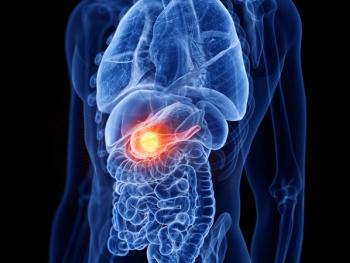
RASolute 302 evaluated daraxonrasib, a once-daily oral KRAS inhibitor, in patients with previously treated metastatic pancreatic cancer. The trial achieved a hazard ratio of 0.4—representing approximately 60% improved efficacy over standard-of-care chemotherapy—and nearly doubled median overall survival to 13.2 months in the second-line setting. Oberstein explains that what made this result transformative was not just that the drug worked, but that it worked across the entire KRAS-mutant pancreatic cancer population rather than a defined subset. KRAS mutations are present in approximately 90% to 95% of pancreatic cancer cases.
Oberstein is direct about the limitations of the current data — the trial did not produce cures, and resistance to daraxonrasib is an emerging and active area of investigation. But he frames RASolute 302 explicitly as a floor rather than a ceiling, describing a pipeline of combination strategies targeting resistance mechanisms that could, in the best case scenario, extend disease control for years. He also addresses the side effect profile—rashes are the most common toxicity—and emphasizes that managing them will require education across treating centers as the drug moves toward FDA approval and broader clinical use.
The episode closes with the game segment, in which Oberstein rates five bold claims about the future of GI oncology. He calls immunotherapy plus chemotherapy in pancreatic cancer an "overhyped buzzword," rates liquid biopsy as somewhere between hype and reality, and expresses measured optimism about early detection while noting that the timeline is longer than the field anticipates. His closing message: the future of treating GI cancers is going to look dramatically different in the next five to ten years, and he invites everyone to be part of it.
The Moonlight Shift is available on