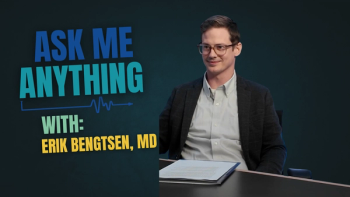
Erik Bengtsen, MD, explained how antidepressants may improve quality of life and how he typically works with patients who decline favorable treatment.
Erik Bengtsen, MD, described what sets psycho-oncology apart and how clinicians can open conversations on body image and sexual health.
Erik Bengtsen, MD, an assistant attending psychiatrist and assistant director of the Consultation-Liaison Psychiatry Training Program at Memorial Sloan Kettering Cancer Center, explained what distinguishes psycho-oncology consultation-liaison (C-L) psychiatry from general capacity, delirium, and dementia consults, and how clinicians can address body image, fertility, and sexual function concerns, in an episode of CancerNetwork’s® Ask Me Anything.
Bengtsen noted that neurocognitive consults are a shared part of any C-L practice, in both inpatient and outpatient settings. What sets psycho-oncology apart, he said, is a wider scope and toolset for existential distress, depression, fear of the next scan, and cancer-specific post-traumatic features. On body image and sexual health, he emphasized that the starting point is clinician comfort with asking, because many patients hesitate to raise these concerns themselves. A simple question about intimacy can surface specific issues, such as erectile dysfunction, and open the door to referrals, including Memorial Sloan Kettering’s sexual functioning clinic within urology and dedicated sexual health clinicians in the breast and gynecology services.
Bengtsen: Capacity, delirium, and dementia have a neurocognitive component that any psychiatrist in the C-L or psycho-oncology setting will see, and we see that in the inpatient and outpatient settings. In psycho-oncology, we have a wider range of tools to help with things like existential distress, depression, fear of the next scan, and very specific cancer-related post-traumatic features. We have a wider scope of practice.
Bengtsen: A first starting point is comfort in the clinician asking these questions. Some patients might have some hesitancy to bring up sexual functioning or other body image concerns with a doctor. We ask, ‘How’s your time with any intimacy lately?’ Some patients might say, ‘I’m too fatigued. I’m in too much pain. That’s not on my mind.’ Some say there’s a very specific issue, whether that’s erectile dysfunction for men or other issues for women. We can often start by just providing information. We have a sexual functioning clinic within the urology department for men, and we have dedicated sexual health clinicians within the breast center and in gynecology as well. It’s about providing information and opening the door for patients to feel comfortable talking about it.
1. Anyone enjoy consult and liaison work? [discussion thread]. Reddit, r/Psychiatry. Accessed October 13, 2026. https://tinyurl.com/32d6xtp4
2. Yamaguchi H, Fukuzawa M, Kawai T, et al. Clinical characteristics, psychosocial concerns, and supportive care needs in young adults with colorectal cancer. J Adolesc Young Adult Oncol. Published online July 2, 2026. doi:10.1177/21565333261464965