This episode addresses central nervous system metastases, which the panel notes may affect nearly half of patients with HER2-mutant non–small cell lung cancer.
This episode addresses central nervous system metastases, which the panel notes may affect nearly half of patients with HER2-mutant non–small cell lung cancer.
This episode focuses on the safety profile of zongertinib and what it takes to keep patients on therapy.
This episode makes the case for moving HER2-targeted therapy into the first-line setting.
This episode follows the path from a positive HER2 result to a patient starting treatment.
This episode takes up the practical mechanics of molecular testing in community oncology, beginning with turnaround time.
This episode opens with a distinction that matters more in lung cancer than many oncologists expect.
A phase 1/1b first-in-human study is evaluating the CNS-penetrant selective ERBB2 inhibitor CGT4255 across multiple tumor types, including HER2-positive breast cancer with brain metastases.

Experts discuss the benefits of combination therapies for non-small cell lung cancer, emphasizing improved survival rates and patient quality of life.
Explore the latest insights on combination therapies for metastatic cancer, focusing on long-term management and patient outcomes in challenging cases.
Health care professionals emphasize the importance of patient education on adverse effects of amivantamab and lazertinib to improve treatment adherence and outcomes.
Oncologists discuss effective strategies for safely implementing combination therapies while managing adverse events to enhance patient outcomes.
Experts discuss the efficacy of amivantamab and lazertinib in treating EGFR mutations, highlighting improved outcomes and reduced CNS metastases.
The experts focus on clinical trial evidence supporting the use of combination therapies in EGFR-mutant mNSCLC. The panel reviews key data from the MARIPOSA and FLAURA trials, highlighting differences in patient populations, CNS imaging protocols, and reported outcomes. They emphasize that routine CNS surveillance allows for a more accurate assessment of intracranial progression-free survival and can inform optimal therapy selection. MARIPOSA trial data demonstrate that amivantamab plus lazertinib significantly improves intracranial progression-free survival compared to osimertinib monotherapy, effectively doubling outcomes in patients with baseline brain metastases. The discussion also addresses the importance of patient stratification based on risk factors, including high tumor burden, liver metastases, p53 mutations, and circulating tumor DNA levels, which may impact prognosis and response to therapy. The panel emphasizes that combination therapy is beneficial across populations, not limited to high-risk patients, and stresses the significance of first-line therapy selection in improving long-term outcomes. Safety profiles and tolerability are also introduced, noting the need for patient education and shared decision-making.
This opening segment establishes the program’s focus on EGFR-mutant mNSCLC, emphasizing the importance of identifying high-risk patient populations and discussing new combination therapies. The panel introduces the challenges in managing patients with CNS metastases, highlighting the need for effective systemic treatments that also demonstrate intracranial activity. Key agents, such as osimertinib and combinations with amivantamab and lazertinib, are briefly introduced, demonstrating their potential to improve progression-free survival and overall survival. The experts discuss the critical balance between treatment efficacy and patient quality of life, noting the importance of considering performance status and potential adverse events when selecting therapies. This segment also highlights that treatment decisions should be individualized, incorporating shared decision-making with patients. The speakers stress that CNS monitoring and early intervention are increasingly essential, and combination regimens are being explored as first-line strategies to maximize long-term benefit.

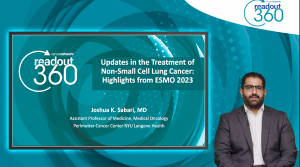
Stephen Liu, MD; and Joshua Sabari, MD, discuss the most intriguing non–small cell lung cancer and small cell lung cancer breakthroughs from the meeting.
Explore the complexities of treating brain metastases in lung cancer patients, focusing on innovative systemic therapies and patient-centered approaches.
Healthcare professionals discuss the importance of individualized treatment plans for managing adverse events in patients undergoing cancer therapy.
Explore effective strategies for managing dermatologic adverse events in lung cancer patients, ensuring optimal care and patient comfort.
Panelists discuss key takeaways from the analysis of long-term results, noting that these findings may influence their recommendations for first-line regimens in EGFR-mutant metastatic non–-small cell lung cancer. They highlight how they engage patients in discussions about treatment options, considering efficacy and safety, while addressing remaining unmet needs in this therapeutic area.
Panelists discuss the National Comprehensive Cancer Network (NCCN) guidelines for first-line treatment of EGFR-mutant metastatic non–small cell lung cancer (NSCLC), emphasizing the recommended therapies and best practices for patient management.
Panelists discuss how they implement prophylactic strategies for treatment-related adverse events in the MARIPOSA study and how they counsel patients about managing these effects.
Panelists discuss how the MARIPOSA study shows more patients in the amivantamab-lazertinib arm continued treatment compared to osimertinib, and many who progressed initiated subsequent therapy, primarily with carboplatin-pemetrexed.
Panelists discuss insights from the MARIPOSA study on first-line treatment options for EGFR-mutant metastatic non–small cell lung cancer (NSCLC), highlighting the efficacy of amivantamab-lazertinib over osimertinib, the importance of managing adverse events, adherence to National Comprehensive Cancer Network guidelines, and the need for patient engagement in treatment discussions to address unmet needs.

Following a spirited debate, Joshua K. Sabari, MD, presents the winning team with the coveted title of victors of this CancerNetwork® Face-Off event.
Experts on non–small cell lung cancer reflect on clinical trial data to weigh treatment options for patients with EGFR-mutated non–small cell lung cancer.
Jyoti D. Patel, MD, and Rajat Thawani, MBBS, tackle the question of whether neoadjuvant therapies will replace surgery plus adjuvant treatment for patients with resectable non–small cell lung cancer.
Robert B. Cameron, MD, PhD, offers insights on a patient with KRAS G12C non–small cell lung cancer.
Focusing on PD-L1-low NSCLC, Faith Abodunrin, MD, discusses the decision to rechallenge with immunotherapy.
Jyoti Patel, MD, presents the case of a patient with EGFR-mutated non–small cell lung cancer requiring treatment following osimertinib.
Initiating a conversation on patient cases, Divya Gupta, MD, presents the profile of a 76-year-old woman with ROS1+ metastatic non–small cell lung cancer.
November 17th 2023
October 15th 2024
October 22nd 2024
April 17th 2023