

Adding durvalumab to standard-of-care chemotherapy appears to improve downstaging in patients with resectable gastric cancer and gastroesophageal junction cancer in the phase 3 MATTERHORN study.
Adding durvalumab to standard-of-care chemotherapy appears to improve downstaging in patients with resectable gastric cancer and gastroesophageal junction cancer in the phase 3 MATTERHORN study.

Results from the phase 3 FLAMES trial show an improved progression-free survival benefit with senaparib monotherapy vs placebo across all pre-specified patient subgroups with newly diagnosed, advanced ovarian cancer.

Five-year data from the monarchE trial support adding adjuvant abemaciclib to endocrine therapy for patients with hormone receptor–positive, HER2-negative breast cancer.
Based on findings from the phase 3 CABASTY trial, a fixed 16 mg/m2 dose of cabazitaxel every 2 weeks vs 25 mg/m2 every 3 weeks reduced neutropenic complications in elderly patients with mCRPC.
Patients with locally advanced/metastatic non–clear cell renal cell carcinoma experienced promising preliminary antitumor activity following treatment with pembrolizumab and lenvatinib in the first line.

Results from the phase 3 KEYLYNK-010 study showed that treatment with pembrolizumab and olaparib did not result in a statistically significant improvement in survival despite yielding higher responses compared with novel hormonal agents in patients with previously treated prostate cancer.

The 24-month follow-up of the phase 1/2 CheckMate 358 trial found nivolumab with or without ipilimumab yielded clinically meaningful, long-lasting responses in patients with recurrent or metastatic cervical cancer.

Results from a post-hoc subgroup analysis of the phase 3 TROPiCS-02 study indicated that sacituzumab govitecan improved efficacy outcomes vs physician’s choice of treatment in HER2-low and HER2 immunohistochemistry 0, hormone receptor–positive metastatic breast cancer.

PARP inhibitors like rucaparib should be considered to treat all kinds of patients, including those who have deleterious mutations and HRD, according to Amit Oza, MD, MBBS, FRCPC.
PARP inhibitors such as rucaparib appear to garner the most benefit in the early maintenance setting in patients with ovarian cancer who have less advanced disease and less heterogeneity, according to Amit Oza, MD, MBBS, FRCPC.
Abiraterone and olaparib continued to demonstrate a positive trend in overall survival (OS) in patients with metastatic castration-resistant prostate cancer, according to Fred Saad, MD, FRCS, though he stated that longer follow-up is needed to confirm the benefit.

Based on findings from a real-world retrospective analysis, Stacey A. Cohen, MD, discussed the prognostic value of post-surgical minimal residual disease detection in patients with stage I to III colorectal cancer.

Findings from a phase 2 clinical study indicated that neoadjuvant pegylated liposomal doxorubicin plus cyclophosphamide, trastuzumab, and pertuzumab demonstrated promising efficacy and safety in the treatment of HER2-positive breast cancer.

Final data from the phase 2 ATLEP trial showed high response rates with a combination of lenvatinib and pembrolizumab in patients with anaplastic and poorly differentiated thyroid cancer.
Findings from the phase 2 KEYNOTE-B61 trial demonstrated promising efficacy with a combination of pembrolizumab and lenvatinib in the frontline treatment of non–clear cell renal cell carcinoma.

Data from the phase 1 METEOR-1 trial showed modest efficacy with GSK3326595, a PRMT5 inhibitor, in patients with advanced solid tumors.
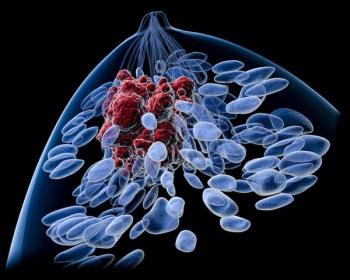
A pooled exploratory analysis of phase 3 trials found statistically significant progression-free survival and overall survival benefits with ribociclib/endocrine therapy for patients with hormone receptor–positive, HER2-negative breast cancer and visceral metastases.

Findings from the phase 1b/2 KRYSTAL-1 trial showed encouraging responses with adagrasib in patients with advanced KRAS G12C-mutant colorectal cancer.

Treatment with fam-trastuzumab deruxtecan-nxki yielded promising patient-reported outcomes in patients with hormone receptor–positive, HER2-low metastatic breast cancer, according to Naoto Ueno, MD, PhD.
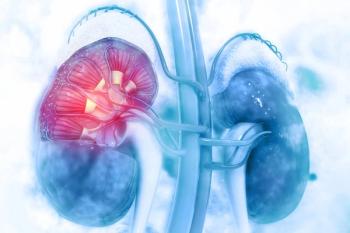
Data from the phase 2 LITESPARK-003 trial demonstrated antitumor activity and a well-tolerated safety profile with belzutifan plus cabozantinib in patients with clear cell renal cell carcinoma.

Health-related quality of life data from the phase 2 KEYNOTE-522 trial did not show ill effects of pembrolizumab vs placebo in patients with triple-negative breast cancer.
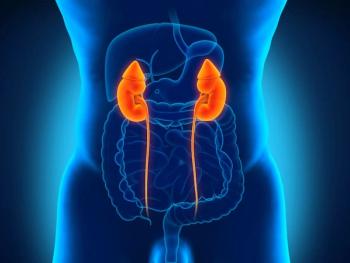
Results from the LITESPARK-003 trial showed continued antitumor activity after 2 years with belzutifan plus cabozantinib.

Findings from the phase 3 PRESTO trial indicated that patients with high-risk biochemically recurrent prostate cancer may derive benefit from treatment with androgen deprivation therapy intensification and apalutamide.

Circulating tumor DNA levels could be a potential prognostic tool for predicting outcomes in diffuse large B-cell lymphoma.

Patients with mismatch repair deficient (dMMR) colon cancer experienced a high rate of major pathologic complete response following treatment with nivolumab and ipilimumab for 4 weeks.
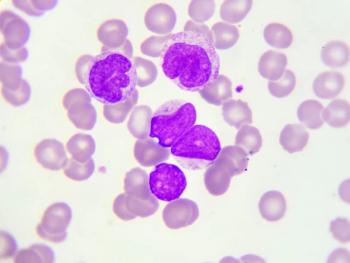
In patients with non-germinal center B cell–like diffuse large B-cell lymphoma, the combination of orelabrutinib plus R-CHOP revealed an overall response rate of 86.4%.
Findings from Cohort K of the EV-103 trial demonstrated a 64.5% overall response rate with enfortumab vedotin plus pembrolizumab in metastatic urothelial cancer.

Findings from the phase 2 BIONIKK trial demonstrated an association between treatment efficacy and increased in situ and immune expression.

First results from the RADICALS-HD trial demonstrated improved metastasis-free survival with 2 years of androgen-deprivation therapy (ADT) plus radiotherapy in men with prostate cancer.

Patients with high-risk resectable melanoma experienced the highest event-free survival benefit when pembrolizumab was administered in the neoadjuvant settings vs the adjuvant setting