CAR-T vs Bispecific Antibodies in Second Line and Earlier-Relapse Relapsed/Refractory Multiple Myeloma
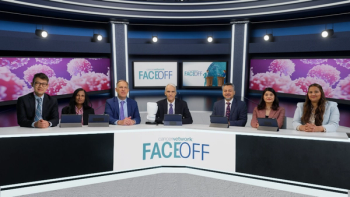
EP. 1: Relapsed/Refractory Multiple Myeloma: Setting the Stage for BCMA-Directed Treatment Strategies
ByThomas G. Martin, MD,Saad Z. Usmani, MD, MBA, FACP,Surbhi Sidana, MD,Peter Voorhees, MD,Hans Lee, MD,Gurbakhash Kaur, MD,Amrita Y. Krishnan, MD Dr. Thomas Martin opens this Cancer Network FACE-OFF program by introducing a debate-style discussion focused on one of the most rapidly evolving areas in relapsed/refractory multiple myeloma: treatment selection between BCMA-directed CAR T-cell therapy and bispecific antibody-based approaches in second-line and earlier-relapse disease. He outlines the unique format of the program, which combines clinical data review, expert debate, and case-based discussion to explore real-world treatment decision-making. Dr. Martin introduces Team Myeloma Mavericks, led by Dr. Saad Usmani and featuring Dr. Surbhi Sidana and Dr. Gurbakhash Kaur, and Team Myeloma Masters, led by Dr. Peter Voorhees with Dr. Amrita Krishnan and Dr. Hans Lee. The segment concludes with an overview of the pivotal studies that will frame the discussion, including CARTITUDE-4, MajesTEC-3, and MajesTEC-9, highlighting how emerging efficacy, durability, safety, and sequencing data are reshaping treatment strategies for patients with relapsed/refractory multiple myeloma.
EP. 2: Relapsed/Refractory Multiple Myeloma: CARTITUDE-4 and the Evolving Role of BCMA CAR T-Cell Therapy
ByThomas G. Martin, MD,Saad Z. Usmani, MD, MBA, FACP,Surbhi Sidana, MD,Peter Voorhees, MD,Hans Lee, MD,Gurbakhash Kaur, MD,Amrita Y. Krishnan, MD Dr. Saad Usmani reviews key findings from the phase 3 CARTITUDE-4 trial and discusses the growing role of ciltacabtagene autoleucel (cilta-cel) in patients with second-line and earlier-relapse relapsed/refractory multiple myeloma. The discussion highlights the study population, including patients with lenalidomide-refractory disease and high-risk clinical features, as well as the significant progression-free survival benefit observed with BCMA-directed CAR T-cell therapy compared with standard triplet regimens. Dr. Usmani and the panel examine the depth and durability of response, including high rates of complete response and sustained MRD negativity, and discuss the concept of treatment-free remission as a unique advantage of CAR T-cell therapy. Faculty also explore practical considerations such as patient selection, manufacturing timelines, bridging therapy, disease burden control, and quality-of-life outcomes. The conversation further addresses important safety considerations, including cytokine release syndrome, neurotoxicity, Parkinsonism-like events, immune effector cell-associated enterocolitis, access challenges, and the logistical barriers associated with delivering CAR T-cell therapy in real-world multiple myeloma practice.
EP. 3: Relapsed/Refractory Multiple Myeloma: MajesTEC-3 and the Bispecific Antibody Approach in Earlier-Relapse Disease
ByThomas G. Martin, MD,Saad Z. Usmani, MD, MBA, FACP,Surbhi Sidana, MD,Peter Voorhees, MD,Hans Lee, MD,Gurbakhash Kaur, MD,Amrita Y. Krishnan, MD Segment opens with the closing moments of the CAR T-cell therapy quality-of-life argument before Dr. Thomas Martin transitions to the second abstract review.
EP. 4: Relapsed/Refractory Multiple Myeloma: Real-World Treatment Patterns, Attrition, and the Case for Earlier BCMA-Directed Therapy
ByThomas G. Martin, MD,Saad Z. Usmani, MD, MBA, FACP,Surbhi Sidana, MD,Peter Voorhees, MD,Hans Lee, MD,Gurbakhash Kaur, MD,Amrita Y. Krishnan, MD Dr. Thomas Martin transitions the panel to the third abstract review, and Team Myeloma Masters presents real-world treatment patterns and outcomes in lenalidomide-refractory relapsed/refractory multiple myeloma drawn from the Flatiron registry.
EP. 5: Relapsed/Refractory Multiple Myeloma: MajesTEC-9 and Teclistamab Monotherapy in Lenalidomide and Anti-CD38 Double-Refractory Disease
ByThomas G. Martin, MD,Saad Z. Usmani, MD, MBA, FACP,Surbhi Sidana, MD,Peter Voorhees, MD,Hans Lee, MD,Gurbakhash Kaur, MD,Amrita Y. Krishnan, MD Dr. Thomas Martin introduces the fourth abstract review, and Team Myeloma Masters presents MajesTEC-9, the phase 3 study of teclistamab monotherapy versus investigator's choice of standard, non-CD38-containing regimens in patients who are both lenalidomide- and anti-CD38-refractory after prior lines of therapy.
EP. 6: Relapsed/Refractory Multiple Myeloma: CARTITUDE-4 Long-Term Outcomes and Treatment-Free Remission With Cilta-cel
ByThomas G. Martin, MD,Saad Z. Usmani, MD, MBA, FACP,Surbhi Sidana, MD,Peter Voorhees, MD,Hans Lee, MD,Gurbakhash Kaur, MD,Amrita Y. Krishnan, MD Team Myeloma Mavericks presents the fifth abstract review, the updated long-term analysis of CARTITUDE-4 evaluating ciltacabtagene autoleucel against standard triplet therapy in earlier-relapse disease, framed by the durable remissions and cure signal seen in longer-term CARTITUDE-1 follow-up.
EP. 7: Relapsed/Refractory Multiple Myeloma: Safety and Real-World Management of BCMA-Directed Therapies
ByThomas G. Martin, MD,Saad Z. Usmani, MD, MBA, FACP,Surbhi Sidana, MD,Peter Voorhees, MD,Hans Lee, MD,Gurbakhash Kaur, MD,Amrita Y. Krishnan, MD Team Myeloma Mavericks presents the sixth abstract review, a real-world and safety-focused discussion of BCMA-directed therapies in earlier-relapse disease, closing out the data-and-landscape section.
EP. 8: Relapsed/Refractory Multiple Myeloma: Debate — Treatment Selection Between CAR T-Cell and Bispecific Approaches in Second-Line Disease
ByThomas G. Martin, MD,Saad Z. Usmani, MD, MBA, FACP,Surbhi Sidana, MD,Peter Voorhees, MD,Hans Lee, MD,Gurbakhash Kaur, MD,Amrita Y. Krishnan, MD Dr. Thomas Martin opens the second section, the face-off debate, and introduces the first debate question on how clinicians should approach treatment selection between CAR T-cell therapy and bispecific antibody-based approaches in second-line disease.
EP. 9: Relapsed/Refractory Multiple Myeloma: Debate — Contextualizing Safety and Sequencing BCMA-Directed Therapies
ByThomas G. Martin, MD,Saad Z. Usmani, MD, MBA, FACP,Surbhi Sidana, MD,Peter Voorhees, MD,Hans Lee, MD,Gurbakhash Kaur, MD,Amrita Y. Krishnan, MD The face-off debate continues with the second and third questions, moderated by Dr. Thomas Martin.
EP. 10: Relapsed/Refractory Multiple Myeloma: Case-Based Discussion — Rapidly Progressive Earlier-Relapse Disease
ByThomas G. Martin, MD,Saad Z. Usmani, MD, MBA, FACP,Surbhi Sidana, MD,Peter Voorhees, MD,Hans Lee, MD,Gurbakhash Kaur, MD,Amrita Y. Krishnan, MD Dr. Thomas Martin introduces the third section, a rapid case-based discussion applying the program's themes to real-world scenarios, and presents the first case: a fit, transplant-exposed patient progressing on lenalidomide maintenance with rapidly progressive, symptomatic, high-risk disease requiring prompt intervention.
EP. 11: Relapsed/Refractory Multiple Myeloma: Case-Based Discussion — The Fit, Immunotherapy-Eligible Patient in Second Line
ByThomas G. Martin, MD,Saad Z. Usmani, MD, MBA, FACP,Surbhi Sidana, MD,Peter Voorhees, MD,Hans Lee, MD,Gurbakhash Kaur, MD,Amrita Y. Krishnan, MD Dr. Thomas Martin presents the second case: a younger, fit, lenalidomide-refractory patient with biochemical and radiologic progression after frontline therapy who is relatively asymptomatic with controlled disease burden and is an appropriate candidate for either CAR T-cell or bispecific therapy, with no urgency to treat.
EP. 12: Relapsed/Refractory Multiple Myeloma: Case-Based Discussion — The Comorbid, Higher-Risk Patient, and Program Conclusions
ByThomas G. Martin, MD,Saad Z. Usmani, MD, MBA, FACP,Surbhi Sidana, MD,Peter Voorhees, MD,Hans Lee, MD,Gurbakhash Kaur, MD,Amrita Y. Krishnan, MD Dr. Thomas Martin presents the final and most challenging case: an older patient being evaluated for BCMA-directed therapy after progression on prior anti-CD38 therapy, with baseline neuropathy, mild gait instability, recurrent infections, and significant caregiver concern about neurologic toxicity, infection, and logistics.
