Those with breast cancer who have undergone implant-based reconstruction following mastectomy have similar outcomes with hypofractionated vs conventionally fractionated radiotherapy.

Your AI-Trained Oncology Knowledge Connection!


Those with breast cancer who have undergone implant-based reconstruction following mastectomy have similar outcomes with hypofractionated vs conventionally fractionated radiotherapy.

Clinicians should not dismiss the concerns of younger patients who suspect they may have breast cancer, especially amid an increase in early-onset disease according to Monique Gary, DO, MSc, FACS.

Faculty highlight recent changes in treatment guidelines surrounding the use of PI3K inhibitors in follicular lymphoma and discuss the evolving role of these agents in the treatment landscape.

Hematologist/oncologists describe the rationale for treatment approaches targeting EZH2 and discuss recent guideline updates surrounding the role of tazemetostat and EZH2 testing in patients with follicular lymphoma.

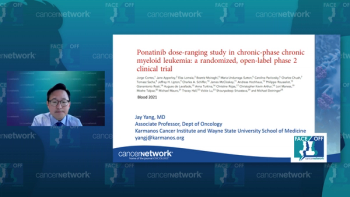
Jay Yang, MD, reviews data from the OPTIC trial, a ponatinib dose-ranging study in chronic-phase chronic myeloid leukemia.

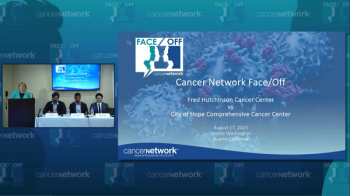
A panel of experts on chronic myeloid leukemia from Karmanos Cancer Institute and Cleveland Clinic introduce themselves and prepare for a team-vs-team debate surrounding recent data in the disease space.

Christina Wu, MB, BCh, MD, closes the program by expressing the necessity of enrolling patients with BRAF-mutant metastatic colorectal cancer in clinical trials, highlighting a second-line study led by the Southwest Oncology Group, new BRAF inhibitors, early phase studies at the Mayo Clinic, and an exciting study in the adjuvant setting.

Experts discuss that although first-generation BTK inhibitors such as ibrutinib were groundbreaking for CLL treatment, the field is now shifting toward second-generation options because of their better toxicity profiles. However, the choice between second-generation inhibitors should be personalized, considering individual patient profiles and adverse effects.

Andrew Kin, MD, reviews data on the addition of ixazomib to pomalidomide and dexamethasone in patients with multiple myeloma who progressed on lenalidomide in the first line.

Christina Wu, MB, BCh, MD, shares data from the phase 3 BREAKWATER trial, which assesses first-line targeted treatment strategies for patients with BRAF V600E-mutant metastatic colorectal cancer.

Experts highlight that second-generation BTK inhibitors offer improved toxicity profiles, lower cardiovascular risks, and are well tolerated for long-term CLL treatment.

A panel of experts on multiple myeloma from Karmanos Cancer Institute and Cleveland Clinic introduce themselves and prepare for a team-vs-team debate surrounding recent data in multiple myeloma.

Accommodating supportive therapies such as fertility and hair follicle preservation may help increase trial recruitment among younger patients with breast cancer, according to Monique Gary, DO, MSc, FACS.

Sara M. Tolaney, MD, MPH, reviews key clinical trial data recently updated in the metastatic HER2+ breast cancer treatment space.

A medical oncologist offers clinical insights on the evolving treatment landscape for patients with HER2+ breast cancer.

Shared insights on the patient profile of a 75-year-old woman with multiple myeloma with confirmed lytic disease.

The expert panel presents the patient case of a 70-year-old man with multiple myeloma and discusses treatment decisions.

Panelists review the CARTITUDE-4 study results highlighting the efficacy of cilta-cel in lenalidomide-refractory multiple myeloma, addressing implementation challenges and patient preferences in varying relapse scenarios.

Rates of obesity appear to correlate with increasing incidence of cancer in young populations, according to Monique Gary, DO, MSc, FACS.

Kristen Neumann, DNP, FNP-C, and Misako Nagasaka, MD, PhD, discuss the importance of patient education on diarrhea as a side effect of EGFR-mutated non-small cell lung cancer treatment, emphasizing dietary considerations and the use of over-the-counter remedies.

Misako Nagasaka, MD, PhD, and Kristen Neumann, DNP, FNP-C, a family nurse practitioner with 30 years of experience in oncology, discuss EGFR-mutated non-small cell lung cancer, the available treatment options, and common side effects such as rash, emphasizing patient education and proactive management for side effects.

While the majority of patients with breast cancer are women, men need to be considered when designing clinical trials.

Data from a study highlight that the breast cancer makes up the highest number of early-onset disease cases compared with other cancer types from 2010 to 2019, although overall cancer morality appears to have decreased.

Experts review data updates from the AUGMENT trial and discuss potential clinical implications of these study findings.

An overview of available treatment options for relapsed or refractory follicular lymphoma and with considerations for treatment selection and expert insight on preferred treatment approaches in the second-line setting.

Paolo Tarantino, MD, discusses how drug prices within the United States are affecting the treatment of breast cancer.

In this September edition of Snap Recap, we share our highlights from Prostate Cancer Awareness Month, news in the breast cancer space, and the latest FDA updates.

SEQUOIA trial data show significant benefits in progression-free survival for patients with chronic lymphocytic leukemia treated with single-agent zanubrutinib, even without a high-risk 17P mutation; Pooja Advani, MD, MBBS, notes that second-generation BTK inhibitors show lower rates of atrial fibrillation and flutter compared with first-generation ones, suggesting increased cardiac safety.

Daniel Ahn, DO, describes the BEACON study, a randomized phase 3 trial in metastatic colorectal cancer that led to the FDA approval of a doublet regimen.

Ricardo D. Parrondo, MD, discusses monotherapy and combination BTKi therapy options for chronic lymphocytic leukemia, noting that the decision depends on patient preferences and disease risk.