
Commentary|Videos|April 29, 2026
Advancing Precision Medicine for Translocation Renal Cell Carcinoma
Author(s)Shikha Gupta, PhD
Fact checked by: Justin Mancini
Shikha Gupta, PhD, discussed the mechanistic rationale for combining palbociclib and RMC-5552 in translocation renal cell carcinoma (tRCC).
Advertisement
Translocation renal cell carcinoma (tRCC) represents a formidable clinical challenge, defined by its rarity and the absence of a consensus standard of care. Driven by specific gene fusions, this aggressive kidney cancer subtype often necessitates the exploration of novel molecular targets to improve patient outcomes. At the
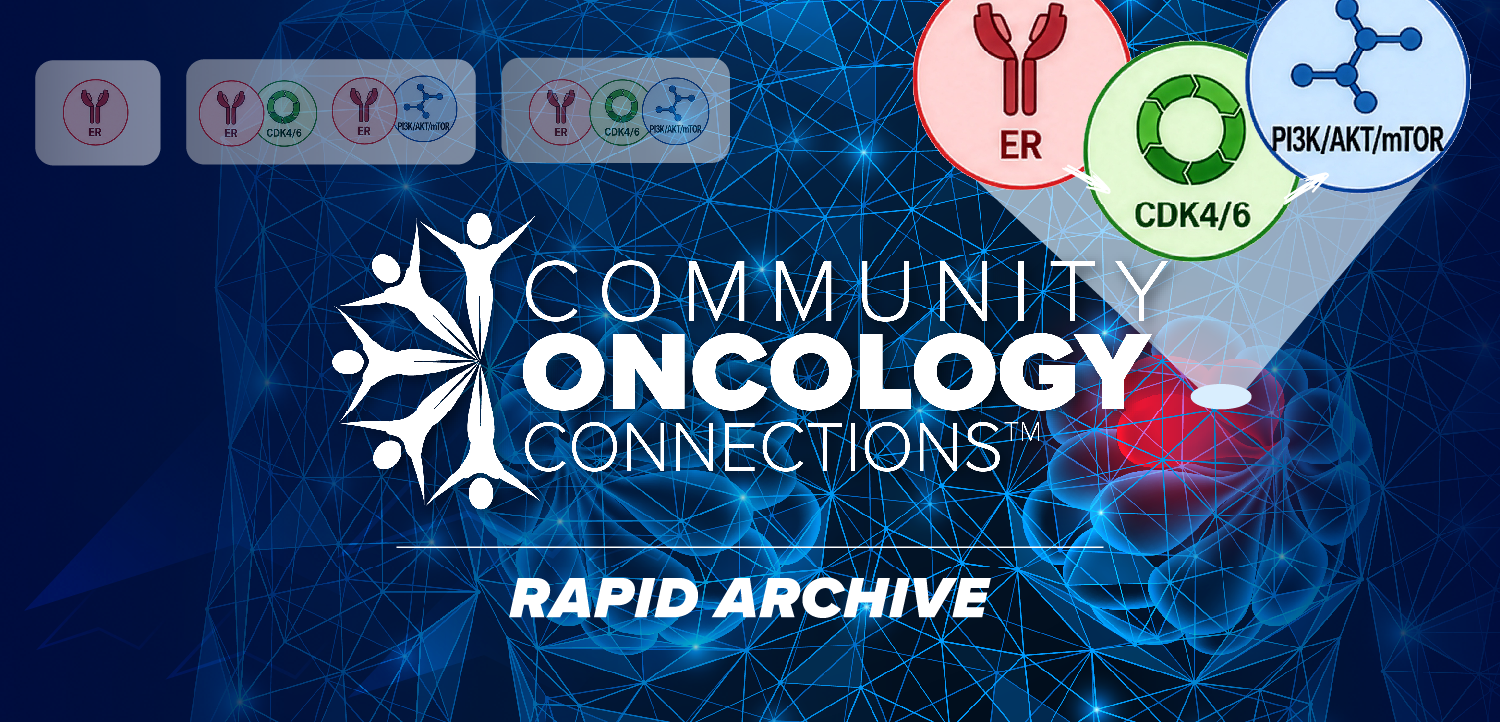
Gupta’s research highlighted a distinct coactivation of the CDK4/6 and mTORC1 signaling pathways in tRCC. Her team investigated a synergistic combination strategy utilizing the CDK4/6 inhibitor palbociclib (Ibrance) and the selective mTORC1 inhibitor RMC-5552. This dual-inhibition approach demonstrated significant suppression of cell viability and stable tumor regression in models. Mechanistically, the research clarifies how mTORC1 inhibition downregulates CD1 via the 4EBP1 effector, thereby sensitizing cells to CDK4/6 blockade.
In this discussion, Gupta, a postdoctoral research fellow at Dana-Farber Cancer Institute, detailed the functional impact of this novel pairing and the ongoing search for noncanonical pathways that could provide even more durable responses. These insights lay a critical foundation for designing biology-driven clinical trials to address the unique complexities of translocation kidney cancer.
Transcript:
CancerNetwork: Are you able to provide a brief background and overview of your presentation from the conference?
Gupta: Through this work, we studied the biology of translocation kidney cancer, which some in the community may know is a rare subtype of kidney cancer that currently lacks a standard of care. In this work, we showed that there is a unique activation of both CDK4/6 and mTORC1 signaling in tRCC. We investigated the functional and mechanistic impact of individually targeting these pathways and developed a novel combination strategy where we proposed using the CDK4/6 inhibitor palbociclib [Ibrance] in combination with the selective mTORC1 inhibitor RMC-5552. We see that this combination leads to a stable tumor regression in our models, and we believe these findings could inform the design of future clinical trials specifically tailored for tRCC biology.
The abstract noted that the combination resulted in a synergistic suppression of cell viability. Mechanistically, does the mTORC1 inhibitor primarily work by downregulating cyclin D1 to sensitize the cells to CDK4/6 inhibition, or are there additional noncanonical pathways being hit that prevent the rapid cell regrowth observed with palbociclib monotherapy?
mTORC1 signaling activates cyclin D1, which is well-known in literature, via its downstream effector 4EBP1 by phosphorylating it. Inhibition of mTORC1 reduces cyclin D1 activity, as we showed in this study, which makes this combination more effective. With that said, we also believe that there are additional noncanonical mechanisms that may contribute to the enhanced and more durable response, and those are currently under investigation.
Reference
Gupta S, Khanna P, Saad E, et al. Synergistic preclinical activity of dual CDK4/6 and mTORC1 inhibition in translocation renal cell carcinoma. Abstract presented at: American Association for Cancer Research Annual Meeting 2026; April 17-22, 2026; San Diego, CA. Abstract 3160.
Advertisement
Related Content
Advertisement


Latest CME
















































Advertisement
Advertisement
Trending on CancerNetwork
1
FDA Approves Topical Gel for Superficial Basal Cell Carcinoma
2
FDA Approves TLX101-Px for PET Imaging in Patients With Glioma
3
Debating CAR T-Cell Therapy Vs Bispecifics at First Relapse in Myeloma
4
FDA Extends Review of Zanzalintinib Combo in Pretreated Metastatic CRC
5