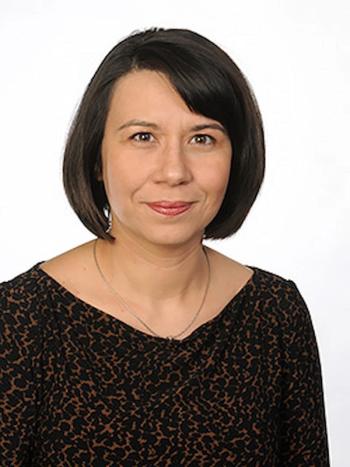
“Those of us who work with NK cells have no doubt that they are incredibly powerful at killing cancer cells,” said Veronika Bachanova, MD, PhD.
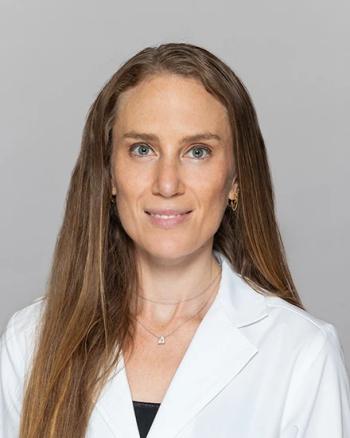
The world of cellular therapy is “still ever-expanding” as novel constructs continue to emerge, according to Megan Melody, MD.
CancerNetwork® spoke with Megan Melody, MD, MS, a malignant hematologist specializing in lymphoma and cellular therapy and clinical director of Cellular Therapy at Tampa General Hospital, about takeaways from the 2026 National ICE-T Conference in Orlando, Florida, held in July 2026. The meeting brought together multidisciplinary experts across the lymphoma, myeloma, and leukemia fields to discuss CAR T-cell therapy and bispecific antibodies.
According to Melody, one of the directors of the conference, emergent themes across presentations included bringing these novel treatments to community practice, toxicity recognition and management, and open questions around sequencing T-cell–redirecting therapies. With many investigational constructs continuing to appear, Melody noted that the world of cellular therapy is “still ever-expanding.”
Melody: I think the common thread running across this year’s ICE-T Orlando meeting was bringing CAR T-cell therapy to the community and how we best do that. CAR T-cell therapy has been available in the academic setting since about 2017 as a commercially approved therapy, but we have seen more of a push to bring both bispecific antibodies and CAR T-cell therapy to the community. Right now, only a portion of patients eligible to receive these therapies are actually receiving them in the community. The meeting focused on some foundational knowledge of CAR T-cell therapy, where the field is going, and how we might best bridge these barriers to access.
In terms of toxicity management, things like neurotoxicity, cytokine release syndrome [CRS], or immune effector cell-associated neurotoxicity syndrome [ICANS] are still some pretty scary terms we use when talking about CAR T-cell therapy. But I think most of the clinicians [at the meeting] feel quite comfortable managing these toxicities in the acute setting, and it is important to note that the most recent studies evaluating CAR T-cell therapies, at least for the treatment of lymphoma, have shown that these acute toxicities are not fatal, which really demonstrates how well they are now managed in the acute care setting.
Something that was talked about a lot in our last few sessions was delayed-onset neurotoxicity seen with these anti-BCMA CAR T-cell products and some novel toxicities we are seeing as we develop new CAR T-cell constructs that we will need to continue working on recognizing as patients return to the community, along with the proper management of these in the post–CAR T-cell setting. For example, Parkinsonism in the post–CAR T-cell setting is not managed with the typical carbidopa and levodopa [Sinemet] that is used to manage Parkinsonism outside the setting of CAR T-cell therapy. Recognizing that is a bit lagging.
Another hot topic is these barriers to CAR T, and how we bring CAR T-cell therapy—and I would say more urgently and more currently, bispecific antibodies—into the community. [It is about] how we do this safely and efficaciously, and how we educate community physicians and emergency room physicians about how to recognize and manage these toxicities, or at least when to call the local oncologist.
Most of the real-world data actually show—and I find this interesting—that the majority of patients enrolled in these real-world retrospective studies would not have been eligible for the clinical trials. Patrick C. Johnson, MD, of Massachusetts General Hospital, presented some data today on real-world evidence in CAR T-cell therapy, and showed that in one study, over two-thirds of patients would not have been eligible for the clinical trial that was foundational for that treatment.1 In another, about 50% of patients would not have been eligible.
I do not think there is something that needs to be done to bridge that gap. I think that is the important thing about real-world evidence: ultimately, when we are doing clinical trials, we need to make sure there are no confounding variables and that patients are as healthy and as fit as possible, so we can clearly demonstrate the efficacy or toxicity of a therapy. Sometimes, I think we are a little more rigorous than we need to be.
We want to make sure clinical trials reflect our real-world population, so making sure we are lenient where we can be without compromising the scientific data is important. But this is why real-world evidence is never going to truly go away: it lets us see how a medication functions in the real-world setting with the real patients in front of us. It is great that there is a difference between the clinical trial data and the real-world evidence, including this more robust population; it really demonstrates how we can use these therapies in a broader patient population.
In both the multiple myeloma space and the lymphoma space, we are seeing a lot of bispecific antibodies, or T-cell-engaging therapies. Some target the same targets as CAR T-cell therapy, in the case of anti-BCMA bispecific antibodies and anti-BCMA CAR T-cell therapy, and some are simply T-cell-engaging therapies. There have been studies showing that sequencing anti-BCMA therapy before CAR T-cell therapy does impact the efficacy of CAR T-cell therapy. There are also suggestions and some real-world evidence presented at last year’s American Society of Hematology [ASH] meeting from the ABC consortium that patients treated with CAR T-cell therapy before bispecific antibodies had a better response to CAR T-cell therapy.2
Regardless, we need to put our best foot forward in frontline therapy, and there are some novel clinical trials emerging that use bispecific antibodies in combination with chemoimmunotherapy in the frontline setting. Bispecific antibodies are going to end up being given prior to CAR T-cell therapy in a select patient population if the data read out correctly. Knowing exactly how to sequence these therapies, what the optimal treatment gap is before apheresis, and the optimal way to sequence bispecific antibodies before CAR T-cell therapy—or vice versa—[may] improve patient outcomes. It is going to be years before we have that data because we are going to need to see it play out in the real-world setting.
I am looking forward to seeing some of these clinical trials read out that use novel combinations of bispecific antibodies and chemoimmunotherapy, or antibody-drug conjugates, in earlier lines of therapy. In particular, I am looking forward to seeing data on glofitamab-gxbm [Columvi] combined with chemoimmunotherapy, as well as the combination of epcoritamab (Epkinly] and polatuzumab vedotin [Polivy]–based chemoimmunotherapy [Pola-R-CHP], being studied in the frontline setting in the EPCORE NHL-5 trial [NCT05283720].3
As we see these bispecific antibodies move into earlier and earlier lines of therapy, it will raise the question of how we sequence subsequent therapies. It will also hopefully lead to a much smaller population for whom we need to make that consideration as we create deeper and more durable remissions in the frontline setting for these patients.
I think the world of cell therapy is still ever-expanding. We are seeing a lot of novel constructs emerge in terms of dual-targeting CARs—also called bispecific CARs—and in vivo CAR T-cell therapy, [which] seems to be a really promising area. We had some great data, although still a small subset, presented at the
I hope the meeting met everyone at the level they were. We had true multidisciplinary attendance and true multidisciplinary presenters, so I hope everyone was able to take away something. I remember, as a medical student, attending some rather large academic conferences and getting frustrated that I could not understand some of the higher-level material being presented, but I have also sometimes gone to conferences that only presented basic material and felt a little bored.
I hope there was a variety of data presented here that both engaged and challenged every learner, at every level of training, and everyone who interfaces with our patients undergoing cellular therapy. I hope everyone took away at least 1 or 2 nuggets of new information, or 1 or 2 questions or changes, in how they are going to interact and engage with patients.