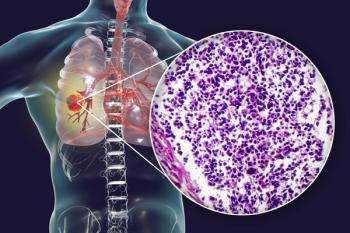
Initial data from the ROSETTA Lung-107 trial support further study of pumitamig in metastatic NSCLC previously managed with an immunotherapy-based regimen.
In KEYNOTE-412, early ctDNA clearance was linked with better survival with pembrolizumab plus chemoradiotherapy in HPV-negative head and neck cancer.
In patients with HPV-negative locally advanced head and neck squamous cell carcinoma (HNSCC), clearing circulating tumor DNA (ctDNA) early in treatment was associated with improved event-free survival (EFS) and overall survival (OS) with pembrolizumab (Keytruda) plus concurrent chemoradiotherapy (CRT). The findings come from an exploratory analysis of the
Jean-Pascal Machiels, MD, PhD, head of Institut Roi Albert II Oncology & Hematology Cancer Center, head of Department of adult and pediatric Oncology and Hematology at the Cliniques universitaires Saint-Luc, UCLouvain, in Brussels, Belgium, and chairman of the European Organisation for Research and Treatment of Cancer (EORTC) Head and Neck Cancer Group, presented the results during a rapid oral session on at the
KEYNOTE-412 randomly assigned 804 patients with high-risk, unresected locally advanced HNSCC 1:1 to 2 arms. One arm received pembrolizumab 200 mg intravenously every 3 weeks for 3 doses plus CRT (6 or 7 weeks), followed by 14 doses of maintenance pembrolizumab. The other received placebo on the same schedule. Randomization was stratified by radiotherapy regimen (accelerated vs standard fractionation), tumor site and p16 status, and disease stage (III vs IV). EFS was the primary end point and OS was the key secondary end point.
The trial did not reach statistical significance in its PD-L1–unselected population. However, pembrolizumab plus CRT showed meaningful EFS benefit and potential OS benefit, with greater benefit in patients with higher PD-L1 expression and in the HPV-negative subgroup.2 About 26% to 27% of patients were HPV positive. As of the August 21, 2024, data cutoff, the median follow-up was 74.4 months (range, 63.7-88.1).
Investigators analyzed ctDNA at baseline (cycle 1, day 1) and early on treatment (cycle 3, day 1, after 6 weeks of pembrolizumab or placebo and 5 weeks of CRT). They used a tumor whole-exome sequencing–informed 16-plex Signatera assay, which quantifies ctDNA as maximum somatic allele frequency (MSAF). The ctDNA-evaluable populations were balanced across arms. At baseline, 287 patients in the pembrolizumab arm (30.0% HPV positive) and 284 in the placebo arm (28.2% HPV positive) could be evaluated. At both time points, 233 patients (29.6% HPV positive) and 240 patients (27.9% HPV positive) could be evaluated, respectively.
About 95% of patients had detectable ctDNA at baseline, regardless of HPV status. In HPV-negative disease, rates were 94.5% (n = 155/164) with pembrolizumab and 96.0% (n = 166/173) with placebo. In HPV-positive disease, they were 94.2% (n = 65/69) and 97.0% (n = 65/67), respectively. Baseline ctDNA levels correlated moderately with target tumor lesion size, with a correlation coefficient (ρ) of 0.494 in HPV-negative disease (n = 405) and 0.341 in HPV-positive disease (n = 166).
In the HPV-negative subgroup, baseline ctDNA was prognostic. In the placebo arm, patients with MSAF below the median had better 5-year EFS (48.1% vs 38.1%; P = .002) and OS (58.3% vs 49.5%; P = .01) than those at or above the median. In the pembrolizumab arm, baseline ctDNA was significantly prognostic for OS (70.5% vs 55.8%; P = .009) but not EFS (58.9% vs 51.2%; P = .086).
Pembrolizumab showed numerically better outcomes than placebo across baseline ctDNA levels, though none of these comparisons were statistically significant:
Baseline ctDNA was not prognostic in the HPV-positive subgroup in either arm. The P values were 0.368 for EFS and 0.337 for OS with pembrolizumab, and 0.166 for EFS and 0.695 for OS with placebo.
Among HPV-negative patients, ctDNA cleared by cycle 3 more often with pembrolizumab (76.8%; n = 119/155) than with placebo (66.3%; n = 110/166). In the pembrolizumab arm, clearance was associated with better outcomes than persistent ctDNA:
In the placebo arm, clearance was associated with better EFS (48.4% vs 35.5%; P = .011), but the OS difference was not significant (58.6% vs 48.2%; P = .075). The prognostic and predictive value of clearance in this subgroup was independent of ECOG performance status and of other markers, including tumor size, stage, PD-L1 combined positive score, T-cell–inflamed gene expression profile, and tumor mutational burden.
In HPV-positive disease, clearance rates were also higher with pembrolizumab (81.5%; n = 53/65) than with placebo (64.6%; n = 42/65). However, clearance was associated with improved outcomes only in the placebo arm:
All P values came from Cox models adjusted for baseline ECOG performance status and were tested against a prespecified nominal α of .05. The investigators concluded that early ctDNA clearance predicted long-term survival with pembrolizumab plus CRT in HPV-negative disease. They cautioned that the HPV-positive results should be interpreted carefully given the small sample size.
Machiels reported institutional funding and institutional advisory board roles with ALX Oncology, ANAVEON, Astellas, Bayer, Bristol Myers Squibb, Boehringer, Cue Biopharma, CureVac, eTheRNA, F-Star Therapeutics, Genmab, GSK, Incyte, Ipsen, iTeos, Merck Serono, MSD, Merus, Nektar, Novartis, Pfizer, Roche, and Seagen. He also reported institutional travel expenses from Amgen, Bristol Myers Squibb, Gilead, Janssen, MSD, Pfizer, and Sanofi. The study was funded by Merck Sharp & Dohme LLC, a subsidiary of Merck & Co., Inc. Medical writing and/or editorial assistance was provided by Obinna T. Ezeokoli, PhD, and Robert Steger, PhD, of ApotheCom, and funded by MSD.