

ASCENT-03 subgroup data show sacituzumab govitecan improved PFS vs chemotherapy across subgroups in untreated metastatic TNBC.
ASCENT-03 subgroup data show sacituzumab govitecan improved PFS vs chemotherapy across subgroups in untreated metastatic TNBC.
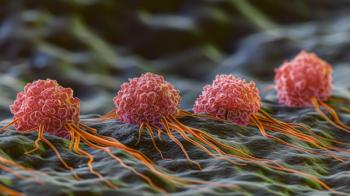
Bispecific antibodies targeting PD-L1 showed activity across first-, second-, and later-line advanced neuroendocrine carcinoma in 3 trials presented at ESMO 2026.
Zev A. Wainberg, MD, MSc, discussed why neither the first-line regimen nor the second-line chemotherapy comparator altered the benefit seen with daraxonrasib in RASolute 302.

Matthew Lee, MD, shares his key takeaway from the first disclosure of BG-C477 data in advanced NSCLC.

“What we are trying to do more often is to ablate as much as we can,” said Shankar Siva, MBBS, PhD, FRANZCR, on pairing SABR with systemic therapy in RCC.

KEYNOTE-B49 data show pembrolizumab plus chemotherapy improved PFS but not OS in PD-L1–positive HR+/HER2– advanced breast cancer.
Matthew Lee, MD, discusses how confident he is that CEACAM5 expression will hold up as a biomarker for BG-C477 in NSCLC.

Futibatinib, pemigatinib, and lirafugratinib showed similar response rates and progression-free survival at first FGFR inhibitor exposure in biliary tract cancers with FGFR alterations.

Frontline iza-bren plus pembrolizumab yielded a 57.9% ORR in recurrent or metastatic HNSCC at 2.5 mg/kg, the dose chosen for phase 3 study.

In the real-world CEMI-LUNG study, first-line cemiplimab produced survival and response outcomes consistent with the pivotal EMPOWER-Lung 1 trial.

Data from the phase 3 OptiTROP-Lung06 trial may support sacituzumab tirumotecan plus pembrolizumab as a new frontline option for this NSCLC population.
Catch up on 5 melanoma and skin cancer readouts from ESMO 2026, including NADINA, OptimUM-01, OptimUM-09, C-POST, and KEYNOTE-630.

ESMO 2026 posters showed durable EV-302 benefit in older and comorbid populations plus persistent early mortality in metastatic urothelial carcinoma.

A post hoc ReFocus analysis found prior immune checkpoint inhibitor exposure raised the risk of mucocutaneous AEs with lirafugratinib.

In STARBOARD, frontline encorafenib, binimetinib, and pembrolizumab improved ORR and PFS vs pembrolizumab alone in BRAF V600E/K-mutant melanoma.

Data from the real-world CEMI-LUNG evaluating cemiplimab in advanced NSCLC were consistent with reports from the EMPOWER-Lung1 study.
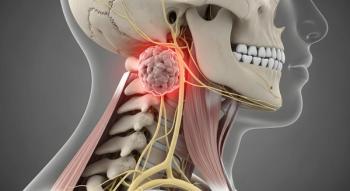
A cisplatin-free pembrolizumab regimen yielded 65.1% laryngectomy-free survival rate at 2 years in SMART-KEY, missing significance vs historical controls.

Risvutatug rezetecan cut the risk of progression or death by 67% vs gemcitabine/docetaxel in heavily pretreated R/R osteosarcoma in ARTEMIS-011.
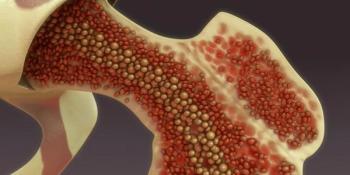
Two-year MANEUVER data show durable, deepening responses and sustained gains in pain, stiffness, and function with pimicotinib in TGCT.

Biomarker and preclinical data support SEZ6 as a potential therapeutic target in small cell lung cancer management.

Jesus Corral Jaime, MD, reviews real-world survival and response data for cemiplimab monotherapy from the CEMI-LUNG study.

First-line pembrolizumab monotherapy did not significantly improve overall survival vs carboplatin plus paclitaxel at the first analysis in dMMR advanced or recurrent endometrial cancer.

Findings from the phase 1 KANDLELIT-001 study support further investigation of calderasib plus pembrolizumab in KRAS G12C-mutated metastatic NSCLC.

Sacituzumab tirumotecan improved survival vs chemotherapy in patients with advanced or recurrent endometrial cancer after platinum and immunotherapy.

In KEYNOTE-412, early ctDNA clearance was linked with better survival with pembrolizumab plus chemoradiotherapy in HPV-negative head and neck cancer.

Initial data from the ROSETTA Lung-107 trial support further study of pumitamig in metastatic NSCLC previously managed with an immunotherapy-based regimen.

More than two-thirds of patients with mismatch repair–deficient locally advanced rectal cancer achieved a clinical complete response with dostarlimab alone.

In the TOP-1 trial, omitting RT and endocrine therapy after breast-conserving surgery yielded a 14.8% 5-year local recurrence risk in women aged 70 and older.

Data from the phase 3 HARMONi-GI1 trial support first-line ivonescimab plus chemotherapy as a new standard of care in advanced biliary tract cancer.

Based on data from the phase 3 SAFFRON trial, osimertinib plus savolitinib may establish a new global standard of care in this population with EGFR-mutated NSCLC.