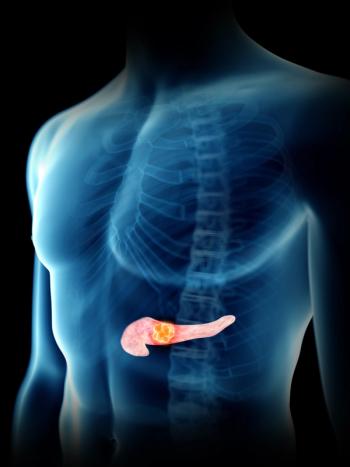
The oral KRAS G12D inhibitor VS-7375 produced responses in pancreatic, colorectal, and lung cancers in the phase 1/2 TARGET-D 101 trial.
Serial ctDNA assessment after 3 months of adjuvant chemotherapy stratified recurrence risk and identified which patients with resected CRC benefit from extended treatment.
Circulating tumor DNA (ctDNA) dynamics assessed after approximately 3 months of adjuvant chemotherapy (ACT) provided clinically meaningful stratification of recurrence risk and identified patient populations who benefit from extended treatment duration in resected stage I to IV colorectal cancer (CRC), according to a large retrospective analysis of the CIRCULATE-Japan GALAXY study (UMIN000039205) presented during an oral session at the
“We found that ctDNA dynamics after 3 months of ACT provide clinically meaningful stratification of recurrence risk by tracking molecular response to ACT,” said presenting author Eiji Oki, MD, PhD, of the Department of Advanced Medicine and Innovative Technology at Kyushu University Hospital in Fukuoka, Japan.
Across the 1028-patient analyzed population, those with a rising ctDNA pattern at the mid-ACT timepoint had worse outcomes, with an HR of 124.38 (95% CI, 67.99–227.55; P <.001) for disease-free survival (DFS) events, when compared with the sustained negative reference group; the median DFS was 1.1 months in the rising group. Those showing a decrease in ctDNA, but who remained detectable had a DFS HR of 13.15 (95% CI, 7.98–21.68; P <.001) and a median DFS of 5.3 months. Patients achieving ctDNA clearance carried an HR of 3.87 (95% CI, 2.79–5.37; P <.001). Both the clearance and sustained negative groups had a median DFS that was not reached. “As shown in the Kaplan-Meier curves, [DFS] was clearly separated across the 4 molecular response groups,” Oki noted. “This finding demonstrated that ctDNA dynamics after approximately 3 months of ACT provide clinically meaningful stratification of recurrence risk.”
Among patients with sustained ctDNA negativity, longer ACT conferred no DFS benefit, with an HR for long vs short ACT of 0.71 (95% CI, 0.46–1.09; P = .118) and median DFS not reached in either arm. “This suggests that patients with durable molecular negativity may already have adequate disease control after shorter duration therapy,” Oki said. Similarly, patients who achieved ctDNA clearance showed no benefit from prolonged treatment, with an HR of 1.06 (95% CI, 0.57–1.97; P = .0846) and median DFS not reached in either arm. “Molecular clearance may indicate sufficient rapid response even with shorter duration treatments,” he added.
Among patients with a decrease but detectable ctDNA pattern, those who received long ACT had a median DFS of 5.9 months compared with 1.7 months for short ACT (HR, 3.64; 95% CI, 1.33–9.97; P = .008). “Patients with partial molecular response may still derive benefit from long ACT beyond 2 months,” Oki stated, while noting that the subgroup was relatively small and findings “should be interpreted with caution.”
An exploratory analysis stratifying this group by mid-ACT ctDNA level found that those below the median threshold had a median DFS of 11.1 months vs 3.7 months in those at or above the median. “These findings suggest that, not only ctDNA dynamics themselves, but also the absolute residual ctDNA burden during treatment may further refine prognosis,” Oki said. “Importantly, this cutoff is data driven and therefore requires prospective validation.”
For patients with rising ctDNA, continuing the same chemotherapy regimen offered no meaningful benefit, with median DFS of 2.0 months with long ACT and 0.8 months with short ACT (HR, 1.78; 95% CI, 0.74–4.26; P = .211). “Continued use of the same chemotherapy regimen may have limited clinical value once molecular progression is observed,” Oki said.
The analysis drew from the CIRCULATE-Japan GALAXY study, a multicenter observational study conducted across 153 Japanese sites and the National Taiwan University Hospital. Of 4288 patients enrolled between May 2020 and March 2024, 1526 met inclusion criteria after exclusions for no ACT, absence of Signatera testing, receipt of neoadjuvant chemotherapy, or insufficient post-surgical ctDNA timing. The long ACT, defined as lasting at least 90 days (n = 651), and short ACT, defined as fewer than 90 days (n = 377), cohorts were defined by actual treatment duration.
The analyzed population had a median age of 66 years, median follow-up of 32 months (range, 4–56), was predominantly stage III (75%), and received mostly doublet ACT regimens (85%). ctDNA testing was performed at a pre-ACT baseline and again at 90 days (±45 days) from ACT initiation.
Limitations included the retrospective observational design, variability in ctDNA testing timing and ACT duration, and small subgroup sizes in some ctDNA dynamics categories. “We believe these findings would help refine ACT duration and support more personalized perioperative treatment strategies in colorectal cancer,” Oki concluded.
Oki E, Yamamoto H, Bando H, et al. Informing optimal duration of adjuvant chemotherapy (ACT) in resected stage I-IV colorectal cancer (CRC) based on early circulating tumor DNA (ctDNA) dynamics. J Clin Oncol. 2026;44(suppl 16):3501.