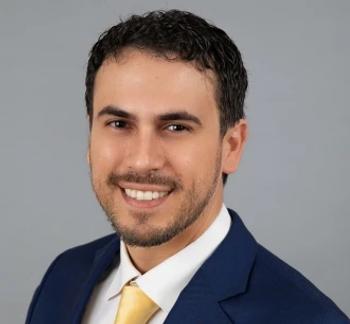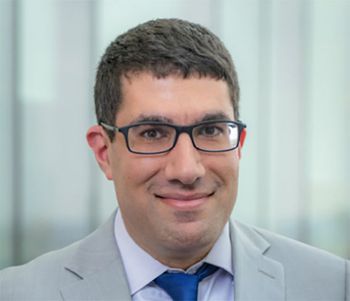
Ayal Aizer, MD, MHS, discussed Alliance A071801 trial data favoring fractionated SRS over single-fraction SRS after brain metastasis resection.
The next major problem to tackle for SRS in brain metastases management is how to handle necrosis rates, according to Ayal Aizer, MD, MHS.
At the 2026 Society for Neuro-Oncology/American Society of Clinical Oncology CNS Metastases Conference in Boston, Massachusetts, Ayal Aizer, MD, MHS, presented to his colleagues on how stereotactic treatments for brain metastases have shifted in recent years. Aizer, the division lead of central nervous system (CNS) radiation oncology at Brigham and Women’s Hospital and Dana-Farber Cancer Institute, spoke with CancerNetwork® at the conference about this presentation. The conversation touched on expanding treatment indications, the role of advancing technology, and the end points used to evaluate outcomes for patients.
Aizer: The biggest change we’ve seen in the stereotactic management of brain metastases over the past 2 to 3 years has been an expansion in the indications for its use. Previously, we had randomized trials that permitted patients with up to 4 brain metastases to enroll, and those trials generally randomly assigned patients to stereotactic radiosurgery [SRS] or whole-brain radiation. Then, in the past year, we’ve had a trial tell us SRS is a better treatment for up to 20 brain tumors, which is a pretty big jump forward. About a year ago, there was another trial showing that in small cell lung cancer, SRS can be used for brain metastases. Previously, that specific primary tumor type was excluded from all prior SRS trials for a number of reasons, but this trial demonstrated that it’s a safe, viable, and effective treatment. There are more patients who can get SRS now than in the past, and that’s probably been the single biggest change in the literature over the past couple of years.
Certainly, we’re doing more SRS now than we had in the past. Part of that is based on recent literature suggesting that it may be appropriate to do so, but there are many factors that go into that decision. When we’re designing a trial, a lot of times we’ll just pick a number and say we’ll enroll patients with 5 to 20 brain metastases or a volume of brain metastases under some threshold, but the reality is patients are more complex than that. There are some patients who had 1 brain metastasis 2 months ago but now have 15. Does that patient benefit from SRS or whole-brain radiation? It’s not clear. The velocity of brain metastasis growth can be impactful. Also, can patients tolerate one treatment or another? As patients get older or if they have poor performance status because they’ve been through many treatments before and have symptoms, it’s harder to do whole-brain radiation. In that population, even more than 20 brain metastases can sometimes be better treated with SRS than whole-brain radiation. Lastly, patient preference plays a role. We try to inform all our patients about the risks and benefits of both approaches, and we have some patients who will make a decision based on their specific preferences, even though the literature might take them in a different direction. It’s very individualized. It’s not algorithmic, but it’s nice to have more data to base those decisions on.
The technology has gotten better every year, which has been incredible to see, and you highlighted some of the key ways it’s gotten better. We now have the ability to treat metastases simultaneously with SRS. About a decade ago, we were using linear accelerators and other delivery mechanisms for SRS that treated tumors one at a time, so each one would take a certain amount of time, and there was a practical limit to how many you could do. Now, there is no limit. You can treat as many metastases as you would like within about 30 minutes, and that’s been a huge step forward, based on the 1-isocenter, multimetastasis approach to SRS. In addition, the imaging we have to work with has gotten better, both to plan the radiation and to ensure its accuracy on treatment day.
As you mentioned, there are AI [artificial intelligence] algorithms that can be useful for identifying and contouring tumors. We’ve found them especially useful for the identification process, as we’ve been doing cases of 20 or 30 brain metastases with SRS. It’s sometimes possible to overlook a tiny metastasis, and maybe you overlook a tiny one near one that you’re treating, and then it would get partially but ineffectively dosed. These artificial intelligence algorithms have been complementary and adding value, but they’re not replacing a human being. Everything still needs to be double-checked, but they’re adding value to the care of the patient, which has been nice to see. There have been more data on that. I think the technology is only getting better, and it’s enabled these processes where we can treat large numbers of brain metastases with SRS effectively and safely.
One trial that we’re really excited about, which is accruing now at our center, is an adaptive planning trial. The idea is that we’re taking tumors that are volatile anatomically, meaning they’re growing rapidly or they’re prone to soft tissue shifts. Maybe there’s an intact tumor, there’s a surgical cavity that was recently made nearby, and you worry that between planning and treatment, that intact tumor could move after the surgical cavity contracts. Maybe there’s a large amount of edema near a metastasis that’s unstable, and it could be pushing it one way or another. It all boils down to the concern that the metastasis may not be in the exact location you think it is when you treat.
We have an adaptive trial in which patients can be treated on a linear accelerator on the same day as radiation, just a few hours after they come in for mapping. What’s really being done is we’re taking the diagnostic MRI that leads to treatment, the one done in radiology, and making a synthetic CT. We’re able to use that diagnostic MRI to create a preplan so that when the patient comes in on the actual planning day, much less has to be done. It’s all these new workflows, algorithms, and synthetic CT that have made it possible. Our hope is that, in a few years, we can go from diagnostic MRI directly to the treatment table, but we’re not there yet. That’s something we’re actively working on.
We’re always vetting different approaches and deciding if they’re worthwhile or not. We haven’t subjected patients to approaches that aren’t helpful, and in fact, everything we do that’s pushing the boundary is done on a trial for that reason. I’ll give you one idea that we tried and quickly discarded. We were trying to make radiation more efficient by taking patients who needed SRS, a single day of radiation, and stereotactic [body] radiotherapy, multiple days of radiation, and trying to do both with the same isocenter. We quickly discovered that wasn’t going to yield a promising outcome; that was decided on computers, not with patients, so we quickly abandoned it. We’re always trying to make things better, but we carefully vet approaches and put them through trials so that we can really understand what we’re doing and understand the value to the field.
Survival should be the gold standard that we hold ourselves to. In a perfect world, anytime you conduct a brain trial, the primary outcome would be survival. The reality, though, is that it’s very difficult to show that a change in local therapy, be it surgery or radiation, in the modern era would be linked to a survival difference. The main reason is that there are salvage therapies available to patients. Even if the first treatment isn’t successful, there are backups, and we also always have the competing risk of systemic progression, which has to be factored in. With the understanding that we’re generally not going to be powering local therapy studies on survival outcomes for practical reasons, I think patient-reported outcomes are hugely important.
Things like whether a new metastasis appears or what the response rate to radiation is for a given metastasis being treated are indeed important, but what’s probably more important for a patient with brain metastases is their symptom burden. How much do those symptoms interfere with daily functions like walking or talking? Can they keep their job? Do they enjoy life? What are their relationships like with other people? These are the things that really matter and make a big difference. In the brain metastasis space, when it comes to local therapy, you’ve seen many trials focused on either neurocognitive function as the primary outcome or something like quality of life or symptom burden, because it makes a lot of sense for those patients. That’s what really matters a lot of the time, given that we probably can’t power trials on survival most of the time when it comes to radiation or surgery.
Stereotactic radiation is very helpful. It has a high therapeutic ratio; it provides a lot of benefit and not a ton of harm, but there are ways we can make it better. We have some patients with tumors that are hard to control with stereotactic radiation, and how we can make the radiation even better is a key question. The flip side is that we have one significant [adverse] effect from stereotactic radiation: necrosis. Necrosis is becoming an increasingly relevant issue as patients live longer and as systemic therapies get better but also contribute, both indirectly and directly, to radiation necrosis rates. What we need to be doing is, first of all, developing strategies for these refractory tumors to make radiation more effective. Also, for the run-of-the-mill typical radiosurgery case, [we must] figure out how to minimize those necrosis rates so that patients don’t have a situation where their tumor is addressed and controlled but they’re now dealing with the complications of radiation. That’s the next frontier for SRS.
There are many ongoing trials in this space, and that’s been wonderful to see. There are trials trying to make radiation more effective; there are trials looking at the integration of radiation with surgery, whether to do it before or after, and how to do it; and there are approaches being tested to minimize the risk of necrosis. One study that we’re very excited about is going through the cooperative groups right now and still being vetted, but it’s being conducted on a more limited scale at several institutions already. The question is, how do we integrate SRS with systemic therapy? Is there a role for giving patients systemic therapy to control the brain metastases and then tying in radiation to what will ultimately be a stable or shrinking tumor, which is contrary to the norm? The historical norm was, if there are brain metastases, radiate them, or if they grow, then radiate them. But these trials are asking a different question: Can we get more mileage out of radiation while tumors are stable or shrinking, hopefully making the radiation better tolerated, all in an effort to provide a better long-term outcome? It’s not about focusing on what’s going to happen 2 months from now but focusing on what’s going to happen 2 years from now. Those trials are very exciting.
It’s great to see so much research being poured into advancing the care of brain metastases. That gives me a lot of hope for the future. A lot of the discoveries that have already been made have provided meaningful benefits to patients in terms of survival, tumor control, and quality of life, and [CNS metastasis] has never been a more promising field than it is now. The future is looking brighter and brighter.
Aizer A. Advances in the stereotactic management of brain metastases. Presented at: 2026 Society for Neuro-Oncology/American Society of Clinical Oncology CNS Metastases Conference; August 13-15, 2026; Boston, MA.