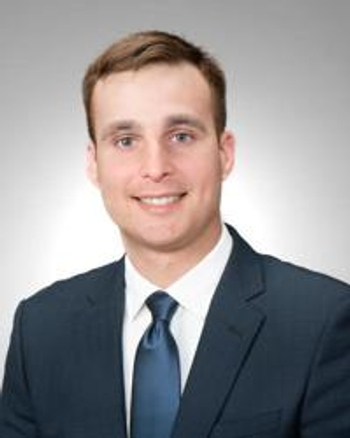
Tyler Wilhite, MD, discusses expanding a radiation oncology program to also utilize low-dose radiation therapy for benign diseases.
Heath Skinner, MD, PhD, discussed the 4 focus areas of the 2026 Radiation Oncology Conference and what it takes to implement new radiation service lines.
The faculty at the University of Pittsburgh Medical Center (UPMC) have organized the
In an interview with CancerNetwork® ahead of the conference, Skinner discussed the thinking behind the meeting’s themes of implementation, innovation, and integration, and walked through the 4 clinical areas the program focuses on: stereotactic radiosurgery, advanced brachytherapy, low-dose radiation therapy for benign conditions, and theranostics. He also discussed the multidisciplinary teams each of these service lines requires, and why the program pairs morning lectures with hands-on afternoon sessions.
Skinner closed by discussing how UPMC balances standardization against local flexibility across a network spanning Western and Central Pennsylvania, Maryland, and Ohio, and what he would count as a successful conference.
Skinner: In radiation oncology, we are evolving, just like many other fields in medicine, and one of the things we’re evolving toward is the implementation of novel technologies and novel ways of using radiation to benefit patients. We focused on 4 key areas where, firstly, there’s a great deal of interest in the community, and secondarily, where our UPMC Hillman Cancer Center and our Department of Radiation Oncology at the University of Pittsburgh really shine.
We’re focusing on stereotactic radiosurgery—the best way to treat brain metastases or brain tumors, with high dose per treatment and a low number of treatments. We’ve been doing this for a very long time at the University of Pittsburgh with really great success. I think that many clinics sometimes struggle with the implementation of this program, struggle with the implementation of new technologies in this treatment, and we’re here to give the benefit of our knowledge and expertise, and also to hear from the community about what they’re doing.
Another area where we have several programs is advanced brachytherapy…which is frequently used in gynecological malignancies as well as prostate cancer. We have really advanced programs for both. There are novel developments and techniques in brachytherapy, and we want to show clinics and individuals how best to implement those.
Other areas include a relatively novel way to use radiation: low-dose radiation for arthritis. This is a treatment that’s been around for decades, and it’s used quite frequently. For example, in Germany and Europe, it’s, if not the highest, one of the highest indications for radiation use among physicians. Recently, particularly with the publication of several trials, including a randomized trial that was just presented at [the
Finally, one area that I’m particularly excited about is theranostics, which basically means coupling something you can see on imaging with an actual therapy. One of the most common is a drug called Pluvicto [lutetium Lu 177 vipivotide tetraxetan], which is for prostate cancer….Every time you treat, you can also scan and see if the tumor is taking up a lot of [dose]? That allows you to tailor the way that you treat. Do you continue to give the same dose, or do you halt? Moreover, in our clinics, we’re trying to integrate this kind of therapy with other forms of radiation for prostate cancer and other types of malignancies, both in the context of clinical trials and in clinical care. But all of that is complicated, and for radiation oncologists especially, we don’t do a lot of systemic therapy. So how do you set this up? How do you do the billing, from big to small?
Those are really the 4 topics that we’re looking at here. We’re trying to do it in every way that we can, both from an academic perspective and from a research perspective, but also from a practical clinical implementation perspective. [We will be having] lectures in the morning during our conference and, in the afternoon, more hands-on, interactive sessions.
This is a team effort. If you look, for example, at stereotactic radiosurgery in the brain, you need a good multidisciplinary team that has a neurosurgeon, a radiation oncologist, a neuro-oncologist, and then everyone else—you need a good radiologist to make sense of imaging; many times, you need a good pathologist to tell you exactly what you’re dealing with from a tumor perspective. You also need a full staff: this includes medical physics and radiation oncology, and this includes dosimetry…. [It’s] a team effort. Finally, the patient comes in, and the radiation therapist is the one who actually sets up the patient, helps with the imaging, turns the beam on, and monitors the patient while they’re on treatment. That’s an enormous team, and that’s just one of these.
If you’re thinking about theranostics, that’s absolutely a collaborative effort between radiation oncology and radiology, because theranostics is a combination of therapy and diagnostics. It’s the portmanteau. We try to work very hand-in-hand with our radiology, and particularly our nuclear medicine colleagues, to make sure that patients get excellent imaging for every cycle, so that therapy is appropriate, and that we do dosimetry on all of these patients, which some institutes don’t. But it’s very important.
What does dosimetry mean? It’s when you do imaging with every cycle and calculate how much dose is going to each tumor and how much dose is going to normal tissue. It’s very informative. It’s important to do both in the context of prospective clinical trials but also in the context of clinical management, because I’m hoping that we can get to a point where we can personalize this therapy far more than it is now. For example, if the standard cut-and-dry formula of a drug is 4 to 6 cycles, we could use dosimetry to [prove] some patients may benefit from only 3 cycles, and that anything more is toxicity, vs some patients for whom going beyond 6 cycles is actually therapeutic. Dosimetry can help personalize that, given the right context and the right data. This is true for all of the different sites.
We also want to work hand in glove with primary care physicians and orthopedists for low-dose radiotherapy for arthritis. As radiation oncologists, we’re enmeshed in multidisciplinary care. It is our bread and butter.
Because at the end of the day, I want people, when they come, to be able to go back to wherever they’re practicing and either implement a program like this or improve in some way the program that they currently have ongoing. I love lectures. I love science. I’m a physician-scientist. I have a lab. I do translational research. But at the end of the day, if we can’t implement the clinical changes that we study, that we see, then it doesn’t mean much, because we want what we do to improve care for patients. That is and should be the goal of translational science, the goal of education, and the goal of any of this. I felt it was very important to try to help people when they come to the conference to operationalize the stuff that they’ve learned because it’s sterile if you don’t do that.
You need to walk a line between standardization—making sure that everyone is being treated to the highest standard possible—but also allowing for local differences. There is very much a difference between a clinic that has 1 physician, 1 physicist, and a few therapists, and a clinic that has 7 physicians and 5 physicists. You have to be sensitive to that, and that means some level of flexibility.
What we have done in our own network is create standard operating procedures for a variety of different services. These standard operating procedures basically say, “This is the minimum that we need for each given step,” and then, depending upon the clinic, “Here are extra things that you can do above this minimum.” That ensures everybody is getting high-quality care, but also accounts for the fact that some centers have one type of machine, while other centers have another type of machine. They’re both good, but it’s like having a Ferrari vs a Lamborghini.
There’s a lot of benefit to that approach because, on one hand, if you overly standardize, you basically cut out clinics that may not have access to some of the resources that others have, from doing something that they’re highly competent and capable of doing. You rob the patient of being treated in an advanced way because most patients don’t want to travel hours for care. In fact, that’s one of the nice things about our network: we have clinics all over Western and Central Pennsylvania, and even down in Maryland and Ohio. Patients don’t have to travel 4 hours to get access to care, so we have to work within the confines of each site to create workflows that are the best clinical standard.
A successful outcome for me is hearing from someone who attended the conference that they brought information back to where they practice and were able to offer either something new or better to a patient than if they had [not attended]. That, to me, is success. If we can, by bringing people together and talking about some of these services, make things better for patients, both in our clinics and outside of our clinics, then I consider that to be an enormously successful event.