“What we have here, I believe, is a strong signal that there is a population…who will benefit from chemotherapy,” said Mark D. Hurwitz, MD, FASTRO, FACRO.
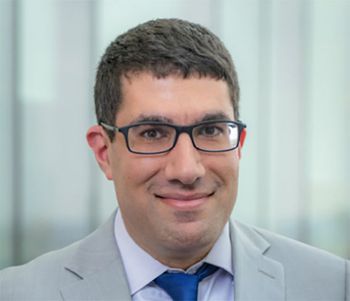
Ravi Patel, MD, PhD, discusses expanding theranostics access, personalized dosing strategies, and translational research in radiation oncology.
The faculty at the University of Pittsburgh Medical Center (UPMC) have organized the
Ravi Patel, MD, PhD, the director of radiopharmaceuticals and vice chair of translational research at UPMC Hillman Cancer Center, is one of those faculty who will be speaking at the conference. His topic: “Radiopharmaceuticals and Theranostics.”
In an interview with CancerNetwork® ahead of the conference, Patel discussed the goals of the inaugural meeting and what the radiopharmaceuticals and theranostics session would cover, including efforts to expand access to community settings and UPMC Hillman’s work on adaptive, personalized dosing strategies. He also discussed the operational and staffing challenges of scaling a rapidly growing theranostics program, what a well-functioning multidisciplinary theranostics team looks like, and the advancements in the field he is most hopeful about.
Patel closed by discussing his efforts to bridge laboratory and clinical work as vice chair of translational research, where he sees the most meaningful innovation happening in radiation medicine broadly.
Patel: [Heath Skinner, MD, PhD], had wanted to showcase a lot of the work that we were doing at UPMC Shadyside. We’re doing a lot of unique things that are leading the nation in our radiation oncology treatments. Hillman Cancer Center is doing a lot of great things, but we don’t often highlight the things in radiation oncology specifically. This is a conference to highlight some of the things that we’re doing in radiation oncology for a broader audience.
Theranostics and radiopharmaceuticals are a growing part of radiation oncology. Historically, it’s been mainly housed in nuclear medicine, but one of the issues with radiopharmaceuticals is that it hasn’t had broad uptake in the community [setting], mainly because there aren’t nuclear medicine departments and physicians out there, while radiation oncology is out at all these sites. It’s seeing an expansion in radiation oncology because of a patient need to take it out of academic centers. For example, here at Hillman, we were initially just doing this in Pittsburgh, but we had patients driving from Williamsport or far away. More recently, we’ve opened up a couple of new sites and are looking to expand this out within our radiation oncology network to improve patient access because patients really couldn’t make it otherwise. Part of it is talking about establishing a clinic out in the community because there’s interest in the radiation oncology field in how to do that.
Then, at our main site, we’re doing some adaptive, personalized theranostics. Right now, when these agents are given, they’re just given once every 6 weeks at a uniform dose, and that’s what the FDA label is. But we’re actually looking at how much the dose is getting to each patient’s tumor after each cycle, and in patients who have an exceptional response, we’re actually holding the drug because we find that there may not be a good reason to keep giving the drug if it’s not getting to the tumor and is only hitting the normal tissues at some point. We’ve had patients do well, where they’re on a break from treatment for a year or more before their [prostate-specific antigen] starts rising and we resume. We’re trying to maximize the therapeutic window of our treatments; that’s something that we’re doing that no one else is. The first part of my talk is about spreading this out to the community and improving patient access, and the last half is more futuristic and about how we can personalize these treatments.
A lot of people who don’t have a clinic are asking about setting up the clinic and reimbursement. People who want to get involved in the dosimetry academic part have also been asking me about how we do it, how we bill for it, how we implement it, and how it’s helped our patients. There are a lot of broad questions.
What are some of the biggest operational and infrastructure hurdles you’ve encountered leading the radiopharmaceuticals program?
The program grew very quickly. There was clearly a need. Sometimes, when things grow quickly, training staff and getting operations up to speed is a challenge. We started our program [in Altoona, PA], and within a couple months, we were treating 15 to 20 patients a month. Those were patients who had the need and weren’t getting treatment because they couldn’t come to Pittsburgh. There were also a few who were coming to Pittsburgh but just wanted to get treatment closer to home. Catching up, training the nursing staff to check labs, and hiring new staff were are all things that we were doing. We had backups, but there was a bit of a challenge overcoming all of that. Some of our reimbursement and finance staff also weren’t as familiar with it, so educating them on how to get appropriate reimbursement for these programs was part of it, too.
By talking to a lot of people. I go to a lot of national meetings. [By] talking to others around the country, I learn from them, and they learn from me. Sometimes, when you make a mistake, you learn from that as well. It’s been by doing it, being involved, and talking to other leaders in the field.
The physician is the leader of the team, but a well-run team is run by the people doing the day-to-day work. [It’s about] having a front office that’s comfortable doing the authorizations and appeals; having nursing that can track the labs and coordinate with referring providers; having an advanced practice provider to do proper patient follow-up; and then having nuclear medicine technologists that make sure we do all the proper QA, dose calibration, injection, administration, and radiation safety surveys of the areas for any potential contamination or patient-related issues. Medical oncologists help us with blood transfusions and potentially switching therapies if something isn’t working. Our nuclear medicine colleagues help us with the imaging and reading the scans. Then, as the physician overseeing the treatment, I make sure we take all this information into account and provide the best care for our patients. It’s a pretty big team.
Radiation oncology is always rapidly advancing. When we talk about the radiation we gave 20 years ago, it’s totally different from what we give now. A lot of that focus has been on external beam radiation, where we switched from 2D bony anatomy–based radiation to more precise [intensity-modulated radiation therapy] and now even proton or particle therapy radiation. There are different FLASH regimens being explored too, but I’m really excited about these radiopharmaceuticals because when I trained, external beam radiation was a local therapy, like surgery. With metastatic cancer, we can palliate or treat small areas when that happens with external beam, but with these radiopharmaceuticals, we can deliver effective doses of radiation to all sites of metastatic disease. For me, that’s exciting because we’re now in a different realm than we’re used to, and there are new and exciting opportunities there.
![“We want to make sure we are not producing a financial burden for patients in exchange for that convenience [with subcutaneous therapies],” said Thaddeus Beck, MD, FACP.](https://cdn.sanity.io/images/0vv8moc6/cancernetwork/cbb0bc385f194a5dd84702ed02a21020e3a6977b-1200x1800.jpg?w=350&fit=crop&auto=format)