Ralph V. Boccia, MD, FACP, discusses payer models, prior authorization, cost recovery, and patient assistance for bispecifics like teclistamab/daratumumab.
"We thought there might be a preventive effect towards the development from CHIP to CCUS to MDS, so it’s a sort of a continuum," said Kirsten Grønbæk, MD, PhD.
The phase 2 EVITA trial (NCT03682029) was the first double-blind, randomized, placebo-controlled study of oral vitamin C in patients with preleukemic conditions or lower-risk myeloid malignancies.1 The trial enrolled 109 patients with clonal cytopenia of undetermined significance (CCUS) or lower-risk myelodysplastic syndrome (MDS) and randomly assigned them 1:1 to 1000 mg of oral vitamin C daily vs a matched placebo for 12 months. Although the trial did not meet its primary end point of reducing clonal growth rates, exploratory analyses revealed a significant overall survival (OS) advantage in the vitamin C arm (HR, 0.35; 95% CI, 0.17-0.71; P = .0025), alongside favorable changes in inflammatory cytokine profiles and a markedly lower serious adverse event (SAE) rate (33% vs 57%).
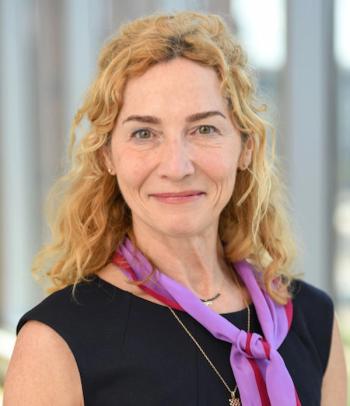
CancerNetwork® spoke with Kirsten Grønbæk, MD, PhD, about the mechanistic basis for evaluating vitamin C in this patient population, what the exploratory survival signal may and may not mean, how clinicians should contextualize these hypothesis-generating findings, and how the team is designing its definitive phase 3 trial. Grønbæk is professor in the Department of Clinical Medicine at the University of Copenhagen and chief physician in the Department of Hematology at Copenhagen University Hospital in Copenhagen, Denmark.
Grønbæk: TET2 mutations are the most common mutations in CCUS, and we think there is a very significant impact from that. We did a study back in 2021 on TET2 mutations in clonal hematopoiesis of indeterminate potential [CHIP], which is a precursor to CCUS, and we could see that those TET2 mutations caused methylation at specific enhancers that are involved in hematopoietic differentiation.2
Then we did a small pilot trial, and we saw that there was a signal with the combination of vitamin C and azacitidine, the drug we normally use, a signal that this may change something with respect to the effect of TET2.3 When we added vitamin C, they had more hydroxymethylation, which is on the pathway to demethylation. When we signed the trial, there was also a paper coming out from Michalis Agathocleous, PhD, [from UT Southwestern] showing that in mice with TET2 haploinsufficiency, vitamin C seemed to almost cure the mice from leukemia.4 When they were transplanted with leukemia cells, they survived as well as those that had not been transplanted, if they had normal oral vitamin C. If they were vitamin C deficient, they died very quickly. That was very strongly showing us that there might be an effect.
The third factor was that Peter Jones, MD, my collaborator, already 40 years ago did some studies in cell lines, also showing that when you put vitamin C in the dish with mouse embryo carcinoma cells, they will not form clones if they have vitamin C, indicating that vitamin C can prevent the formation of malignant clones.5 Based on all of this, we thought there might be a preventive effect towards the development from CHIP to CCUS to MDS, a sort of a continuum. We also did several studies in cell lines that showed the dose you can achieve with oral dosing was sufficient to see demethylation, and that you didn't gain more by using a very high dose if demethylation was the goal.
It was quite a surprise to us that our patients were vitamin C deficient. This has also been shown in patients who are Dutch and I think there’s an American study as well: for some reason, patients [with hematological cancers] are vitamin C deficient. That was a reason for starting this trial.
Why do we go to the high dose of 1000 mg? Because the normal dose would be 100 mg. We are giving 10 times that. The reason is we want to achieve saturation within the stem cells of the bone marrow, because that’s where the cells with TET2 mutations come from. The whole idea was to make sure we had saturation, but at a dose that did not cause [adverse] effects. The reason for oral dosing was that it can maintain a constant high level throughout. We measured vitamin C in our patients and saw that in those who received vitamin C, there was a constant high level throughout that year, which we did not see in the placebo group. They also adhered to the trial.
Honestly, this is also still something we are working on to try to understand what is going on between the 2 groups. It has to do more with the function of the mutated cells and the microenvironment and these inflammatory markers, because we know that inflammation drives these clones.
Obviously, we cannot recommend this because it needs a phase 3 trial. This needs to be proven in a phase 3 [protocol], and we had some feedback when we submitted the paper because the reviewers said this could bring the wrong message, too early with a phase 2 trial, and that is true.
Vitamin C is available over the counter. We have now shown that in this setting, where we give 1000 mg a day, and we excluded any patients with prior kidney stones because they would have a higher risk of developing new kidney stones. We saw very little in the way of [adverse] effects. We saw a few gastrointestinal [adverse] effects in 3 patients out of 54. Mainly gastritis, and that is about it in terms of adverse effects.
On the other hand, as a physician, you cannot recommend this before the phase 3 [data]. It is like with every other drug. It is a different situation, and some patients might go home and do it. For those patients, I would say: please tell your doctor you are doing it, because then at least we know what is going on. That will be very important. If it is a watchful waiting situation where you don't get any other drugs, it's probably less harmful. If you do get other drugs, it is very important that the treating physician knows what is going on.
We have been discussing this a lot, but if we want to confirm the data we have found now, we need to go for the same patient population in a larger cohort powered to look at overall survival. That is what we would like to know. Our primary end point will be all-cause mortality, because when we look at what these patients die from, it is not typically only progression, it is also infections and other things. In the placebo group, patients die from various causes, and we also know that [patients with] CCUS may have more cardiovascular disease. It is important that we have the same patient group and go for all-cause mortality. Then afterwards we can see what markers might distinguish them. We are not going to stratify by mutations in the phase 3 because the groups would be relatively small if you think about stratifying according to specific mutations. Combinations, in the long run, will also be something we are looking into.