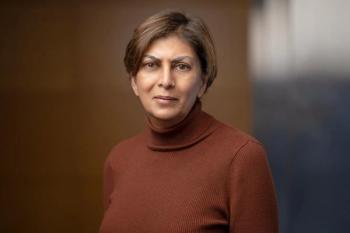
Jasmine Zain, MD, described the molecular workup to determine whether a secondary malignancy after CAR T-cell therapy reflects direct insertional mutagenesis.
"Patients [with cancer] and physicians would rather have a fixed-duration treatment, if possible," said Julie M. Vose, MD, MBA, at SOHO 2026.
The treatment landscape for chronic lymphocytic leukemia (CLL) has undergone substantial evolution over the past several years, with fixed-duration Bruton tyrosine kinase (BTK) and BCL2 inhibitor combinations increasingly rivaling continuous BTK inhibitor monotherapy. Data from the phase 3 CLL17 trial (NCT04608318) is now giving the field its clearest head-to-head comparison of that to date.
CancerNetwork® spoke with Julie M. Vose, MD, MBA, the George and Peggy Payne Distinguished Chair of Oncology, professor in the Division of Hematology, and director of the Lymphoma Research Group at the University of Nebraska Medical Center, and co–editor in chief of ONCOLOGY®, about where the frontline CLL algorithm is heading at the
Vose opened by articulating the practical appeal driving the shift toward finite treatment courses, noting the alignment between patient and physician preferences for time-limited therapy when the data support it. She then described what the CLL17 trial clarified at 3 years, with an approximate equivalence in progression-free survival (PFS) across all arms, as well as what remains unanswered pending longer follow-up. Moreover, she discussed next-generation BTK degraders and non-covalent inhibitors, framing their eventual clinical role as contingent on both efficacy and tolerability data yet to mature.
She then addressed the growing use of minimal residual disease (MRD) testing to guide treatment duration in CLL, a setting where blood-based assessment is comparatively accessible. Vose further outlined the practical barriers facing community oncologists managing multiple tumor types alongside a rapidly evolving CLL algorithm, and closed by identifying the pursuit of time-limited combination therapy as the defining clinical theme emerging from SOHO 2026.
Vose: Patients and physicians would rather have a fixed-duration treatment, if possible, just for convenience, for cost, and for [adverse] effects—for a lot of reasons. As the data comes out, we will be seeing more of that used in practice.
The follow-up demonstrated, so far, a 3-year [PFS]—all of the arms had approximately 80%, so no difference there. The challenge is: can we use a fixed-duration regimen and an all-oral regimen, and can it be as good? We really need longer follow-up. At this point in time, they appear equivalent. The question is what will happen after many years of follow-up?
As we get more short-term and long-term data on these new medications, we will see if they are as good with respect to the CLL response, and toxicity is another big issue. Anytime we have a new treatment, we want to make sure it is at least as good and less toxic than the ones we currently have. With further trials and more mature data, we will be able to see where they are going to fit in a little bit better.
MRD testing is becoming more mainstream. It is relatively easy to do in CLL, since it is in the blood and easily tested, as compared with some other types of tumors. It is important for us to use that when guiding especially time-limited therapy because we do not want to stop the medications prematurely. As we see more mature data, we will understand it better. But it is very informative, helpful, and should be used in clinical practice.
There are so many new studies coming out, and different combinations, and new drugs; it is hard to keep up with all of that, especially if that is not what you do 100% of the time, as in community practice, where [oncologists are] dealing with lung cancer and breast cancer and CLL. It is important for them to choose several regimens they are comfortable with, to make sure that the data are good and mature, and to try to stick to those as much as possible. It is also important for community practice to have the infrastructure to deal with [adverse] effects from the treatment, as well as understanding the molecular testing and the other types of tests we need for patients with CLL. As we get more mature data, we will see that spread to the community faster.
There is not a lot that is new as far as readout from the studies, but there is a lot going on with studies looking at different time-limited therapies. That is probably the biggest theme coming out of most of the newer studies: trying to use combination treatment, but in a time-limited way. All of our treatments have [adverse] effects; all of them are costly. We want to see if there is a way to do time-limited therapy for our patients. That is the biggest theme coming out of most of the new studies.
Al-Sawaf O, Stumpf J, Zhang C, et al. Fixed-duration versus continuous treatment for chronic lymphocytic leukemia. N Engl J Med. 2026;394(11):1084-1096. doi:10.1056/NEJMoa2515458