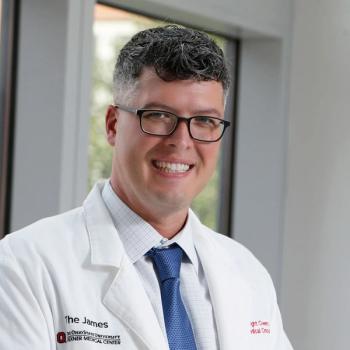
Dwight H. Owen, MBBCh, MS, discussed why severe immune-related toxicities remain hard to predict as immunotherapy combinations expand in lung cancer.
Chinmay Jani, MD, highlights non-smoking risk factors, the impact of lung cancer on younger populations, and the value of comprehensive molecular testing.
In a special edition of Oncology On the Go, CancerNetwork® joined Chinmay Jani, MD, in the studio to discuss key insights across different hot topics in the thoracic oncology field. He spoke about risk factors for lung cancer beyond smoking based on recent news regarding Pope Leo XIV, how the disease impacts younger populations, and what novel findings suggest about the role that comprehensive molecular testing can play to improve precision medicine.
In October 2026, the Vatican announced that Pope Leo XIV had undergone a right lower lobectomy to remove a lung nodule confirmed to be lung adenocarcinoma, despite a lack of smoking history.1 Later in the month, a subsequent oncological evaluation suggested that no further treatment was necessary for him.2 According to Jani, this development illustrates a need to change the historical paradigm and stigma equating lung cancer solely with tobacco use. He also noted that these events demonstrate the value of early detection through screening to help prevent the need for systemic therapy beyond surgery.
Jani also described findings from a study that he and colleagues published in eClinicalMedicine showing the contribution of factors including air pollution and asbestos to lung cancer mortality.3 Additionally, he reviewed research presented at the
On top of research dedicated to non-tobacco risk factors, research that Jani and colleagues presented at the
“For the general population, I would like to deliver one message: lung cancer is no [longer] smoking associated or tobacco associated. There are various other risk factors being associated with lung cancer, and beyond that, there are many lung cancers being diagnosed without any of these risk factors,” Jani concluded. “[The] earlier a cancer is diagnosed, the higher the chances of cure, and that's what oncology is working on: to make lung cancer curable in future.”
Jani is a medical oncologist at Sylvester Comprehensive Cancer Center of the University of Miami Miller School of Medicine.