
Adding radiotherapy to tislelizumab and chemotherapy also appeared to prolong progression-free survival in a real-world setting.
Adding radiotherapy to tislelizumab and chemotherapy also appeared to prolong progression-free survival in a real-world setting.

Poster sessions at WCLC 2026 detail how surgery, nursing, and pathology can contribute to the multidisciplinary care of patients with lung cancer.
Subcutaneous amivantamab is safer and more convenient for patients compared with the intravenous formulation, according to Misako Nagasaka, MD, PhD.
Misako Nagasaka, MD, PhD, explains how subcutaneous amivantamab’s shorter administration time benefits patients and infusion centers.
Misako Nagasaka, MD, PhD, discusses PALOMA-2’s 70% 3-year survival rate compared with historical MARIPOSA data for intravenous amivantamab.

The OMNI-EGFR inhibitor BH-30643 produced a 45% objective response rate among patients with EGFR C797S–positive disease in the phase 1/2 SOLARA trial.

Data presented at WCLC 2026 support the use of B7-H3–directed antibody-drug conjugates and brain MRI surveillance in small cell lung cancer.

New data on antibody drug conjugates and extended survival follow-ups may inform clinical decision-making surrounding non–small cell lung cancer.
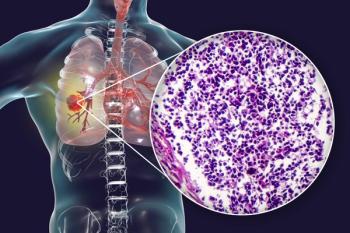
Medical oncologists, clinical pharmacists, and oncologic nurse practitioners share the presentation topics to look out for at WCLC 2026.

Partnering with subspecialities like ophthalmology and dermatology may be critical for nurse practitioners in lung cancer, according to Beth Sandy, CRNP.

Beth Sandy, CRNP, said she would like to see more data on management strategies for blepharitis, eye toxicities, and mucositis in patients with lung cancer.
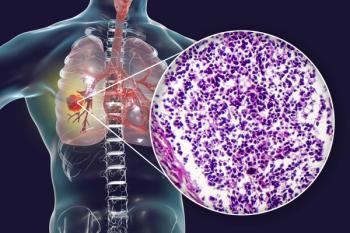
A real-world, retrospective analysis showed that CRS and ICANS occurred in 48% and 16% of patients with ES-SCLC who were treated with tarlatamab.
In patients with LS-SCLC who were ineligible for a prophylactic cranial irradiation, toripalimab appeared to decrease the progression of brain metastases.
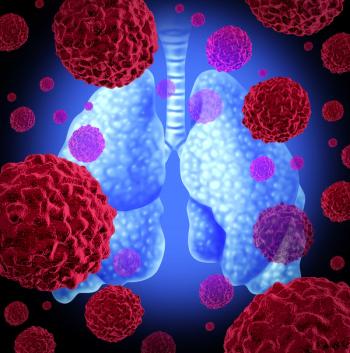
Cisplatin/etoposide and carboplatin/etoposide achieved median OS of 8.8 months and 7.8 months, respectively, in those with extensive-stage small cell lung cancer.

Data from the IDeate-Lung01 trial support the potential role that ifinatamab deruxtecan may play in the management of extensive-stage small cell lung cancer.

Lurbinectedin achieved an ORR of 27% in all patients with extensive-stage small cell lung cancer in the phase 4 Jazz Emerge 402 study.

Ateganosine plus cemiplimab was well tolerated in patients with heavily pretreated advanced NSCLC, with most adverse effects grades 1/2 in severity.

Findings from the 2025 World Conference on Lung Cancer reflected key updates in the management of NSCLC, SCLC, and other lung cancer types.
All efficacy-evaluable patients with ES-SCLC treated with surufatinib, durvalumab, etoposide, and chemotherapy responded to treatment.
No new safety signals were identified with subcutaneous amivantamab in EGFR-mutant NSCLC, and infusion reactions were reduced vs the IV formulation.

After failing to record any objective responses in 9 patients with relapsed/refractory ES-SCLC, the phase 2 trial was terminated early.
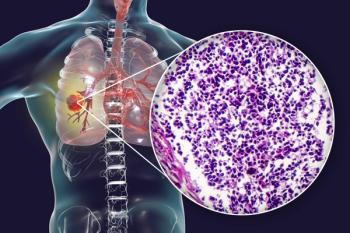
Results from the DeLLphi-303 trial showed sustained efficacy and safety with tarlatamab plus anti–PD-1 treatment for patients with extensive-stage SCLC.
The confirmed overall response rate with ABB-706 was 77% in patients with relapsed/refractory small cell lung cancer who received 2 prior lines of therapy.

When compared with observation, adjuvant crizotinib did not improve disease-free survival or overall survival in ALK-positive NSCLC.

Adding aumolertinib to chemotherapy in the treatment of patients with EGFR-mutated NSCLC led to improvements in progression-free survival.
The median CNS PFS with Dato-DXd was 5.0 months vs 3.0 months with docetaxel in patients with NSCLC who have brain metastases.

For patients with unresectable stage III NSCLC, concurrent durvalumab with chemotherapy/radiation did not show an efficacy improvement.

The safety and tolerability of nivolumab/chemotherapy in non–small cell lung cancer were manageable and consistent with its profiles in other clinical scenarios.

Zidesamtinib was well tolerated in patients who received prior ROS1 TKI therapy with advanced NSCLC, and dose discontinuation/reduction rates were low.

Ivonescimab plus chemotherapy following progression after a third-generation TKI showed consistent efficacy across EGFR-mutated NSCLC subgroups.