

Subgroup data from KEYNOTE-671 support the use of perioperative pembrolizumab in stage II or III non–small cell lung cancer of any clinical nodal status.
Subgroup data from KEYNOTE-671 support the use of perioperative pembrolizumab in stage II or III non–small cell lung cancer of any clinical nodal status.
AE-related discontinuations of osimertinib were low, and no new treatment-related deaths were reported with the combination in EGFR-mutant NSCLC.

Updated findings from the AEGEAN trial support perioperative durvalumab as a new therapy option for those with resectable non–small cell lung cancer.
Phase 2 data show meaningful efficacy with taletrectinib regardless of whether patients with ROS1-positive NSCLC previously received tyrosine kinase inhibitors.

Confirmed partial responses with firmonertinib occurred across a range of EGFR PACC mutations among patients with NSCLC in the phase 1b FURTHER trial.

Patients with EGFR-mutated NSCLC had sustained HRQOL when treated with amivantamab plus lazertinib vs osimertinib.
Data from the HARMONi-2 trial support the potential superiority of frontline ivonescimab vs pembrolizumab in non–small cell lung cancer.

In particular, dato-DXd plus durvalumab and chemotherapy produced the highest pCR and mPR rates in the phase 2 NeoCOAST-2 trial.

Phase 1b data also show encouraging preliminary intracranial activity with zongertinib among patients with HER2-mutant non–small cell lung cancer.
BAY 2927088 showed substantial response rates for patients with pretreated HER2-mutant non–small cell lung cancer.
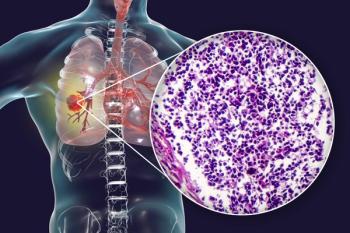
Amivantamab/lazertinib also reduces the risk of second progression or death compared with osimertinib in the phase 3 MARIPOSA trial.

Investigators showcased feasibility of combining pathology findings with deep learning artificial intelligence to speed up biomarker detection and discovery for patients with lung cancer.

Investigators of the phase 1b/2 KontRASt-01 trial will continue their evaluation of TNO155 plus JDQ433 in KRAS G12C-mutated solid tumors as part of an expansion portion of the trial.
Treatment with zongertinib produces low rates of EGFR-mediated adverse effects among patients with HER2-mutated non–small cell lung cancer in the phase 1a/b BEAMION Lung-1 trial.

Baseline characteristics do not appear to correlate with long-term benefits for patients receiving durvalumab plus tremelimumab and chemotherapy for metastatic non–small cell lung cancer in the phase 3 POSEIDON trial.

Findings from the phase 3 AEGEAN trial suggest that patients with EGFR-mutated non–small cell lung cancer experience similar outcomes whether receiving durvalumab or placebo.

Treatment with adagrasib appears to be particularly well tolerated in patients with KRAS G12C–mutated non–small cell lung cancer who receive it for more than 1 year.

Iruplinalib appears tolerable with no new safety signals among patients with locally advanced and metastatic ALK-positive non–small cell lung cancer in the phase 3 INSPIRE trial.
Data from the phase 2 EVOKE-02 trial support further assessment of sacituzumab govitecan plus pembrolizumab as a frontline treatment for metastatic non–small cell lung cancer.

Investigators report a progression-free survival benefit with osimertinib plus chemotherapy in EGFR-mutated non–small cell lung cancer across all subgroups in the phase 3 FLAURA2 study.

In an interview with CancerNetwork®, Hossein Borghaei, DO, MS, details the promising body of ongoing research assessing biomarkers in patients with non–small cell lung cancer who are candidates for treatment with immunotherapy.
Alexander I. Spira, MD, PhD, FACP, highlights several unanswered questions within the KRAS G12C–positive non–small cell lung cancer space.
Positive trends in screening of patients at high risk of lung cancer may double survival in this malignancy, according to Giorgio V. Scagliotti, MD, PhD, at 2022 WCLC.
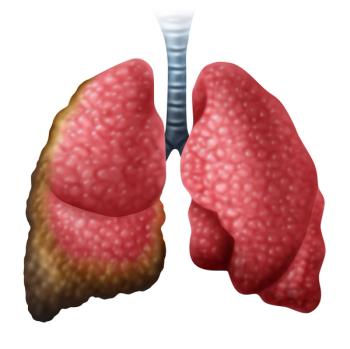
Results from the phase 2 PEMMELA trial revealed positive treatment benefits in patients with malignant pleural mesothelioma who were given pembrolizumab plus lenvatinib.
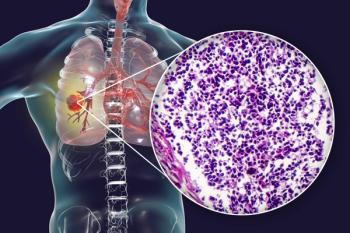
Ociperlimab plus tislelizumab showed promising antitumor activity in patients with treatment-naïve, metastatic, PD-L1–positive non–small cell lung cancer who were treated on the phase 1 AdvanTig-105 trial.
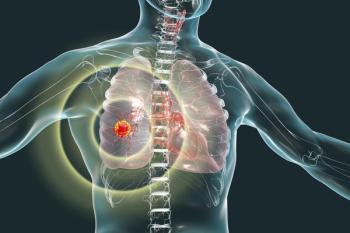
Results from the phase 3 RATIONALE-303 trial presented at 2022 WCLC showed an overall survival benefit when patients with non–small cell lung cancer were treated with second- or third-line tislelizumab compared with docetaxel.
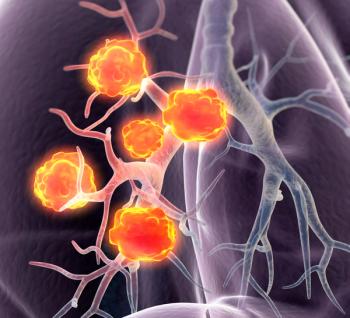
Results from a phase 1b trial showed efficacy potential of sotorasib plus SHP2 inhibitor RMC-4630 for patients with pretreated or KRAS G12C inhibitor–naïve non–small cell lung cancer.

Follow-up to the phase 2 NAVIGATE and phase 1 LOXO-TRK-14001 trials showed durable responses and extended survival in patients with NTRK fusion–positive lung cancer who were treated with larotrectinib.
Results from cohort C of the phase 2 VISION trial showed continued efficacy when tepotinib was given to patients with non–small cell lung cancer harboring MET exon 14 skipping alterations.
Patients with advanced PD-L1–positive non–small cell lung cancer and squamous histology who were treated with sitravatinib plus tiselizumab had promising antitumor activity.