
Opinion|Videos|August 1, 2025
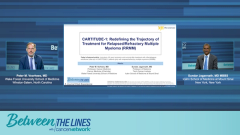
Key Perspectives: Cilta-Cel in Multiple Myeloma
Author(s)Peter Voorhees, MD, Sundar Jagannath, MD
Panelists discuss how long-term CARTITUDE-1 data may change clinical practice by validating earlier use of ciltacabtagene autoleucel (cilta-cel) and informing personalized treatment strategies based on risk and disease biology.
Advertisement
Episodes in this series
Long-term follow-up from CARTITUDE-1 is prompting a shift in clinical practice, including earlier consideration of chimeric antigen receptor T-cell therapy. The trial has influenced regulatory agencies to accept minimal residual disease as a surrogate for survival in new studies.
As new therapies like bispecifics and trispecific antibodies emerge, clinicians must tailor treatment sequencing. Yet, cilta-cel remains a cornerstone therapy, especially for younger, fit patients or those with high-risk features who may benefit most from its curative potential.
Ultimately, these findings challenge the long-standing notion that multiple myeloma is incurable, offering new hope and optimism to patients and clinicians alike.
Advertisement
Related to this article

“When we give the most effective therapy at the time of new diagnosis, we get the most value out of the effort and time that we and our patients are spending,” said Neeraj Agarwal, MD, FASCO.
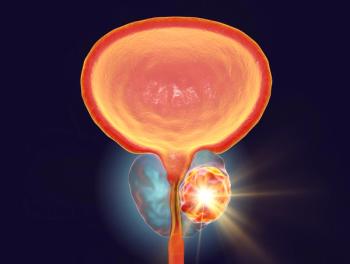
An aglatimagene besadenovec-based radiotherapy combination increased intratumoral lymphocyte fraction in intermediate- to high-risk localized prostate cancer.

The ROADS investigators reported no differences between cesium-131 tile-based radiation therapy and SRT in quality of life, functional status, or neurocognitive function.
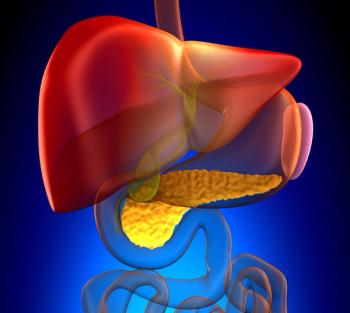
William A. Hall, MD, discussed the SOFT Preop study of preoperative SBRT vs conventional chemoradiation for pancreatic adenocarcinoma.
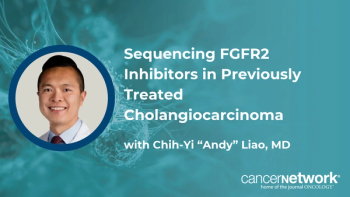
Chih-Yi “Andy” Liao, MD, discusses how oncologists are sequencing pemigatinib, futibatinib, and lirafugratinib and how their tolerability differs.
“It should be protocol that 100% of your patients with metastatic prostate cancer get germline testing. Full stop. No exceptions,” said Neal D. Shore, MD, FACS.
Chih-Yi “Andy” Liao, MD, discusses the FDA approval of lirafugratinib and what the field has learned about resistance to FGFR2 inhibitors.

In the phase 3 NRG-CC009 trial, SRS led to longer overall survival vs HA-WBRT plus memantine with similar neurocognitive failure in SCLC brain metastases.
Advertisement
Advertisement
Trending on CancerNetwork
1
Aglatimagene Combo Shows Sustained Immune Remodeling in Prostate Cancer
2
What Does TALAPRO-3 Mean for Frontline Treatment of HRR-Altered mHSPC?
3
SBRT Matches Chemoradiation, Preserves QOL Before Pancreatic Surgery
4
BCMA/GPRC5D CAR T-Cell Therapy Shows Early Efficacy in R/R Multiple Myeloma
5