
Opinion|Videos|September 1, 2026
Managing Adverse Events With Capivasertib Plus Fulvestrant
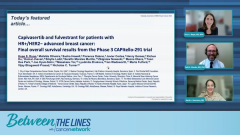
Erica L. Mayer, MD, MPH, of Dana-Farber Cancer Institute, reviews final safety data from CAPItello-291, the phase 3 trial of capivasertib plus fulvestrant in hormone receptor positive, human epidermal growth factor receptor 2 (HER2)-negative advanced breast cancer, reporting no new signals: diarrhea in nearly 80% of patients with about 10% grade 3 and no prophylactic antidiarrheal in the protocol, rash in about 40%, and all-grade hyperglycemia of 17% despite allowing hemoglobin A1c up to 8%.
Episodes in this series

Erica L. Mayer, MD, MPH, of Dana-Farber Cancer Institute, reviews final safety data from CAPItello-291, the phase 3 trial of capivasertib plus fulvestrant in hormone receptor positive, human epidermal growth factor receptor 2 (HER2)-negative advanced breast cancer, reporting no new signals: diarrhea in nearly 80% of patients with about 10% grade 3 and no prophylactic antidiarrheal in the protocol, rash in about 40%, and all-grade hyperglycemia of 17% despite allowing hemoglobin A1c up to 8%. Seth A. Wander, MD, PhD, of Massachusetts General Hospital, stresses comprehensive team-based education and early intervention at grade 1 or 2 toxicity. Sarah L. Sammons, MD, of the University of Maryland Greenebaum Comprehensive Cancer Center, schedules dosing Monday through Thursday with a 3-day weekend off, prescribes loperamide at the first sign of diarrhea, adds prophylactic cetirizine starting the day before treatment based on antihistamine data, and counsels close glucose monitoring with reduced carbohydrate intake.
Related to this article

Final NSABP B-42 data show 5 additional years of letrozole improved DFS, BCFI, and distant recurrence vs placebo at 15 years, with no OS difference.

Perioperative pembrolizumab plus neoadjuvant cisplatin and gemcitabine did not significantly improve EFS vs placebo in cisplatin-eligible MIBC in KEYNOTE-866.

Hope S. Rugo, MD, FASCO, and Irene M. Kang, MD, discussed ASCENT-03, -04, and TROPION-Breast02 data, sequencing, and toxicity in metastatic TNBC.

Pope Leo XIV’s lung adenocarcinoma diagnosis may increase awareness and combat stigma surrounding lung cancer screening.

Helena A. Yu, MD, discusses the background of REZILIENT3 and her key takeaways on zipalertinib in EGFR exon 20-mutated NSCLC.

Intismeran autogene plus pembrolizumab cut the risk of recurrence or death by 42% vs pembrolizumab alone in resected stage IIB-IV melanoma.

Oana Danciu, MD, explained why phase 1 breast cancer trials are moving earlier in the treatment course and how disease stability guides patient selection.

The FDA based its approval of pembrolizumab on findings from the phase 2 KEYNOTE-158 trial.
Trending on CancerNetwork
1
Intismeran Plus Pembrolizumab Reduces Recurrence Risk in Resected Melanoma
2
FDA Approves Pembrolizumab in Metastatic TMB-H Solid Tumors
3
What Pope Leo XIV’s Lung Cancer Diagnosis Could Mean for Stigma & Nihilism
4
Zipalertinib May Introduce Another Option to EGFR Exon 20+ NSCLC
5