

Opinion|Videos|July 31, 2026
Reviewing the SIERRA Trial of STRIDE in Poor-Prognosis HCC
James J. Harding, MD, presents the SIERRA study for Team Deep-Dish Pizza, reviewing the phase 3b, single-arm trial of the STRIDE regimen, tremelimumab plus durvalumab, in first-line unresectable hepatocellular carcinoma (HCC) with poor-prognosis features.
Advertisement
Episodes in this series
James J. Harding, MD, presents the SIERRA study for Team Deep-Dish Pizza, reviewing the phase 3b, single-arm trial of the STRIDE regimen, tremelimumab plus durvalumab, in first-line unresectable hepatocellular carcinoma (HCC) with poor-prognosis features. Harding explains that SIERRA was designed to address populations excluded from HIMALAYA, enrolling patients with Child-Pugh class B7 or B8, ECOG performance status 2, or chronic main portal vein thrombosis (Vp4). He reviews the baseline characteristics of the 98-patient cohort, including a median age of 70, predominantly BCLC stage C disease, and a meaningful proportion with Child-Pugh class B. Harding presents the early safety analysis, noting that grade 3/4 event rates were generally consistent across subgroups and tracked with the original HIMALAYA population, while the Vp4 cohort showed higher rates of serious adverse events. He emphasizes that efficacy endpoints, including objective response, were immature at the data cutoff and should not be inferred from these safety data.
Advertisement
Related to this article
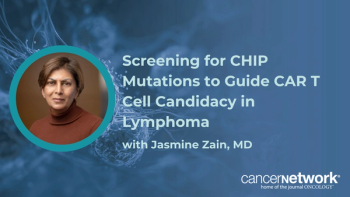
Jasmine Zain, MD, described how pre-existing CHIP mutations should inform pre-infusion risk counseling and treatment selection.
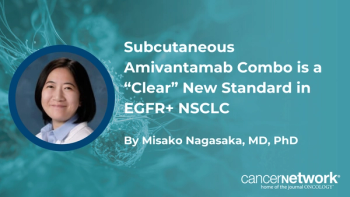
Subcutaneous amivantamab is safer and more convenient for patients compared with the intravenous formulation, according to Misako Nagasaka, MD, PhD.
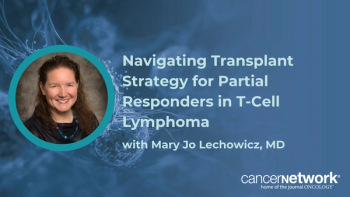
Mary Jo Lechowicz, MD, discussed how pre-transplant depth of response informs the choice between autologous and allogeneic HSCT in T-cell lymphoma.
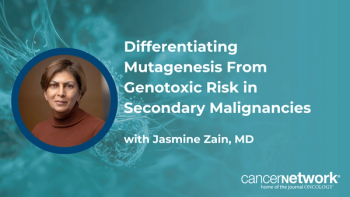
Jasmine Zain, MD, described the molecular workup to determine whether a secondary malignancy after CAR T-cell therapy reflects direct insertional mutagenesis.
Misako Nagasaka, MD, PhD, explains how subcutaneous amivantamab’s shorter administration time benefits patients and infusion centers.
Misako Nagasaka, MD, PhD, discusses PALOMA-2’s 70% 3-year survival rate compared with historical MARIPOSA data for intravenous amivantamab.
Adult T-cell lymphoma and leukemia may warrant upfront allogeneic transplant, according to Mary Jo Lechowicz, MD.
Amir T. Fathi, MD, explains which AML subgroups were excluded from PARADIGM and why chemotherapy remains standard for them.
Advertisement
Advertisement
Trending on CancerNetwork
1
Pembrolizumab/Enfortumab Vedotin Earns Positive CHMP Opinion in MIBC
2
Screening for CHIP Mutations to Guide CAR T Cell Candidacy in Lymphoma
3
Daraxonrasib Receives FDA Breakthrough Therapy Status in 1L Metastatic PDAC
4
FDA Approves Imlunestrant Combo in ESR1-Mutated Breast Cancer
5