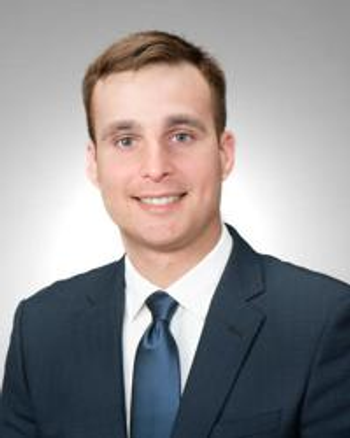
Tyler J. Wilhite, MD, discussed scaling low-dose radiation therapy for osteoarthritis from 1 patient to nearly 20 centers and the referral work behind it.
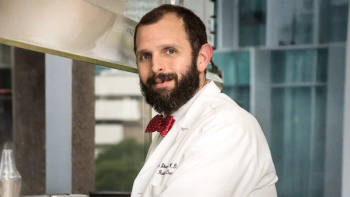
Adam C. Olson, MD, MSc-GH, discussed the infrastructure, training, and shared decision-making behind building a prostate HDR brachytherapy program.
The faculty at the University of Pittsburgh Medical Center (UPMC) organized the
In an interview with CancerNetwork® at the symposium, Adam C. Olson, MD, MSc-GH, discussed the presentation he gave on prostate high-dose rate (HDR) brachytherapy, why the modality makes a useful case study for a forum on service lines, and how a brachytherapy program can diversify a department's revenue base against shifts in reimbursement. Olson addressed the national decline in brachytherapy use, the staffing and training bottleneck behind it, and the American Brachytherapy Society (ABS) program intended to rebuild the pipeline.
Olson closed by discussing how patients choose between HDR brachytherapy and stereotactic body radiation therapy (SBRT), the infrastructure a department needs before it can offer HDR at all, and why the regulatory oversight makes shortcuts difficult.
Olson is an associate professor in the Department of Radiation Oncology at the University of Pittsburgh and medical director at Children's Hospital of Pittsburgh of UPMC.
CancerNetwork: What was your presentation about?
Olson: I talked about prostate [HDR] brachytherapy, which is a form of radiation that implants radiation treatment directly into the prostate in a temporary fashion. The talk was mainly about the clinical rationale for it, along with some of the service line and program-building aspects of it.
A big focus of this conference is developing new service lines. What makes brachytherapy a useful case study for this forum?
One of the main thrusts of the talk was to appreciate the many different ways that prostate cancer can be appropriately treated, and brachytherapy is one mode to do that. It can be done on its own or in combination with external beam radiation.
Part of the rationale and the content of the talk was understanding how different clinical programs can create a more diversified financial revenue base, so that if there are changes in reimbursement or practice patterns that might affect something like external beam radiation, having a robust alternative can essentially hedge against any sort of financial shock to the system.
Brachytherapy is being used less in the US. How should programs keep clinicians proficient when the number of patients they see falls?
The data are clear on that: brachytherapy across the board, but prostate [in particular], has been on the decline. There are a few reasons for that. First and foremost, it is a staffing and training choke point. The American Brachytherapy Society recently initiated a so-called [300 in 10] program. The goal would be to train 300 brachytherapists over the next 10 years to reinvigorate and strengthen the pipeline for it.
I started our HDR program here approximately a year and a half ago, partly to ensure that the residents who graduate from this program would have that tool in their toolbox. I think it's really important, particularly for gynecological cancers. You cannot really cure cervical cancer without good quality brachytherapy. Ensuring that there is a place at the table to ensure that all patients get the best outcomes is really important to me.
There's a staffing and workflow workshop later today. What will the brachytherapy discussion cover there?
We have a number of good relationships with industry sponsors that provided a number of kits so attendees could get a lot of hands-on practice with ultrasound units and understanding how they work. In addition, my partner [Bhanu Prasad Venkatesulu, MD] gave a talk on rectal spacers and fiducials, and so we have a variety of those—what are called phantoms—downstairs that folks can practice with.
A big part of it is ensuring that people are comfortable and getting over the procedural hesitancy. Most radiation oncologists do external beam radiation, not as much hands-on. Just getting that fear assuaged is the purpose of our breakout session.
Brachytherapy occupies the same space as a lot of other modalities, SBRT among them. How do you decide between them?
The short answer is I don't. I have thought long and hard about this, and as somebody who tries to practice with as strong an evidence-based approach as possible, the evidence base is quite strong for both brachytherapy and SBRT. These conversations that I have with patients when they're trying to decide what to do can be rather lengthy, because I go through the pros and cons and logistics associated with receiving one or the other. I really strongly encourage patients to take a little bit of time to reflect on what they feel is the best fit for them.
There are some people who really are attracted to the idea of the radiation going directly into the prostate, and they're not averse to having procedures performed, so HDR is a perfectly reasonable choice for them. Alternatively, there are some folks who really want to have a less invasive approach, and SBRT is a perfectly appropriate choice for those patients.
I'm reminded, as we're talking about this, of a study that the group from Vanderbilt did some years ago that looked at treatment-related regret for localized prostate cancer.1 When I read that paper and looked at some of the factors that are associated with it, one of the clearest messages I received was that my goal was to educate and to provide a space for people to feel like they have an opportunity to have input on their decision. When it comes to the specifics of HDR or SBRT, my goal is to simply educate [the patient] and let them choose what they feel fits them best.
HDR requires specific equipment, sometimes shielded space and physical support. What are the minimum requirements for a program to install a brachytherapy service?
There is a fair bit of upfront cost. First and foremost, you have to have a shielded vault so that treatment can be administered in a safe way for patients and staff. That also requires a specific machine called an afterloader, which is the one that actually feeds the source through the catheters and into the patient. The source itself also needs to be replenished, usually on a quarterly basis, and the applicators and templates and so forth also need to be done.
In terms of where the procedures can be done, we at our program developed and have our own procedure suite. For those places that cannot afford or have space for that, asking for operating room time and performing them there, and then transferring [patients] to the radiation department, is another very common path. That, along with the standard clinic space, is what you need to get an HDR program going.
Do you ever see programs cut corners in places where they shouldn't?
For brachytherapy, that's exceedingly difficult to do, simply because the regulatory oversight for brachytherapy is quite robust. There are very clear stipulations about, say, [the physicist]. There has to be a physicist who performs that, and then an independent second check, which is a standard practice that really should not ever be short-circuited.
This conference is smaller than the American Society of Clinical Oncology Annual Meeting or the European Society for Medical Oncology Congress, but that doesn’t make it less valuable. What different goals should attendees have coming here, and what will they find that they wouldn’t at one of those?
This is a far more intimate type of symposium that is really focused on balancing the clinical and the practical, program-building, financial aspects of a robust clinical radiation oncology department. The intent of the symposium is much more niche.
Along with that, it's a much smaller group. There's been a lot of really robust discussion, and I think some really meaningful relationships will come out of this, particularly with the industry sponsors that have chosen to support this. It's been very valuable for me, and I think for them as well, to continue discussions that may have started elsewhere and then had much more time today to develop further.