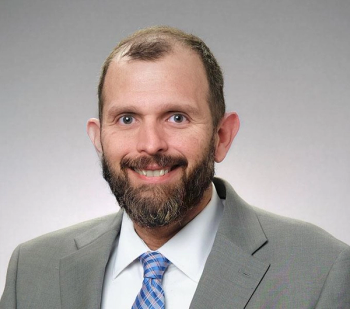
Brandon Mancini, MD, MBA, FACRO, discusses the presentations from ASTRO 2026 that may impact the future of prostate cancer, lung cancer, and other diseases.
Host Brandon Mancini, MD, MBA, FACRO, discusses stereotactic radiosurgery, proton therapy, and other relevant modalities in the management of brain tumors.
In honor of Brain Tumor Awareness Month in May, RadOnc on the Run host Brandon Mancini, MD, MBA, FACRO, discussed the extensive roles that radiation oncology can play in the management of brain tumors and central nervous system (CNS) malignancies. He touched upon how modalities such as stereotactic radiosurgery, proton therapy, adaptive planning, artificial intelligence (AI), theranostics, and emergent radioligand therapies can elevate the care of patients with glioblastoma, medulloblastoma, ependymoma, CNS lymphoma, and other conditions.
Mancini emphasized how the field has increasingly adopted precise technologies such as Gamma Knife, CyberKnife, and linear accelerator–based radiosurgery, which have allowed clinicians to target specific tumor locations while sparing normal brain tissue. Looking toward the future, he noted how advances in molecular imaging and circulating tumor DNA may help further develop personalized treatment strategies for patients.
The discussion also covered unique considerations for treating patients with meningiomas, which may require multiple lines of therapy due to their more malignant or aggressive nature at baseline. Mancini described how DOTA-TATE PET-based imaging may assist with visualizing disease and planning radiotherapy strategies for those with meningiomas.
“The field of CNS radiation oncology has evolved tremendously from large-field radiation decades ago to stereotactic radiosurgery, proton therapy, adaptive planning, AI integration, and molecular targeted radiopharmaceutical therapy. The pace of innovation is truly accelerating rapidly, and it is very exciting for patients as far as what the future holds…. The center of all this technology is still the patient,” Mancini stated. “Every advancement ultimately aims to improve survival, preserve neurocognitive [and] neurologic function, maintain dignity, and improve quality of life. For patients and families [with] brain tumors, hope increasingly comes not only from one breakthrough but from the convergence of many advances happening simultaneously across imaging, radiation oncology, surgery, systemic therapy, and precision medicine.”
Mancini is the medical director at Bold Advanced Medical Future Health, a clinical associate professor in the Department of Radiology at Michigan State University College of Human Medicine, and the editor at large for RadOnc Review, a supplement of the journal ONCOLOGY®.