Around the Practice

3 KOLs are featured in this series.

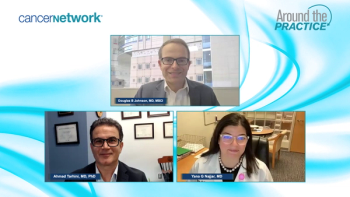
Leading oncology experts come together for an in-depth virtual roundtable on immunotherapy strategies in advanced or metastatic melanoma. Moderated by Dr. Douglas B. Johnson of Vanderbilt University Medical Center, and joined by distinguished panelists Dr. Ahmad Tarhini (Moffitt Cancer Center) and Dr. Yana G. Najjar (University of Pittsburgh Medical Center), the series explores the evolving treatment landscape with a focus on real-world application, efficacy, and patient safety.

Panelists discuss the current treatment landscape of ES-SCLC, review recent clinical trials, and how they prepare their sites for tarlatamab administration, patient monitoring and management of adverse events

4 experts in this video

Jason Efstathiou, MD, DPhil, FASTRO, FACRO; Brandon Mancini, MD, MBA, FACRO; Comron Hassanzadeh, MD, MPH; and Bridget Koontz, MD, FASTRO, discuss the evolving role of PSMA PET imaging in prostate cancer, examining its impact on diagnosis, disease staging, treatment decisions, and posttreatment assessment. They also review key clinical trial data, current guideline recommendations, and real-world applications of PSMA PET imaging in practice.

5 experts in this video

Krish Patel, MD; Saurabh Dahiya, MD, FACP​; Nathan Denlinger, DO, MS; Mohamed M. Hegazi, MD​, and Samuel Yamshon, MD discuss how, the DLBCL treatment landscape has evolved with CAR-T therapies transforming outcomes in R/R cases. Key considerations include risk stratification, optimal sequencing, and real-world efficacy vs. trial data. Future advances may refine patient selection, enhance manufacturing, and integrate novel therapies for improved durability and safety.

Panelists discuss how a patient-centered approach, shared decision-making, and clear communication between physicians, patients, and caregivers are essential in improving care, treatment adherence, and long-term management for individuals with paroxysmal nocturnal hemoglobinuria (PNH).

This program was made possible with support from Novartis Pharmaceuticals.

Panelists discuss how the CAR-T referral process for relapsed/refractory multiple myeloma involves careful patient selection, bridging therapy, and coordination between community and academic centers to optimize treatment outcomes.

Cristina Gasparetto, MD; Amandeep Godara, MBBS; Ken Shain, MD, PhD; and Mansi Shah, MD, examine evolving treatment paradigms in newly diagnosed multiple myeloma (NDMM), highlighting the increasing role of daratumumab-based regimens across the care spectrum—from induction through maintenance—supported by landmark trials like PERSEUS, CASSIOPEIA, and AURIGA that demonstrate improved outcomes with these approaches while considering patient-specific factors in treatment selection.

4 experts are featured in this series.

Al-Ola Abdallah, MD; Muhammad Umair Mushtaq, MD; Jeries Kort, MD; and Zahra Mahmoudjafari examine the evolving landscape of chimeric antigen receptor (CAR) T-cell therapy in earlier lines of treatment for relapsed/refractory multiple myeloma, exploring institutional challenges around patient selection, slot availability, referral processes, and decision-making frameworks while considering both clinical and practical factors that influence treatment sequencing and access.

4 experts are featured in this series.

Alfred Garfall, MD; Omar Nadeem, MD; Naresh Bumma, MD; and Surbhi Sidana, MD,explore the evolving therapeutic landscape of relapsed/refractory multiple myeloma, including bispecific antibodies, real-world outcomes across treatment settings, optimal sequencing strategies after CAR T progression, and long-term efficacy data from key clinical trials like MajesTEC-1.

Saad Usmani, MD, MBA; Carlyn Rose Tan, MD; Sham Mailankody, MBBS, and Sridevi Rajeeve, MD, examine evolving chimeric antigen receptor (CAR) T-cell therapy in multiple myeloma, discussing recent clinical trial data for cilta-cel and ide-cel, comparing study outcomes, evaluating institutional implementation factors, and assessing patient eligibility criteria for optimal therapy selection in earlier treatment lines.