Articles by Hatim Husain, MD

Explore significant updates in the field of EGFR-mutant lung cancer treatment, focusing on the introduction of combination therapy in the first-line setting, including the FLAURA2., MARIPOSA, and RAMOSE trials, offering improved progression-free survival and potential implications for patient care.
Insights into diagnosing EGFR-mutant lung cancer and explores evolving first-line treatment strategies, incorporating recent developments, combinations, and clinical trial data, while addressing challenges in testing and patient management.
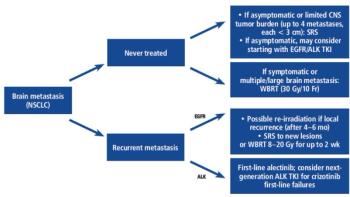
Systemic Treatment Options for Brain Metastases from Non–Small-Cell Lung Cancer
ByAjaz Bulbul, MD,Patrick M. Forde, MD,Ayesha Murtuza, MD,Brian Woodward,Hannah Yang,Ingmar Bastian,Parissa K. Ferguson, MS,Fernando Lopez-Diaz, PhD,David S. Ettinger, MD,Hatim Husain, MD In this review, we discuss recent clinical investigations that highlight the effects of novel compounds targeting EGFR, ALK, and other receptor oncogenes, as well as the promise of immunotherapy in lung cancer CNS disease.

Lung cancer remains the leading cause of cancer-related death in the United States. Ongoing research into the molecular basis of lung cancer has yielded insight into various critical pathways that are deregulated in lung tumorigenesis, and in particular key driver mutations integral to cancer cell survival and proliferation.
Ganti and colleagues have provided a brief review on the diagnosis of small-cell lung cancer (SCLC) and the roles of chemotherapy and surgery in its management. Notably, in the past three decades, the most significant progress in the treatment of SCLC has mainly involved the use of radiotherapy. Thus, to complement their assessment, we will provide an overview of the role of radiation in the management of limited-stage and extensive-stage SCLC.