Two clinical scenarios illustrated shared decision-making in practice: a 58-year-old woman with TP53 mutation, L858R, and asymptomatic brain metastases drew unanimous consensus for treatment intensification with either FLAURA2 or MARIPOSA, given her high-risk features and flexible schedule.
The debate examined whether amivantamab-lazertinib or osimertinib-chemotherapy more favorably reshapes resistance biology, with the MARIPOSA team citing data showing lower rates of MET amplification (7.3% vs. 13.1%) and secondary EGFR mutations (1.4% vs. 7.6%) compared to osimertinib monotherapy, alongside a potential immune-activating effect of amivantamab and a possible curve-flattening signal suggesting disease course modification.
Panelists agreed that subcutaneous amivantamab represents meaningful progress over the IV formulation, nearly eliminating infusion reactions, reducing dosing frequency to every four weeks, and lowering high-grade dermatologic toxicity, although grade 1-2 rash and the burden of the COCOON prophylaxis regimen remain relevant considerations for patients.
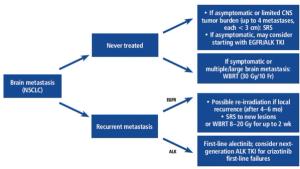
The debate centered on CNS efficacy comparisons between MARIPOSA and FLAURA2, with the key distinction being that MARIPOSA mandated serial brain MRIs for all patients, enabling full intracranial PFS analysis across all 429 participants, whereas FLAURA2 only required serial imaging in patients with baseline CNS metastases, limiting the robustness of its CNS data.
The TOP trial, a phase three study focused exclusively on TP53-mutant EGFR-mutant non-small cell lung cancer, validated the FLAURA2 findings in this high-risk subset, showing a striking PFS benefit of 34.0 versus 15.6 months (HR 0.44) for osimertinib plus chemotherapy over monotherapy, with a favorable duration of response of 32.7 versus 15.9 months, though overall survival data remain immature.
The FLAURA2 phase three trial demonstrated that adding platinum-based chemotherapy to osimertinib significantly improved outcomes over osimertinib monotherapy in first-line EGFR-mutant non-small cell lung cancer, with a median PFS of 29.4 versus 19.9 months and a statistically significant overall survival benefit of 47.5 versus 37.6 months.
The COPERNICUS study, an ongoing phase two trial, evaluated amivantamab-based regimens in EGFR-mutant non-small cell lung cancer across two cohorts, first-line and post-osimertinib progression, with a key focus on implementing mandatory prophylactic skin and DVT regimens, resulting in dramatically lower rash rates (4% grade 3+) compared to the original MARIPOSA trial.
Panelists discuss the pivotal MARIPOSA trial, which examined combining amivantamab with lazertinib versus osimertinib monotherapy, showing improvements in progression-free survival (23.7 vs. 16.6 months), overall survival, CNS efficacy, and particularly strong benefits in high-risk subgroups such as TP53-mutant patients. Safety data from the trial highlighted the importance of prophylactic measures, especially for rash and other adverse events, noting that with current prophylaxis protocols, serious toxicity rates have been significantly reduced compared to the original study.
Dr. Husain discusses how anticipating resistance mechanisms and tailoring post-progression strategies based on initial therapy are key to optimizing sequencing in EGFR-mutant NSCLC.
Dr. Husain discusses how selecting between FLAURA-2, MARIPOSA, and other frontline regimens requires balancing efficacy, safety, and sequencing considerations to deliver the most personalized care in EGFR-mutant NSCLC.
Dr. Husain discusses how updated MARIPOSA and FLAURA-2 data highlight the growing role of combination regimens in improving both systemic and CNS outcomes for patients with EGFR-mutant NSCLC.
An expert discusses how comprehensive genomic profiling will continue growing as an essential component of personalized cancer care, expanding into serial testing for resistance monitoring, tumor burden tracking, and potentially earlier-stage cancers as targeted therapies prove effective beyond advanced disease.
An expert discusses how education about the clinical impact of genomic testing, understanding of targeted therapies, turnaround times, and team-based approaches are essential to bridge the gap in routine comprehensive genomic profiling adoption.
An expert discusses how comprehensive genomic profiling panels that include relevant targets, resistance markers, and clonal hematopoiesis information have proven most useful, along with technologies that can detect fusion events, point mutations, and copy number variations for serial monitoring over time.
An expert discusses how molecular profiling has become essential for most solid tumor cancers, particularly in lung cancer, where both tissue- and plasma-based testing using next-generation sequencing help identify actionable genomic targets and monitor resistance patterns.
An expert discusses how molecular profiling has become essential for most solid tumor cancers, particularly in lung cancer, where both tissue- and plasma-based testing using next-generation sequencing helps identify actionable genomic targets and monitor resistance patterns.
Closing insights into managing EGFR-mutant NSCLC, from evolving treatment options and sequencing strategies to addressing unmet needs and the importance of comprehensive genomic testing.
Unmet needs in EGFR exon 20 insertion lung cancer, emphasizing the importance of early identification, selectivity against wild type EGFR, CNS activity, and mechanisms of resistance.
Experts discuss the rapidly evolving treatment landscape for EGFR exon 20 insertion lung cancer, highlighting recent advancements in therapies, clinical trial results, and the quest for first-line treatment options, providing valuable insights into managing this unique patient population.
Learn about the latest developments in the treatment of lung cancer, focusing on EGFR mutations, antibody-drug conjugates (ADCs), targeted therapies, and biomarker-driven approaches to improve patient outcomes in various stages of the disease.
Shared insight into the complexities in treating EGFR mutant lung cancer during the second-line therapy phase, including safety profiles of different treatment regimens, managing toxicities, and ongoing research to improve patient outcomes.
Experts consider the influence of combination therapies on EGFR-mutant lung cancer treatment, including the impact on central nervous system (CNS) response, challenges in CNS metastases management, and the potential alternatives to whole-brain radiation.