

TAS-117 showed limited clinical efficacy in treating patients with ovarian cancer harboring PIK3CA E545K mutations and in those with breast cancer harboring PIK3CA H1047R and Akt1E17K mutations.
TAS-117 showed limited clinical efficacy in treating patients with ovarian cancer harboring PIK3CA E545K mutations and in those with breast cancer harboring PIK3CA H1047R and Akt1E17K mutations.

Lifileucel (LN-144), the tumor-infiltrating lymphocyte therapy, showed a positive objective response rate with the median duration of response not yet reached after more than 28 months of follow-up in patients with advanced melanoma.

These data establish pembrolizumab as a promising treatment option for those with locally advanced and recurrent/metastatic cutaneous squamous cell carcinoma, according to Brett G.M. Hughes, MD.

The combination adjuvant treatment of ipilimumab plus nivolumab did not meet the dual primary endpoints of the phase 3 CheckMate-915 trial, failing to improve relapse-free survival in the intent-to-treat and PD-L1 of less than 1% populations.

Germline variants in cancer predisposition genes were associated with worse event-free and overall survival in patients with neuroblastoma.
Phase 2 data found that the combination of nivolumab plus ipilimumab demonstrated significant anti-tumor activity for patients with mCRPC.
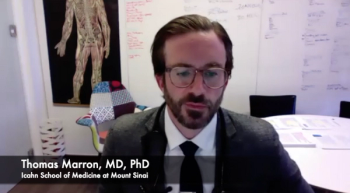
Marron discussed the primary objectives and early data from a phase 1 trial presented at the virtual AACR Annual Meeting regarding the neoantigen peptide vaccine, PGV-001.

Nivolumab in combination with paclitaxel showed clinical activity and a manageable safety profile when used as second-line therapy for patients with Epstein-Barr virus–related, microsatellite instability–high/mismatch repair deficient or PD-L1–positive advanced gastric cancer.

Trastuzumab deruxtecan has not only demonstrated efficacy as a potential anti-HER2 therapeutic option for patients with HER2-amplified gastric cancers, but has also shown promise in those with HER2 moderate-, low-, and non-expressing disease.
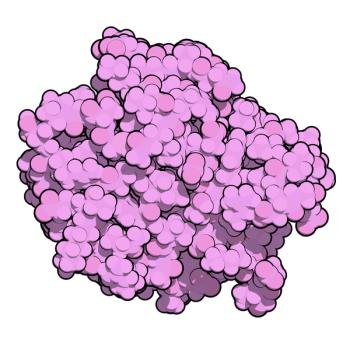
The early results showed that voruciclib led to a rapid decrease in the phosphorylation of proteins that promote MYC transcription and quickly decreases phosphorylation of MYC protein on Serine 62 (Ser62), which is a site implicated in stabilizing MYC in KRAS-mutant cancers.
Frontline treatment with tebentafusp significantly improved overall survival in patients with metastatic uveal melanoma, according to data from the phase 3 IMCgp100-202 trial.
The MD Anderson expert discussed the main takeaway from the data published during the virtual AACR Annual Meeting, while looking forward to what comes next with these genetic drivers.

Maintaining a healthy lifestyle mitigated the genetic risk for lethal prostate cancer in men with high genetic risk.

The CheckMate-816 trial is the first positive phase 3 trial demonstrating a significant improvement in pathologic response with neoadjuvant immunotherapy plus chemotherapy in resectable non-small cell lung cancer.
Cancer Network spoke with Lecia V. Sequist, MD, MPH, about the TATTON study, which tested the combination of osimertinib and savolitinib in previously treated non–small-cell lung cancer patients.
Cancer Network spoke with Jennie Williams, PhD, and Jenny Paredes, a PhD student, about how tumor biology impacts chemotherapy response in African American vs Caucasian patients.
Cancer Network spoke with Ryan J. Sullivan, MD, about the efficacy and safety of entinostat plus pembrolizumab in patients previously treated with immunotherapy.
Cancer Network spoke with Carlo Maley, PhD, about how strategies utilized in agriculture can be applied to drug resistance in oncology.

Cancer Network spoke with Sheila A. Stewart, PhD, on how age-related changes in the tumor microenvironment may impact progression and metastasis.
Cancer Network spoke with Mark H. O'Hara, MD, about the safety and efficacy of APX005M in combination with standard chemotherapy with or without nivolumab.

During AACR 2018, Dr. Diaz discusses the progress of his laboratory’s colorectal cancer research as part of the Stand Up 2 Cancer Colorectal Dream Team.
In this video, Dr. Melissa Davis explains how African ancestry may play a role in breast cancer, and ways that genetics might be used to help guide treatment.

In this video, Dr. Brian Schwartz highlights several small-molecule TKIs in development with the potential to help patients with several malignancies.
In this video, Pashalina Kehagias discusses how an early increase in ctDNA may predict a poor response to regorafenib in advanced CRC.

In this video, Dr. Edison Liu describes a novel patient-derived xenograft platform that might enable development of a mouse-based clinical trials program.
In this video, Dr. Elizabeth Swisher reviews the use of PARP inhibitors in breast cancer, and the importance of understanding how resistance to these agents develops.

In this video, Dr. Judd Moul discusses disparities in prostate cancer screening among African-American men, and the need for more research in this area.

In this video, Dr. Arman Rahman explains how the OncoMasTR protein assay may help women with breast cancer avoid unnecessary chemotherapy.

In this video, Dr. Patricia Steeg discusses the role of the blood-tumor barrier in both development and treatment of brain metastases.

In this video, Dr. Douglas Fearon outlines ways that inhibiting CXCR4 may provoke an immune response to treat pancreatic and colorectal cancer.