

Marron spoke about the value that neoantigen vaccines can provide by studying T-cell responses and the characteristics of lymphoid response to antigens.
Marron spoke about the value that neoantigen vaccines can provide by studying T-cell responses and the characteristics of lymphoid response to antigens.

CancerNetwork® spoke with Francesco Ravera, MD, PhD, during the American Association for Cancer Research Annual Meeting 2021 to discuss a study that looked at cell-free DNA assessment compared with traditional MRI for determining pathological complete response in patients with locally advanced breast cancer.

Kim discussed the need for further CREB inhibitor combinations to target collateral pathways and improve patient outcomes.

Low-grade, manageable treatment-emergent adverse effects and low rates of discontinuation were associated with the RET inhibitor selpercatinib as therapy for patients with RET-altered advanced solid tumors who were treated on the LIBRETTO-001 trial.
The lymphoma expert discussed how adding copanlisib to rituximab improved progression-free survival, while demonstrating a manageable safety profile in patients with relapsed indolent non-Hodgkin lymphoma.

Marron discussed the next steps to a trial of PGV-001, specifically centered around determining the immunogenicity of vaccinated patients against their antigens.
The lymphoma expert offered highlights from the meeting, with hopes that more treatment options will be available for patients with lymphoma.

CancerNetwork® spoke with Abdulraheem Yacoub, MD, during the American Association for Cancer Research Annual Meeting 2021 to discuss how predictors of response to therapy may be just as important as the development of new therapies for advancing outcomes in myelofibrosis and myeloproliferative neoplasms.

Kim detailed the specifics of his research from the American Association for Cancer Research Annual Meeting 2021 focusing on novel therapies to target mutations and upstream or downstream pathways.

Marron detailed the research process for a phase 1 trial of PGV-001 presented virtually at the American Association for Cancer Research Annual Meeting 2021.

CancerNetwork® spoke with Vivek Subbiah, MD, during the virtual American Association for Cancer Research Annual Meeting 2021 to discuss the most important data to come out of the meeting regarding therapy for tumors harboring KRAS mutations.

Twenty percent of patients with resectable hepatocellular carcinoma experienced significant tumor necrosis when treated with neoadjuvant cemiplimab-rwlc, according to data from a phase 2a open label.

Patients with EGFR T790M-positive non–small cell lung cancer who progressed on prior treatment experienced a clinically meaningful efficacy when treated with D-0316.

A promising objective response rate and a tolerable safety profile were observed with telisotuzumab vedotin monotherapy to treat patients with previously treated c-Met–positive advanced non–small cell lung cancer.

CancerNetwork® spoke with Matthew D. Galsky, MD, during the American Association for Cancer Research Annual Meeting 2021 to discuss leading data to come out of the meeting and what it means for the future of cancer systemic therapy.

Patients with germline and/or homozygous tumor DNA damage response alterations among male patients with heavily pretreated metastatic castration-resistant prostate cancer were most likely to respond to treatment with the PARP inhibitor talazoparib.

In a phase 1 study of the innate cell engager AFM13, all 4 patients with CD30-positive, relapsed/refractory Hodgkin lymphoma treated with the therapy achieved at least a partial response.

The majority of independently adjudicated interstitial lung disease cases associated with the antibody-drug conjugate were low grade and occurred within the first 12 months of treatment.

A durable clinical benefit was seen from the dual inhibition of the MAPK pathway using BRAF and MEK inhibitors dabrafenib and trametinib, respectively, to treat patients with BRAF V600E mutant low- and high-grade glioma.

The clinical benefit rate of the neratinib plus fulvestrant combination treatment did not meet the predefined efficacy threshold, but was active in heavily pretreated patients with estrogen receptor-positive, metastatic breast cancer.
The lymphoma expert discussed how the addition of copanlisib to rituximab may add another treatment option for patients with relapsed indolent B-cell lymphomas.

Twice- versus once-daily dosing of investigational poziotinib for HER2 and EGFR mutations in exon 20 was more efficacious and better tolerated, according to results of the phase 2 ZENITH20 trial presented at the AACR Annual Meeting 2021.

For patients with recurrent platinum-resistant epithelial ovarian cancer who were naïve to PD-1/PD-L1 inhibition, the combination treatment of tislelizumab plus sitravatinib showed early antitumor activity while maintaining a manageable safety profile.

The safety and efficacy of experimental combinations of investigational agents are being analyzed as treatment for advanced clear cell renal cell carcinoma as part of a phase 1b/2 umbrella platform study.

In an analysis of a cohort of patients treated with atezolizumab in the myPathway trial, a tumor mutational burden cutoff of 16 mutations per megabase or higher was key for achieving durable responses in various solid tumors.
During a presentation at the American Association of Cancer Research Annual Meeting 2021, Ben L. Kong, PharmD, described the SMMART program, which pairs genetic and clinical information to find the best therapies for patients with breast cancer who progress on standard therapies.

Data presented at the virtual AACR Annual Meeting 2021 showed that a phase 2 trial examining combination treatment with adavosertib plus irinotecan met its protocol-defined efficacy end point in a cohort of pediatric patients with neuroblastoma.
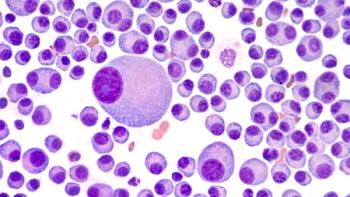
The selective MCL-1 inhibitor AMG 176 plus gilteritinib as a combination treatment synergistically targeted preclinical models of FLT3 internal tandem duplication–mutated acute myeloid leukemia.

Patients with non‒small cell lung cancer with undetectable circulating tumor MET Exon 14 following treatment with savolitinib are more likely to have positive progression-free and overall survival outcomes.
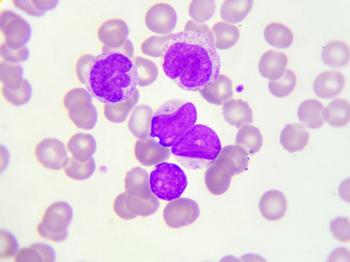
Adding parsaclisib to the ruxolitinib treatment of patients with myelofibrosis who had a suboptimal response on a standard dose of ruxolitinib alone led to improvements in spleen volume reduction and symptom burden.