
The FDA has set a Prescription Drug User Fee Act date of May 9, 2024 for the potential full approval of tisotumab vedotin for those with recurrent or metastatic cervical cancer.
The FDA has set a Prescription Drug User Fee Act date of May 9, 2024 for the potential full approval of tisotumab vedotin for those with recurrent or metastatic cervical cancer.

Data from the phase 2 A-PLUS trial indicate that bevacizumab plus chemotherapy prior to whole brain radiotherapy may be an efficacious systemic strategy for intractable brain and extracranial metastases stemming from breast cancer.
Providers should inform patients with breast cancer that selecting later-line therapies following prior treatment with CDK4/6 inhibitors is a “developing area,” says Abigail M. Johnston, JD.
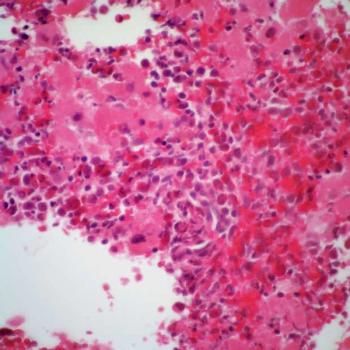
Treatment with asciminib produces a favorable safety profile among patients with Philadelphia chromosome–positive chronic myeloid leukemia in chronic phase.

Treatment with iopofosine I 131 appears to be well tolerated among patients with relapsed/refractory Waldenström macroglobulinemia.

Sarah Donahue, MPH, NP, discusses her strategy for administering doxorubicin, cyclophosphamide, and antiemetics to manage nausea following trastuzumab deruxtecan therapy for patients with hormone receptor–positive breast cancer.

Treatment with atezolizumab monotherapy yields an acceptable toxicity profile compared with chemotherapy among those with advanced or metastatic urothelial carcinoma.
Fatigue and mouth sores are some of the common adverse effects associated with treatment using palbociclib or ribociclib, says Sarah Donahue, MPH, NP.

Investigators report that prediabetes may prove to be a target for intervention to decrease morbidity and mortality in survivors of pediatric cancer.

Treatment with CDK4/6 inhibitors does not appear to result in severe neutropenic fever compared with chemotherapy for breast cancer, according to Sarah Donahue, MPH, NP.

Investigators note that the benefit of maintenance olaparib rechallenge in previously treated, platinum-sensitive ovarian cancer extends to the BRCA-mutant and non-mutant cohorts.

A population of patients with multiple myeloma describes experiencing challenges including confusion regarding the complexities of their diagnoses and managing chronic treatment-related adverse effects in a qualitative study.

It is crucial to ensure equitable access to high-quality survivorship care among lesbian, gay, and bisexual adolescent and young adult cancer survivors, according to Michael E. Roth, MD.

Data from the phase 3 NATALEE trial highlight a positive toxicity profile for ribociclib as an adjuvant therapy for patients with hormone receptor–positive, HER2-negative breast cancer, says Neil M. Iyengar, MD.
Future research will focus on ctDNA dynamics change over time in the full translational cohort of patients with hormone receptor–positive breast cancer in the phase 3 monarchE study, says Stephanie L. Graff, MD.
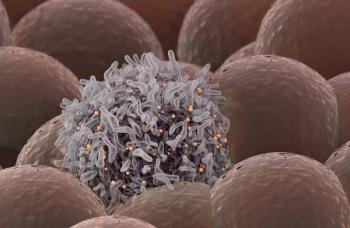
Results from a long-term analysis of the phase 3 IMCgp100-202 trial indicate that tebentafusp results in better disease control and long-lasting responses in those with HLA-A*02:01–positive, previously untreated metastatic uveal melanoma.

The FDA lifts its hold on a clinical program for lacutamab in lymphoma after a fatal adverse effect in the phase 2 TELLOMAK trial is determined to be related to aggressive disease progression.
Findings from a phase 3 trial highlight regression of central nervous system metastases across all heavily pretreated breast cancer subtypes with Bria-IMT.

Findings from a National Cancer Database analysis highlight no statistically significant differences in survival outcomes with chemotherapy for patients over 81 years old with triple-negative breast cancer compared with those who do not receive chemotherapy.

GPRC5D may be a promising therapeutic pathway in the treatment of those with relapsed/refractory multiple myeloma, says Susan Bal, MD.

Sugemalimab is now approved for managing esophageal squamous cell carcinoma in China following results from the phase 3 GEMSTONE-304 study.

Data from a phase 2 trial support the potential survival benefit of CAN-2409 plus prodrug for patients with borderline resectable pancreatic ductal adenocarcinoma.
An analysis based on the phase 3 TRANSFORM and TRANSCEND trials shows an increase in cost-effectiveness, life-years, and quality-adjusted life-years compared with standard of care in patients with relapsed/refractory diffuse large B-cell lymphoma.

Data from the phase 1b MonumenTAL-2 trial support pomalidomide plus talquetamab as a promising treatment option in relapsed/refractory multiple myeloma, says Jeffrey Matous, MD.

Combining olverembatinib with blinatumomab appears to produce high complete molecular remission rates in patients with newly diagnosed, Philadelphia chromosome–positive acute lymphoblastic leukemia, says Elias Jabbour, MD.

Patients with non–small cell lung cancer who already received LN-145 in the phase 2 IOV-LUN-202 trial will be followed per trial protocol following the FDA’s clinical hold.

A review from the FDA confirms the dose comparison post-marketing requirement that was detailed at the time of sotorasib’s accelerated approval for those with KRAS G12C–mutated non–small cell lung cancer.

A phase 1 clinical trial has found the optimal dosing schedule with a tolerable safety profile of vibecotamab in patients with relapsed/refractory acute myeloid leukemia.
Overall, the findings highlight the potential of bispecific antibodies as salvage therapy post anti-CD19 CAR T cell treatment and challenges associated with allogeneic hematopoietic cell transplantation consolidation after bispecific antibodies therapy in patients with relapsed/refractory B-cell lymphomas .