
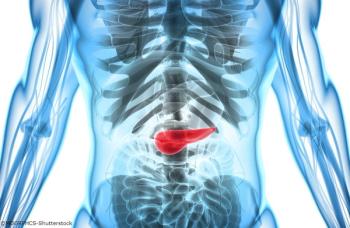
Although sintilimab improved overall response rates and maintained a tolerable safety profile for patients with metastatic or recurrent pancreatic adenocarcinoma, it did not improve overall or progression-free survival.
Although sintilimab improved overall response rates and maintained a tolerable safety profile for patients with metastatic or recurrent pancreatic adenocarcinoma, it did not improve overall or progression-free survival.
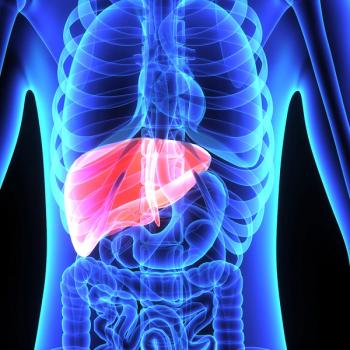
Patients with advanced hepatocellular carcinoma achieved a statically significant and clinically meaningful survival benefit following treatment with pembrolizumab and best supportive care in the second line.

Patients with biliary tract cancer who were given the adjuvant oral fluoropyrimidine derivative S-1 had better overall survival compared with surgery alone.
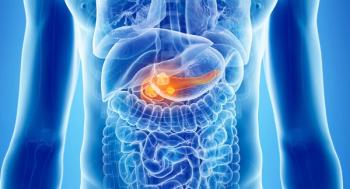
Updated results from a cohort of the KRYSTAL-1 trial spotlight the potential of adagrasib for patients with previously treated KRAS G12C¬–mutant gastrointestinal tumors.

Risks of skin-related adverse events from nivolumab may be predicted by the presence of Arthrobacter and fatty acid metabolism pathways in the gut microbiome of patients with advanced gastric cancer.

Adding pembrolizumab to chemotherapy does not improve outcomes over chemotherapy alone in patients with advanced gastric or gastroesophageal junction adenocarcinoma, according to updated results of the KEYNOTE-062 trial.

Patients with resectable microsatellite instable/mismatch repair–deficient oeso-gastric junction adenocarcinoma experienced a high rate of pathologic complete response following treatment with neoadjuvant nivolumab and ipilimumab followed by adjuvant nivolumab.
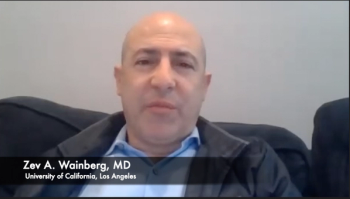
In an interview with CancerNetwork® during the 2022 Gastrointestinal Cancer Symposium, Zev A. Wainberg, MD, discussed key updates from the phase 3 KEYNOTE-062 trial, examining pembrolizumab plus or minus chemotherapy for patients with advanced gastric and gastroesophageal junction adenocarcinoma.

Patients saw an improvement in overall survival when given fam-trastuzumab deruxtecan-nxki to treat HER2-positive gastric cancer or gastroesophageal junction adenocarcinoma.

Looking forward, Andrzej Jakubowiak, MD, PhD, anticipates CAR T-cell therapy with ciltacabtagene autoleucel will establish its place across various indications for multiple myeloma.
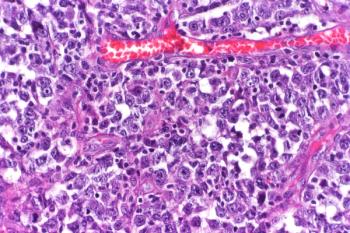
This review article discusses which frontline treatment are best for diffuse large B-cell lymphoma.

The Japan Ministry of Health, Labour and Welfare granted approval to the KRAS inhibitor sotorasib for the treatment of adults with KRAS G12C–mutated non–small cell lung cancer.
Patients 70 years or older that received neoadjuvant chemotherapy and radical cystectomy had better overall survival than those undergoing radical cystectomy alone.

Jun Gong, MD, gives his perspective on neoadjuvant chemotherapy in elderly patients with muscle-invasive bladder cancer.
Sugemalimab showed promise in the phase 2 GEMSTONE-201 trial in a group of patients with extranodal natural killer/T-cell lymphoma; developer CStone is set to submit a new drug application for the treatment to the National Medical Products Administration of China.

Patients with unresectable hepatocellular carcinoma received an overall survival benefit following first-line treatment with durvalumab (Imfinzi) and tremelimumab.

Although female representation for National Comprehensive Cancer Network guidelines has increased to at least 50%, participation in guideline panels across all organizations is still less than 30%.

Gilead Sciences has announced the voluntary withdrawal of idelisib from the United States market in several indications including follicular lymphoma and small lymphocytic leukemia.
Yael Cohen, MD, sat down with CancerNetwork® to spotlight a number of promising treatments that are under investigation for patients with heavily-pretreated multiple myeloma.

When compared with placebo and chemotherapy, durvalumab plus gemcitabine and cisplatin was superior in terms of overall survival in the treatment of advanced biliary tract cancer.
CancerNetwork®, sat down with Yael Cohen, MD, to discuss the research that lead up to the phase 2 CARTITUDE-2 trial, examining the use of ciltacabtagene autoleucel for those with lenalidomide–refractory multiple myeloma

“If we can understand the mechanisms of resistance to be able to monitor [patients] in real time, then we will be able to turn many cases of cancer into chronic diseases.”
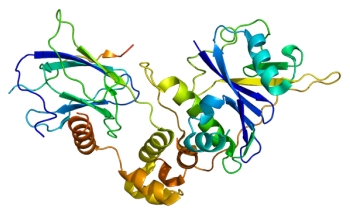
In an interview with ONCOLOGY®, Natasha Khrystolubova, BPharm, RPh, BCOP, offers a comprehensive review of real-world treatment considerations of belzutifan as therapy for patients with renal cell carcinoma.

In this episode of "Oncology Peer Review On-The-Go," Amy Comander, MD, spoke with CancerNetwork regarding important developments in breast cancer that took place in 2021 and key clinical trials that read out throughout the year.

CYNK-101 plus standard frontline chemotherapy, trastuzumab, and pembrolizumab has received a fast track designation from the FDA for patients with advanced HER2-positive gastric or gastroesophageal junction adenocarcinoma.

Patients undergoing pancreaticoduodenectomy for pancreatic ductal adenocarcinoma experienced a better overall survival when treated with adjuvant chemotherapy.
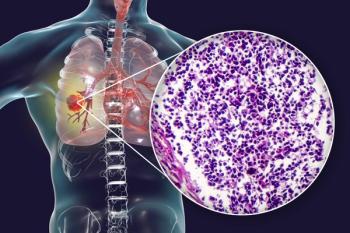
Investigators reported that combining a blood-based biomarker panel with PLCOm2012 resulted in a significant improvement in risk assessment for lung cancer screenings.

Fam-trastuzumab deruxtecan-nxki, which was granted a priority review designation, appears to have potential for patients with HER2-positive unresectable/metastatic breast cancer.

Women diagnosed with ovarian cancer were reported to have longer waiting times for treatment vs other cancer types with the exception of kidney cancer.

Lindsey Roeker, MD, spoke about identifying the correct population of patients with chronic lymphocytic leukemia who will benefit from umbralisib and ublituximab plus ibrutinib.