

Patients who developed brain metastases from renal cell carcinoma experienced promising intracranial activity after being treated with cabozantinib.
Patients who developed brain metastases from renal cell carcinoma experienced promising intracranial activity after being treated with cabozantinib.

Despite the importance of incorporating palliative care into strategies for metastatic kidney cancer, little data exists in the space, highlighting a need for further research.

Patients with melanoma, head and neck squamous cell carcinoma, and cervical cancer who had not previously received immunotherapy and were treated with lifileucel plus pembrolizumab experienced promising overall response rates compared favorably with historical data on pembrolizumab monotherapy.

CancerNetwork®sat down with John Burke, MD, to discuss why treatment with pembrolizumab post-surgery may be a promising option for patients with high-risk renal cell carcinoma.

Patients with relapsed/refractory adult B-cell acute lymphoblastic leukemia who were treated with AUTO1 experienced durable responses.

Patients with hormone receptor–positive breast cancer in 3 separate subgroups showed an overall survival benefit when treated with eftilagimod alpha plus paclitaxel compared with the placebo.
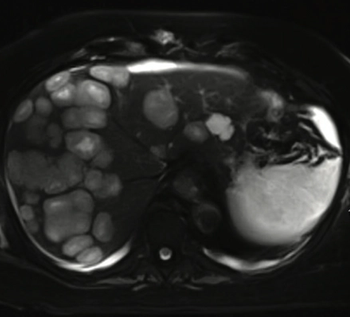
Ghulam Gous, MD, and colleagues report a case of glioblastoma with extensive liver metastases along with a review of previous reports of liver metastasis from glioblastomas and the possible mechanisms of metastasis.

CancerNetwork® sat down with Hossein Borghaei, DO, MS, to talk about the findings of the DESTINY-Lung01 study that were presented at 2021 ESMO.

In an interview with ONCOLOGY®, David Hughes PharmD, BCOP, and Jessica Freydman, PharmD, offers a comprehensive review of real-world treatment considerations of tepotinib as therapy for patients with metastatic non–small cell lung cancer that have MET exon14 skipping mutations.

“I’ve done a lot of work [not only with] clinical trials, but also understanding the disease, the prognostic factors, and the management of adverse effects.”

Adult patients with polycythemia vera may now be treated with ropeginterferon alpha-2b, the only interferon available for this population.

PSA testing rates for prostate cancer increased among men after the US Preventive Services Task Force released updated guidance in 2017 that reversed the recommendations from previous guidance in 2012.

Patients with melanoma who have asymptomatic brain metastases had long-lasting responses after being treated with first-line nivolumab and ipilimumab.
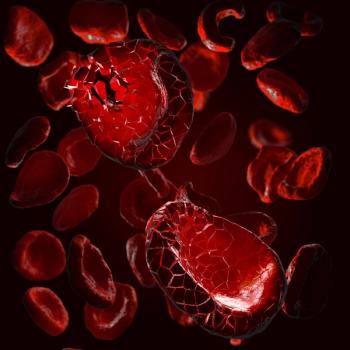
Cell therapy omidubicel, designed for patients with hematologic malignancies who are undergoing allogeneic stem cell transplant, will be submitted to the FDA for approval in 2022.

A select group of patients with metastatic renal cell carcinoma may benefit from cytoreductive nephrectomy followed by active surveillance as an alternative option to systemic therapy.

Patients with microsatellite instability-high/mismatch repair deficient metastatic colorectal cancer treated with first-line nivolumab plus low-dose ipilimumab experienced a durable clinical benefit.

Investigators noted evident racial and ethnic disparities among patients with high prostate-specific antigen levels who received subsequent prostate MRI imaging.

Patients who are White British and have been diagnosed with a malignant primary brain tumor were found to have a shorter survival compared with patients of other ethnicities.

A retrospective study suggests that there might be an association between pre-existing TP53 clonal hematopoiesis of indeterminate potential variants and therapy-related myeloid neoplasms for patients with high-grade ovarian cancer following treatment with rucaparib.

The single-cell functional precision medicine treatment, an artificial intelligence strategy helps to create therapies for patients with hematologic cancers.

Sponsored by Atlantic Health System
Eric D. Whitman, MD, discusses the clinical trial program at Atlantic Health System, a large nonprofit health care network in New Jersey, and how partnering with the Translational Genomics Research Institute will help to bring better care to patients with cancer.

Research estimates suggest that the cost of metastatic breast cancer, especially in younger and midlife women, is expected to rise from 2015 through 2030 along with the overall prevalence of cases.

Germline testing for BRCA1/2 mutations in tumor tissue for treatment selection of PARP inhibition in HER2-negative metastatic breast cancer did not show large differences in outcomes compared with blood testing, inferring feasibility of tumor testing.

The utilization of 68Ga-PSMA-11 PET allowed for positive sensitivity and specificity scores for patients with intermediate to high-risk prostate cancer following radical prostatectomy and lymph node dissection.

CancerNetwork® sat down with C. Jillian Tsai, MD, PhD, at the 2021 American Society for Radiation Oncology to talk about the use of stereotactic body radiation therapy to treat breast and lung cancer.
Patients with mutant-IDH2 acute myeloid leukemia experienced a better overall response rate when treated with enasidenib plus azacitidine compared with azacitidine alone.
Patients who received transoral robotic surgery for human papillomavirus–positive oropharynx squamous cell carcinoma were likely to experience pathologic extra nodal extension and positive margins following surgery.

The Centers for Medicare & Medicaid Service has released an interim final rule on COVID-19 vaccination for health care staff participating in Medicare and Medicaid programs, and the Occupation Safety and Health Administration has released an Emergency Temporary Standard for employers with 100 or more staff members.

The FDA granted Fast Track Designation to bemcentinib combined with a PD-L1 agent to treat patients with STK11 altered advanced/metastatic non–small cell lung cancer without actionable mutations.
CancerNetwork® sat down with C. Jillian Tsai, MD, PhD, at the 2021 American Society for Radiation Oncology to talk about why consolidative radiotherapy may be beneficial against oligoprogression in metastatic breast and lung cancer.