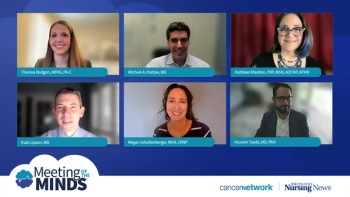
Panelists discuss how their key takeaways emphasize the importance of communication and collaboration between academic centers and community practices to ensure equitable access to bispecific therapies, highlighting that it’s an exciting time in myeloma treatment with patient-friendly options that can be administered closer to home, and concluding that virtually no patient should be denied exposure to bispecific therapy before discontinuing treatment, while anticipating that de-escalated Q4 weekly schedules and trispecific agents will transform current practice patterns in the coming years.
![A third of patients had a response [to lifileucel], and of the patients who have a response, half of them were alive at the 4-year follow-up.](https://cdn.sanity.io/images/0vv8moc6/cancernetwork/6b7c9a3270c71a70749ba86000cfc78a29d74309-2988x1702.png?w=350&fit=crop&auto=format)
![We have the current CAR [T-cell therapies], which target CD19; however, we need others.](https://cdn.sanity.io/images/0vv8moc6/cancernetwork/6d5ddb2c2098f525a65b378ece6ca55a114f95fc-2974x1660.png?w=350&fit=crop&auto=format)
![“Every patient [with multiple myeloma] should be offered CAR T before they’re offered a bispecific, with some rare exceptions,” said Barry Paul, MD.](https://cdn.sanity.io/images/0vv8moc6/cancernetwork/70a5f0fed7009863fe30cf0740cf32014ebaf5be-2974x1660.png?w=350&fit=crop&auto=format)