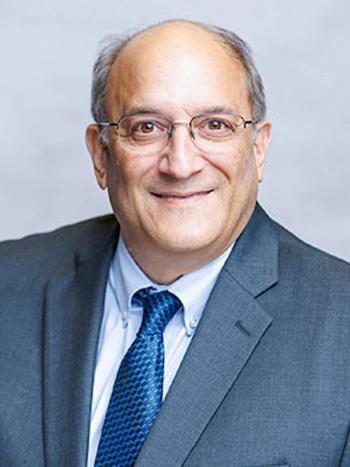
“Those of us who work with NK cells have no doubt that they are incredibly powerful at killing cancer cells,” said Veronika Bachanova, MD, PhD.
Alexander Z. Wei, MD, highlighted key clinical trials presented at ASCO GU and initiated at Columbia University to “move the needle” in bladder cancer.
Identifying patients who might succeed with bladder-sparing regimens, and equally as important, those who will not, is an important next step in the development of the bladder cancer space, according to Alexander Z. Wei, MD. Wei, assistant professor of Medicine (Hematology/Oncology) at the Columbia University Medical Center, discussed key data from the
First, he highlighted key ASCO GU trial readouts, including from the
Then, he identified 3 phase 1 trials initiated at Columbia, the first of which was the NEXUS-01 trial (NCT06465069) assessing LY4052031 in advanced metastatic urothelial cancer and other solid tumors.4 Additionally, he touched upon the FORAGER-1 trial, which is evaluating LOXO-435 among patients with an FGFR3 alteration, a common mutation in bladder cancers.5 Finally, he discussed another trial (NCT07301268) examining GI-102, a novel immunocytokine, with or without pembrolizumab prior to surgery to restore immune response to those who progressed on prior immunotherapy agents.6
Furthermore, despite the ability for surgeons to conduct complex procedures for patients, he noted that their higher biological age raises questions about their eligibility for intensive procedures, such as cystectomy. To that end, he highlighted findings from 2 trials presented at ASCO GU: the phase 2 RETAIN-2 trial (NCT04506554) and the phase 1b/2 EV-PRIME trial (NCT06470282), which both examined novel bladder-sparing regimens in MIBC.
Wei: It was an exciting conference. The biggest trial that was presented were the results from EV304. EV304 was a study looking at the combination of enfortumab vedotin plus pembrolizumab compared with platinum-based chemotherapy in the perioperative setting for muscle invasive bladder cancer. This is a space that hasn’t moved in a while, until last year, where enfortumab vedotin/pembrolizumab started coming into the cisplatin-ineligible space. Then we were all wondering this year, what was going to happen with the cisplatin-eligible population? The results were, unsurprisingly, very good.
Patients had a pathological CR rate after enfortumab vedotin/pembrolizumab of about 55%. If you include patients that refused cystectomy, it went up to 65%. As far as studies go, that can impact what we do in clinical practice. This changes things right after the weekend. A lot of people went back to clinic on Monday and started using neoadjuvant enfortumab vedotin and pembrolizumab for muscle invasive bladder cancer.
Other studies that were presented in the kidney cancer space. The LITESPARK studies were also [quite] impressive in the adjuvant setting. Belzutifan plus pembrolizumab compared with pembrolizumab alone lead to a survival benefit, and that moves the needle forward in the adjuvant space for kidney cancer.
Additionally, in the second-line space in advanced kidney cancer, belzutifan plus [lenvatinib] compared with cabozantinib was also a positive trial. [For] patients who were previously treated with checkpoint inhibitors, often the question was, what was second line treatment? This trial answered that profoundly, where the combination of the HIF-2⍺ inhibitor, belzutifan plus lenvatinib was positive compared with cabozantinib.
The bladder cancer space has moved quickly in the past couple of years. Up until about 3 years ago, we were still using platinum-based chemotherapy for almost everything, and nowadays we’re already looking at Nectin-4 ADCs with checkpoint inhibitors in the frontline. Now the question becomes, what do you do afterwards? Is Nectin-4, something that you can target? Are there other forms of targeted therapies that we can use, whether it’s an ADC or a targeted molecule?
At Columbia right now, we have 3 phase 1 trials that are pertinent to bladder cancer patients. We have LY4052031, which really rolls off the tongue in the NEXUS-01 trial, which is a novel NECTIN-4 antibody drug conjugate using a [topoisomerase I] payload. This is for patients that have progressed after enfortumab [and] platinum, and they need a potential new therapeutic agent for further cancer treatment.
Additionally, we have the FORAGER studies open, which looks at LOXO-435, which is a novel FGFR3 inhibitor. In current practice, there is an FDA approved FGFR3 inhibitor for patients that have that mutation in their bladder cancer. However, it is a toxic drug, so we have the FORAGER studies open here in phase 1 to find the next best thing for it.
The last study I would want to talk about is GI-102, that’s a novel immunocytokine that we have here at Columbia. It’s a CD80/IL-2 immunocytokine which hopes to restore immune therapy resistance in patients that have previously had immunotherapy and have since progressed. These are 3 exciting studies that we have at Columbia.
We’re [quite] fortunate in the bladder cancer space where we have skilled surgeons who perform these amazing surgeries. That’s including radical cystectomy, which is a complicated surgery where you remove a patient’s bladder in an attempt to cure them from certain cancers, especially bladder cancer. Now the challenge here is that with bladder cancer, the median age of diagnosis is about 72 or 73 years old. It’s the sixth most common cancer. When you put that math together, you’re looking at a lot of elderly patients that are being asked to go through this, while curative, very tough surgery.
The [first] question is, are all patients actually surgical candidates? The second question is, do all patients with bladder cancer need a cystectomy? At Columbia, we’re fortunate that we have been a what’s called an organ-sparing cancer center for the past couple decades, where patients who come in with muscle invasive bladder cancer [ask] us, “Is there anything that we can do to avoid a cystectomy?” Through teamwork with our urologists or radiation oncologists, pathologists, [and] radiologists, we offer patients the best possible treatment up front, and if they have an amazing response, and they don’t want to have their bladders removed, we give them that chance. This is a strategy that’s quickly being adopted throughout the entirety of the United States.
At ASCO GU, there were 2 bladder sparing clinical trials that were presented, RETAIN-2 was presented, and [of] those patients, about half of them were able to keep their bladders. EV-PRIME is opened through UCSF. These are patients that got enfortumab vedotin and radiation therapy to the bladder, and these patients are able to keep their bladder. This is something that we’ve done for a long time at Columbia, but also something that’s really picked up throughout the United States.
What we need to do is to be able to identify how well our patients are going to do, even before we treat them. We have effective treatments now where, like I mentioned before, if patients have an incredible response to therapy, maybe they don’t need the life-altering surgery, maybe they can be watched. Also, at the same time, if we can identify a patient that will not respond to therapy, then we shouldn’t offer things like bladder sparing therapies.
We want to be able to identify patients who are going to do well, but also the patients who are going to do poorly even before treatment. You know, in conjunction, we want to be able to develop new molecules and new treatment modalities for bladder cancer patients. Whether that’s through treatments, whether that’s through new strategies, [or] working with multidisciplinary teams, This is where we can kind of move the needle forward with the bladder cancer treatment space.