Scalp cooling may enhance patients’ quality of life when managing hair loss associated with cancer treatment.

Your AI-Trained Oncology Knowledge Connection!


Scalp cooling may enhance patients’ quality of life when managing hair loss associated with cancer treatment.

Panelists discuss how the NAPOLI-3 trial led to FDA approval of NALIRIFOX after demonstrating superior median overall survival (11.1 months) and progression-free survival (7.4 months) compared with gemcitabine/nab-paclitaxel, with key differences from the older PRODIGE 4 study including a lower oxaliplatin dose that may reduce adverse effects.

Panelists discuss how the current first-line treatment landscape for metastatic pancreatic adenocarcinoma includes NCCN-recommended regimens like FOLFIRINOX, gemcitabine plus nab-paclitaxel, and newest addition NALIRIFOX, with treatment selection guided by toxicity profiles, patient-specific factors, and the importance of germline testing.

Diverse dermatologic AEs, such as hair and nail toxicities, can be associated with various cancer treatments.

Stage IV lung cancer may be curable based on the success of the DREAM Program, according to thoracic surgeon, Ankit Bharat, MBBS,

Ankit Bharat, MBBS, a thoracic surgeon, discussed potential treatment-emergent adverse effects or complications as well as strategies for managing them.

The Jack & Sheryl Morris Cancer Center offers “state-of-the-art” surgical suites and advanced radiation technology, says Andrew M. Evens, DO, MBA, MSc.

Thoracic surgeon Ankit Bharat, MBBS, discussed surgical strategies among patients with advanced lung cancer diagnoses based on staging.

In a CancerNetwork® YouTube video, Cornelia Tischmacher, a mother of twins from Germany, outlined her receipt of double lung transplantation.

Panelists discuss how 2 key clinical trials, Checkmate 067 and RELATIVITY-047, established the efficacy of different immunotherapy combinations while highlighting the significant difference in toxicity profiles between ipilimumab plus nivolumab (60% grade 3/4 toxicity) versus relatlimab plus nivolumab (19% grade 3/4 toxicity).

Panelists discuss how monotherapy may still be appropriate for certain patient populations including those with desmoplastic melanoma, solid organ transplants, severe autoimmune disease, and older patients where the toxicity risk of combination therapy may outweigh benefits.

Kit Yu Lu, MD, discussed the implications of the TROPiCS-02 and DESTINY-Breast06 trial data for sequencing ADCs in HR+/HER2– breast cancer.

Panelists discuss how the assessment and management of immune effector cell–associated neurotoxicity syndrome involves grading symptoms from mild to life-threatening, emphasizing the need for prompt recognition and rapid intervention to prevent progression and minimize long-term neurological damage.

Panelists discuss how education materials for tarlatamab include detailed treatment overviews, potential adverse effects, and monitoring requirements, while emphasizing the importance of ensuring that patients and caregivers fully understand the information and can recognize early signs of adverse reactions.

Panelists discuss how unmet needs in relapsed/refractory follicular lymphoma (R/R FL), including durability of responses, adverse effect management, personalized treatment, resistance to therapy, and access to care, are driving exciting developments in emerging targeted therapies, improved CAR T technologies, combination approaches, and efforts to enhance access and affordability for patients.

Panelists discuss how collaborating with community physicians and providers through clear communication, shared care plans, education, referral networks, and regular monitoring is crucial for treating patients with complex cancer and ensuring coordinated care, particularly for those receiving advanced therapies such as CAR T and bispecific antibodies.

Currently, sacituzumab govitecan, T-DXd, and Dato-DXd cannot be compared in HR+/HER2– breast cancer due to a lack of head-to-head trials.

Panelists discuss how proactive management of adverse effects through the COCOON protocol represents a paradigm shift that could be applied to other EGFR inhibitors, emphasizing early intervention before symptoms appear.

Panelists discuss how implementing standardized order sets in electronic medical records and providing printed patient education materials can help streamline the COCOON protocol implementation.

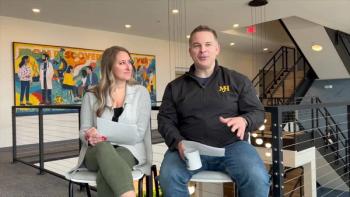
Co-hosts Kristie L. Kahl and Andrew Svonavec highlight what to look forward to at the 2025 ASCO Annual Meeting, from hot topics and emerging trends to travel recommendations.

Kit Yu Lu, MD, identifies patients with HR+/HER2– metastatic breast cancer who may benefit from earlier T-DXd or sacituzumab govitecan treatment.

The pediatric care wing of the Jack & Sheryl Morris Cancer Center is intended to accommodate the physical and emotional needs of younger patients with cancer.

Panelists discuss how bridging therapies, including chemotherapy, targeted therapies, immunotherapy, and steroids, are used to control disease progression in patients awaiting CAR T therapy, with the choice of treatment depending on disease type, performance status, and the urgency of disease control.

Panelists discuss how treatment sequencing for relapsed/refractory lymphoma is influenced by factors such as disease characteristics, prior treatments, patient preferences, and adverse effect profiles, with the inclusion of Tafasitamab + R2 in the second-line setting potentially altering third-line therapy decisions.

Jennifer Moliterno, MD, FAANS, discusses effective collaboration strategies with multidisciplinary colleagues to optimize treatment for brain tumors.

Approximately 10% of patients discontinued treatment with avutometinib/defactinib due to toxicity in the phase 2 RAMP 201 trial.

Panelists discuss how the combination immunotherapy approach is superior to monotherapy for most melanoma patients, with specific exceptions such as desmoplastic melanoma where monotherapy shows remarkably high response rates.

Panelists discuss how the treatment paradigm for melanoma has evolved to favor upfront dual checkpoint blockade over targeted therapy, except in specific cases where rapid response is needed for symptomatic patients with high LDH.

Panelists discuss how early recognition, accurate diagnosis through histopathology and molecular testing, and multidisciplinary collaboration are critical for optimizing treatment strategies in epithelioid sarcoma (ES), while future research into targeted therapies holds promise for improving outcomes, especially in advanced cases.

Panelists discuss how assessing disease progression, utilizing molecular testing (eg, INI1 loss), and considering prior treatment responses are crucial for selecting appropriate second-line therapies, with targeted therapies and immunotherapies offering promising options for managing advanced or metastatic epithelioid sarcoma (ES).