

Focusing on PD-L1-low NSCLC, Faith Abodunrin, MD, discusses the decision to rechallenge with immunotherapy.
Focusing on PD-L1-low NSCLC, Faith Abodunrin, MD, discusses the decision to rechallenge with immunotherapy.
Jyoti Patel, MD, presents the case of a patient with EGFR-mutated non–small cell lung cancer requiring treatment following osimertinib.
Initiating a conversation on patient cases, Divya Gupta, MD, presents the profile of a 76-year-old woman with ROS1+ metastatic non–small cell lung cancer.
Divya Gupta, MD, presents data from CHRYSALIS-2 focused on amivantamab plus lazertinib in atypical EGFR-mutated advanced non–small cell lung cancer.
Robert B. Cameron, MD, PhD, reviews data from the LAURA trial investigating osimertinib in patients with EGFR-mutated stage III unresectable NSCLC.
Focusing on the CROWN study, Faith Abodunrin, MD, discusses the role of lorlatinib in the treatment of patients with non–small cell lung cancer.
Laila Gharzai, MD, discusses findings from the BRIGHTSTAR trial which evaluated brigatinib in TKI-naïve patients with ALK-rearranged metastatic non–small cell lung cancer.
Joshua K. Sabari, MD, introduces a Face-Off program in which Northwestern University and the University of Chicago will present data and discuss treatment practices in non–small cell lung cancer.
A retrospective study sought to assess CRS and ICANS onset and duration, as well as non-relapse mortality causes in patients infused with CAR T-cell therapies.

Helping patients manage potential treatment-related adverse events is an essential part of the overall care plan in the treatment of non-small cell lung cancer. Experts provide strategies to address adverse events and best practices for providing the supportive care needed for patients.
A group of experts discuss the current treatment algorithm for NSCLC, as well as novel approaches under investigation, the impact of molecular biomarkers on their treatment decisions, and the importance of clinical trials.
Fred R. Hirsch, MD, PhD, leads a discussion with his Mount Sinai colleagues about important biomarkers found in non-small cell lung cancer, including those that provide predictive and prognostic information.
Non-small cell lung cancer experts share biomarker testing protocols and best practices for optimal outcomes, with a focus on overcoming challenges and nuances of testing.
A retrospective study sought to assess CRS and ICANS onset and duration, as well as non-relapse mortality causes in patients infused with CAR T-cell therapies.
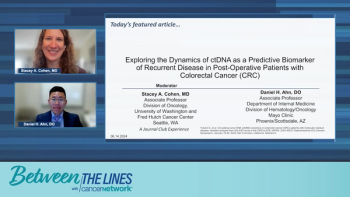
Daniel H. Ahn, DO, and Stacey A. Cohen, MD, discuss the COBRA clinical trial, which evaluated rates of ctDNA clearance in patients with colorectal cancer receiving assay-directed therapy.
Stacey A. Cohen, MD, and Daniel H. Ahn, DO, provide comprehensive insights on the DYNAMIC clinical trial, an interventional study of circulating tumor DNA in colorectal cancer.
A review of patients with metastatic clear cell renal cell carcinoma shows radiological tumor burden as an independent prognostic factor for survival.
A phase 2 trial is assessing ubamatamab in patients with MUC16-expressing SMARCB1-deficient renal medullary carcinoma and epithelioid sarcoma.
Analysis of 2 phase 1 trials compared gut biome diversity between standard of care with or without CBM588 in patients with metastatic renal cell carcinoma.
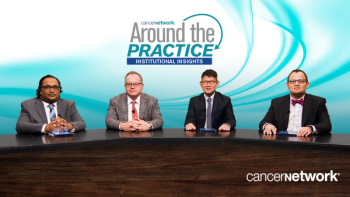
Hans Lee, MD, discusses recent updates presented at ASCO 2024 surrounding cilta-cel CAR T-cell therapy in relapsed/refractory multiple myeloma.
Myeloma specialists discuss considerations they consider when determining how they sequence CAR T-cell therapies and bispecific antibodies.

Panelists analyze observed obstacles to implementing routine circulating tumor DNA testing as a standard of care, while offering strategies to overcome these challenges.
Panelists explore the clinical value of circulating tumor DNA testing at various stages of the colorectal cancer treatment journey, with a focus on optimal testing timelines.
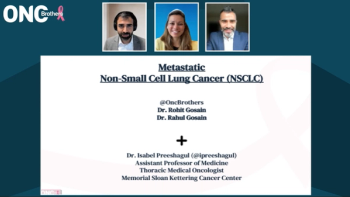
The Oncology Brothers and Isabel Preeshagul, DO, MBS, share clinical insights on later-line treatment practices for patients with metastatic non–small cell lung cancer.
Isabel Preeshagul, DO, MBS, and the Oncology Brothers discuss the treatment of patients with NSCLC and actionable mutations following progression on first-line therapy.
Medical oncologists discuss the role of dual checkpoint inhibitors with chemotherapy in the treatment of patients with metastatic non–small cell lung cancer.
Isabel Preeshagul, DO, MBS, joins the Oncology Brothers, Rahul Gosain, MD, and Rohit Gosain, MD, to discuss treatment practices for newly diagnosed patients with metastatic non–small cell lung cancer (NSCLC) and no actionable mutations.
Medical experts compare the updated results of a Phase II trial and KEYNOTE B-61, both presented at ASCO 2024, giving a comprehensive overview of these pivotal studies.
The panel examines the key findings from abstract 4512 and evaluates its potential impact on the current treatment paradigm for renal cell carcinoma.
Colorectal cancer specialists review recent updates from BESPOKE-CRC evaluating the utilization of circulating tumor DNA for informing adjuvant therapy in patients with colorectal cancer.