
Opinion|Videos|July 31, 2024
Important NSCLC Biomarkers
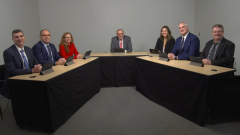
Fred R. Hirsch, MD, PhD, leads a discussion with his Mount Sinai colleagues about important biomarkers found in non-small cell lung cancer, including those that provide predictive and prognostic information.
Advertisement
Advertisement
Related to this article
SOHO 2026 sessions covered chemoimmunotherapy in frontline DLBCL, treatment selection via molecular classifiers, and bispecific antibodies for unfit patients.

The FDA cleared the Triton 1 robotic endoscopy system for diagnostic and therapeutic procedures such as colorectal cancer screening and lesion removal.

ASTRO’s first standalone clinical practice guideline for bladder cancer recommends trimodal therapy vs radical cystectomy for select muscle-invasive disease cases.

Investigators are evaluating cesalatamig among patients with advanced cancer in the international phase 1/2 BiPAVE-001 trial.
The FDA granted fast track designation to the oral pan-KRAS inhibitor KST-6051 for patients with KRAS-mutant advanced or metastatic solid tumors.
Based on updated data from the TRUST-1 trial, a sNDA for taletrectinib has been approved by the FDA for patients with TKI-naive ROS1+ NSCLC.

Misako Nagasaka, MD, PhD, explains how subcutaneous amivantamab’s shorter administration time benefits patients and infusion centers.

Jasmine Zain, MD, emphasized the importance of good patient counseling when outlining the potential risks of secondary T-cell malignancies following CAR T-cell therapy.
Advertisement
Advertisement
Trending on CancerNetwork
1
IASO208 Receives FDA IND Clearance for Relapsed/Refractory B-Cell Lymphoma
2
Secondary T-Cell Malignancies: Identifying and Counseling After CAR T-Cell Therapy
3
SOHO 2026: Key Updates Across the Multiple Myeloma Continuum
4
PALOMA-2 Shows Improved Survival vs Historical IV Amivantamab Data
5