
The phase 2 INTERCEPT-TT trial showed that TAS-102 induced ctDNA clearance following adjuvant chemotherapy in patients with colorectal cancer.

Your AI-Trained Oncology Knowledge Connection!
The phase 2 INTERCEPT-TT trial showed that TAS-102 induced ctDNA clearance following adjuvant chemotherapy in patients with colorectal cancer.

Clinical trials still have a role in improving outcomes with immunotherapy among those with kidney cancer.

Panelists discuss how the CheckMate 214 study demonstrated durable overall survival benefits with ipilimumab plus nivolumab vs sunitinib, with 9-year follow-up showing improved outcomes even in favorable-risk patients and nearly half of responders remaining in remission.
Panelists discuss how clear cell renal cell carcinoma (RCC) represents the most common kidney cancer subtype, typically affecting men in their 50s and 60s who often present incidentally with metastatic disease, and has limited identifiable risk factors beyond smoking, hypertension, and obesity.
Panelists discuss the shift toward a more personalized approach in metastatic renal cell carcinoma (RCC) management, highlighting the evolving role of risk stratification, the renewed interest in immune checkpoint inhibitors for favorable-risk patients, and the strategic integration of systemic therapy, active surveillance, and surgical interventions to optimize long-term outcomes.
Panelists discuss current strategies for first-line treatment sequencing in renal cell carcinoma (RCC), emphasizing immunotherapy-based combinations tailored to disease burden and patient characteristics, while highlighting the importance of multidisciplinary care, real-world experience, and clinical trial data in guiding personalized, patient-centered decisions.

Panelists discuss how to manage borderline transaminase elevations in a patient benefiting from voracidinib therapy, balancing the risk of mild liver toxicity against continued disease control while investigating potential contributing factors.
Current research initiatives in the kidney cancer field include exploring anti–PD-1, anti–LAG-3, and anti–CTLA-4 combination regimens.

Boris M. Kiselev, MD, provides practical advice for oncology clinicians on how to approach and initiate conversations about a patient’s mental and emotional well-being.
Boris M. Kiselev, MD, explores evidence-based interventions for managing cancer-related anxiety and depression.
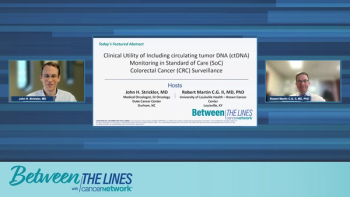
Experts discuss how postoperative surveillance after colorectal cancer surgery is increasingly personalized by integrating pathologic staging, surgical quality, and ctDNA testing to adjust monitoring intensity, with higher-risk or uncertain cases receiving more aggressive follow-up to optimize early detection and intervention.

Panelists discuss how current chimeric antigen receptor (CAR) T therapies for early relapsed/refractory multiple myeloma (R/R MM) include both ciltacabtagene autoleucel (cilta-cel) and idecabtagene vicleucel (ide-cel), both targeting the B-cell maturation antigen (BCMA), with cilta-cel showing superior outcomes in second-line patients compared with ide-cel’s performance in third- and fourth-line settings. They also emphasize that regardless of which CAR T is used, both significantly outperform standard-of-care treatments. Looking toward the future, emerging CAR T therapies are targeting new antigens like GPRC5D on myeloma cells, with phase 2 clinical trials already enrolling patients whose disease returned after initial CAR T treatment, offering hope for sequential CAR T approaches as the field moves toward increasingly immunotherapy-focused treatment strategies.
Panelists discuss how the CARTITUDE-4 clinical trial demonstrated that ciltacabtagene autoleucel (cilta-cel) chimeric antigen receptor (CAR) T-cell therapy significantly outperformed standard-of-care treatments in patients with early relapsed/refractory multiple myeloma (R/R MM), showing higher response rates, complete remission rates, and deeper minimal residual disease (MRD)-negative remissions while also providing superior quality of life with treatment breaks vs continuous therapy requirements, and, most importantly, becoming the first therapy in this patient population to demonstrate improved overall survival and actually prolong life.
Experts discuss the pivotal role of ctDNA in postoperative colorectal cancer care, using it alongside pathology and staging to personalize recurrence risk assessment and guide adjuvant therapy decisions, particularly in nuanced cases where ctDNA results and clinical risk factors may not align.
Boris M. Kiselev, MD, discusses the essential role of psycho-oncology in addressing patient distress, improving treatment adherence, and supporting long-term survivorship.

Declan Walsh, MD, highlighted the need for nutrition research to enhance oncology care.
Being proactive and quickly identifying when a patient may need the supportive care team is the best way to integrate this field into whole-person care.
An expert explains that while bispecific antibodies show strong efficacy in relapsed/refractory multiple myeloma, optimizing their safety—through step-up dosing, infection prophylaxis, immunoglobulin support, and early symptom management—is essential to minimizing toxicity and expanding access to this promising treatment class.

Tycel Phillips, MD, highlighted the need for new therapies for patients with MCL who have experienced relapse on previous lines of treatment.
Tycel Phillips, MD, spoke about the impact the glofitamab CRL had on the landscape of bispecifics in lymphoma.
Peter Martin, MD, discusses the complexities of treating relapsed MCL after treatment with a BTK inhibitor.
Panelists discuss how to manage slow FLAIR progression by initiating IDH inhibitor therapy, emphasizing the importance of setting patient expectations about tumor volume reduction and addressing special considerations for patients of childbearing age.
Panelists discuss how to counsel a 38-year-old patient with excellent surgical outcome about treatment options, weighing the benefits of early IDH inhibitor therapy against watchful waiting while considering individual patient factors and goals.
Peter Martin, MD, discusses the shifting paradigm for treating fit, transplant-eligible patients with MCL.

Historical standards for H3 K27M–mutant diffuse midline glioma treatment may harm healthy central nervous system cells, according to Ashley L. Sumrall, MD.
Experts discuss how initial postoperative visits after colorectal cancer surgery integrate pathology review, recurrence risk assessment, and timely ctDNA testing to personalize prognosis and guide surveillance, emphasizing the importance of surgical quality indicators and molecular tools in shaping follow-up care.
Experts discuss how postsurgical surveillance for colorectal cancer varies by setting, with multidisciplinary teams leading coordinated care in academic centers, whereas surgeons in rural or resource-limited areas often take on expanded roles to ensure follow-up and monitoring are not compromised.
Panelists discuss how patients typically respond well to chimeric antigen receptor (CAR) T-cell therapy with manageable adverse effects (AEs), including expected cytokine release syndrome (CRS) presenting as fever, whereas rare neurotoxicity is closely monitored through frequent cognitive testing and treated with steroids and late immune system effects like urinary tract infections (UTIs), respiratory infections, and shingles occur in the first 6 months post treatment but resolve with appropriate medications and prophylactic treatments, with outcomes improving significantly when CAR T is used earlier in treatment lines rather than after patients have exhausted all other options.
Panelists discuss how patients with multiple myeloma can achieve excellent quality of life with bispecific therapies like talquetamab despite manageable adverse effects, with Karen sharing her advice to embrace treatment opportunities, accept a "new normal," and focus on the meaningful life experiences these innovative therapies enable, including her recent trip to Italy and time with 6 grandchildren she wouldn't have met without these advancing treatments.