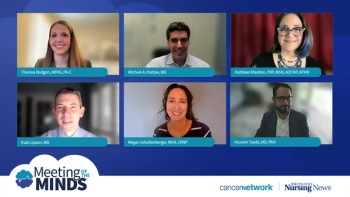
Panelists discuss how nursing support for chimeric antigen receptor (CAR) T-cell therapy success involves providing comprehensive educational materials covering everything from collection to survivorship, conducting virtual CAR T classes, and adapting to new outpatient CAR T protocols where patients receive cells and go home with vital sign monitoring equipment for caregivers. The panelists also celebrate recent FDA regulatory changes that reduced required stay times from 4 weeks to 2 weeks and driving restrictions from 8 weeks to 2 weeks, making CAR T therapy more accessible by allowing patients to return to work and normal life sooner, with reduced financial burden on families.



![A third of patients had a response [to lifileucel], and of the patients who have a response, half of them were alive at the 4-year follow-up.](https://cdn.sanity.io/images/0vv8moc6/cancernetwork/6b7c9a3270c71a70749ba86000cfc78a29d74309-2988x1702.png?w=350&fit=crop&auto=format)
![We have the current CAR [T-cell therapies], which target CD19; however, we need others.](https://cdn.sanity.io/images/0vv8moc6/cancernetwork/6d5ddb2c2098f525a65b378ece6ca55a114f95fc-2974x1660.png?w=350&fit=crop&auto=format)
![“Every patient [with multiple myeloma] should be offered CAR T before they’re offered a bispecific, with some rare exceptions,” said Barry Paul, MD.](https://cdn.sanity.io/images/0vv8moc6/cancernetwork/70a5f0fed7009863fe30cf0740cf32014ebaf5be-2974x1660.png?w=350&fit=crop&auto=format)